Weekly cleaning
£24per cleaner-hour
3 hours minimum · £72 daytime basePlan weekly cleaning
Make the rooms you use every day easier to enjoy. Our Barking Riverside cleaning service starts with what would help you most: a kitchen ready for dinner, a bathroom you feel comfortable using, properly vacuumed floors, or a bedroom with fresh linen waiting. You choose the work, we allow time for that work, and the price is set out before a visit is confirmed. Whether you are settling into a home or keeping an established routine going, the plan should fit your household rather than ask you to fit somebody else's checklist.
Moving area names stop while hovered or focused. Press Enter or Space, or tap the moving area, to keep them still after leaving. Activate again to allow movement. Browse the directory for the complete list.
A regular helping hand, a proper reset or a clean before your next move. Choose the work your home needs.
Keep the kitchen, bathrooms and everyday rooms feeling cared for.
Explore regular cleaning02 ↗More time for reachable detail and the build-up that needs extra attention.
Explore deep cleaning03 ↗An agreed empty-property checklist, ready for your next chapter.
Explore tenancy cleaningA clear plan for your Barking Riverside home, from the jobs you need to an agreed visit.
Add your contact details and save your home address.
Pick your service, tasks and property details. Choose a date and start time, then check the full cost.
Top up from £35, with enough to cover the whole visit. The booking amount is reserved from your balance when you confirm.
Agree the plan and an available time. Your visit details stay in your account.
These are starting points. The final scope, timing and suitable cleaner availability need confirmation.
£24per cleaner-hour
3 hours minimum · £72 daytime basePlan weekly cleaning£26per cleaner-hour
3 hours minimum · £78 daytime basePlan fortnightly cleaning£28per cleaner-hour
3 hours minimum · £84 daytime basePlan one-off cleaning£35per cleaner-hour
4 hours minimum · £140 daytime basePlan deep cleaningEarly starts, late finishes and next-day requests can cost more. The full breakdown is shown before agreement. See timing prices and assessed extras →
Studio & 1 bed from £189 · 2 beds from £269 · 3+ beds & houses from £329
 Barking Riverside · IG11
A clean is more useful when the cleaner knows exactly where to start. Pick your rooms, add your priorities and allow enough time for the work.
Ironing and laundry use the same booked time. A long checklist may need more than the minimum visit.
Build my cleaning planHouse, flat or studio—start with what matters most to you.

Think about the moment you want to come home to. If cooking has become a struggle around a greasy hob and crowded preparation space, the kitchen belongs near the top of your list. If the bathroom is the job you keep putting off, give it a clear share of the visit. A cleaner can work much more effectively from those priorities than from a request to make everything perfect. Tell us which rooms matter, what needs doing in each, and which jobs can wait.
In a kitchen, a useful domestic clean can cover accessible worktops, the sink, taps, cupboard fronts, the hob exterior and suitable flooring. Those are separate surfaces with different requirements. Dried sauce around the hob needs more attention than a lightly marked cupboard door, while a full drainer can prevent access to the sink. Let us know whether you want a small washing-up batch included. Leaving that choice explicit protects the time intended for preparing and cleaning the surfaces underneath.
Describe the bathroom by its fittings. A room with a shower enclosure, a bath, two basins and a toilet is a different job from a small shower room. Cleaning should address the agreed fittings, accessible surrounding surfaces and floor, with suitable products and a sensible drying sequence. If the main concern is soap residue on a shower screen, say so. An old stain, damaged seal or failed grout may remain visible after cleaning; those are not problems that should be disguised with stronger chemicals.
Bedrooms and living spaces need their own definition of done. You might want reachable dusting, accessible ledges, a vacuumed floor and bedside tables wiped, while leaving drawers and paperwork alone. Another household may value a bed change above decorative dusting. There is no requirement to give every room equal time. A spare room that has barely been used can receive less attention, leaving more of the booked visit for the places that are carrying the week's activity.
For floors, describe the surfaces and the result you need. Vacuuming a carpet is different from mopping a suitable hard floor, and a rug may need its own careful treatment. Let us know if you want accessible edges included or if an area must stay dry. Small objects and loose cables can interrupt a thorough pass, so clear what you safely can without moving heavy furniture. A sticky patch near a dining table deserves specific attention; a worn finish will not be renewed by repeated mopping. If there are different materials within an open-plan room, identify them so the cleaner can use an appropriate method in each area. This gives the floor work a practical scope beyond simply counting the room once.
Make a short list of items the cleaner should leave untouched. That could include a work desk, a collection, a particular ornament or a room being used by someone who needs privacy. These limits can sit beside the cleaning instructions without becoming a long set of rules. If a worktop contains medication or personal papers, decide where you want to keep them beforehand. The cleaner should be able to reach the agreed surface without having to interpret or reorganise private belongings.
A first visit is often where you discover how much work the home needs. Explain the condition as well as the number of rooms. A kitchen maintained each week may need a straightforward refresh; one with built-up grease may require a deeper service and more hours. Photos can help explain a specific concern, but a room count alone cannot show the level of work. A realistic description gives us a better basis for setting both the cleaning order and the time.
If you have recently moved, separate unpacking from cleaning. A cleaner can work on accessible surfaces and suitable floors, but stacked boxes can block the very places you want reached. You do not need to finish arranging the entire home first. Choose a usable area, move lightweight belongings where practical and identify the rooms ready for attention. That can make a focused visit more worthwhile than spreading the same hours across spaces still waiting for deliveries or furniture assembly.
Newly occupied does not necessarily mean ready for an ordinary domestic clean. If there is plaster dust, adhesive, paint splashes or other residue from building work, describe it before choosing a service. Such material can need a separate assessment, different equipment or specialist treatment. We will not assume that every Barking Riverside home has building residue, or that a recently finished surface can safely tolerate a scraper. The practical question is what is actually present in your property on the proposed date.
Three hours can be useful when the work is focused, but it is not a promise to finish an unlimited list. Adding ironing, a laundry load, two bed changes and a full kitchen clean takes time away from other rooms. Put the essentials first, then identify any work to do only if time remains. If everything on the list must be completed, ask for enough hours to match it. A smaller, finished brief is often more satisfying than eight jobs left at different stages.
A good end to the visit also needs a little room in the plan. The cleaner needs to put equipment away, leave suitable floors safe and tell you if an agreed item remains unfinished. Where a machine cycle is still running, the next step must be clear. Where an old mark has resisted normal treatment, you should know rather than assume it was overlooked. We would rather describe the result accurately than call a partially completed task finished simply because the appointment has ended.
Regular cleaning is priced at £24 an hour for weekly visits and £26 an hour for fortnightly visits, with a three-hour minimum for either frequency. That makes a three-hour weekly clean £72 and a three-hour fortnightly clean £78 before any applicable additions. Compare those figures with the work and frequency you need. A weekly visit may keep the main rooms under control, while a fortnightly arrangement may need a more selective brief or a longer appointment.
A standard one-off clean is £28 an hour with a three-hour minimum, so three hours is £84. Deep cleaning is £35 an hour with a four-hour minimum, making the starting four-hour visit £140. The service choice should follow the condition and scope, not simply whichever hourly figure looks smallest. Tell us about accumulated grease, neglected fittings or a home that has been closed up for a while, so the proposed service has enough time for the work involved.
For a straightforward example, four weekly hours cost £96 at the standard weekly rate. Those four hours could be used for more bathroom work, a carefully defined ironing batch or a wider floor-cleaning brief, depending on the home. They do not make every extra task automatically included. When you compare a three-hour and four-hour plan, ask what useful work the additional hour will allow rather than viewing it as an abstract increase on the bill.
An early start, evening visit, urgent request or other qualifying time may carry an addition, subject to availability and the applicable terms. Ask for the actual total for your chosen date and start time. If your household needs a narrow appointment around a delivery or other commitment, explain it early. We can then consider whether that window and the cleaning brief fit together, rather than leaving you to discover a different price or an unrealistic schedule at the door.
The agreed price should identify the service, frequency, number of cleaning hours and any specific additions. If you want to reduce the amount, decide which work to remove or reduce before confirming the plan. If you want more done, ask for a revised scope and total. The important comparison is between two understandable visits. A low headline figure is not useful if the tasks you most wanted were never included in the time behind it.
Cleaners must complete our identity and suitability approval before they can be assigned to work. That is the starting requirement, alongside a clear brief for your particular home. It does not mean you have to assume every cleaner already knows how to care for an unfamiliar surface or appliance. Tell us about delicate finishes, unusual fittings and anything that needs a particular method. Useful preparation is about sharing the relevant details, not making the home spotless before help arrives.
For recurring visits, you provide a safe, working vacuum, mop and bucket. The company arranges approved cleaning products, cloths and personal protective equipment. If the property requires something different, that arrangement needs to be agreed as part of the quote. A vacuum with the wrong attachment or a mop unsuitable for the floor can limit the result, so flag a missing or faulty item beforehand. Cleaning time should be spent on the agreed work rather than trying to make unsafe equipment function.
Care instructions matter especially where you are learning how to maintain a recently installed kitchen or bathroom. Keep any relevant manufacturer information available and point out finishes that must not receive a particular product. A cleaner should not guess whether a pale worktop is stone, laminate or another material from its appearance alone. Nor should a stubborn mark automatically lead to abrasive treatment. The aim is to remove ordinary dirt safely while preserving the surface you have, not to chase a result at the cost of damage.
The same care applies to photographs and updates. If a picture is useful to explain a damaged fitting or an unfinished task, keep it focused on the item concerned. Avoid including family members, personal documents, screens or security details. You can describe many concerns in words, and no full tour of the home is needed to ask about a single worktop mark. When reporting a problem, identify the room, surface and result you expected so the agency can respond to the actual issue.

Barking Riverside includes locally named neighbourhoods such as Rivergate and Northgate. Those references can help describe where you live, but the booking needs your complete residential address, including the building or house number and full postcode. The Rivergate Centre is on Minter Road, while Barking Riverside station is listed on River Road. Neither landmark tells the cleaner which private entrance belongs to your home. Add the precise block and flat details rather than expecting a nearby destination to complete the address.
If your home has an intercom, identify the name or flat number the visitor should select. If the main entrance differs from the postal address, give a short, practical explanation. Tell us about stairs or an access arrangement that could affect bringing in agreed supplies. Do not put entry codes or sensitive key instructions into a public message. Share the necessary details through the agreed contact route, with permission from the person responsible for the property.
Choose a start time when the areas to be cleaned will be available. If you will be working from one bedroom, say whether that room should be left until later or skipped altogether. If children are resting, a quieter task order may be more helpful than starting with the vacuum. These are requests to discuss within the available appointment, not promises that every sound or disruption can be removed. A clear sequence makes the visit easier for both your household and the cleaner.
If you will be out, agree who is providing entry, who can answer a question and how the property should be left at the end. An unattended visit should not depend on an unconfirmed assumption that somebody will happen to be nearby. Likewise, do not rely on a building employee to accept a key or admit a cleaner without checking the arrangement yourself. Tell the agency promptly if access changes so that the original appointment can be reconsidered before it becomes a missed visit.

Laundry can mean several different services to different households. You may want one agreed machine load started, clean dry clothes folded, or suitable garments put away in a specified place. State which of those you need. The cleaner cannot assume a load will wash, dry and be ready for folding within the booked period. Sort out the intended programme and any items to leave alone, especially where care labels or colour separation need your decision.
For ironing, choose a finite batch and put the garments together with any relevant instructions. A few simple items are a different amount of work from a large mixed basket with detailed pieces. The iron and stable ironing board must be safe and available under the agreed arrangement. If ironing is the main reason for the visit, say so at the beginning of the plan. If it is lower priority, define what should happen when the cleaning work has used the available time.
Bed changing is easier to plan when you state the number and size of beds and leave the correct clean linen ready. Say whether you want the old linen placed in a basket or included in a separately agreed laundry task. The cleaner should not have to search drawers to find a sheet that fits. If a room is still being unpacked, identify the bed that is ready and keep spare sets apart, so practical bed care does not become a lengthy sorting job.
Any extra paid work needs your approval before it goes ahead. If the cleaner finds a larger task than described, or you decide to add another room, the agency can help establish the additional work, available time and price. Approval must come from the person authorised to make that decision. Where an extension cannot be arranged, retain the original stopping point and decide what belongs in a later visit. You should be able to ask for help without accidentally agreeing to an open-ended bill.
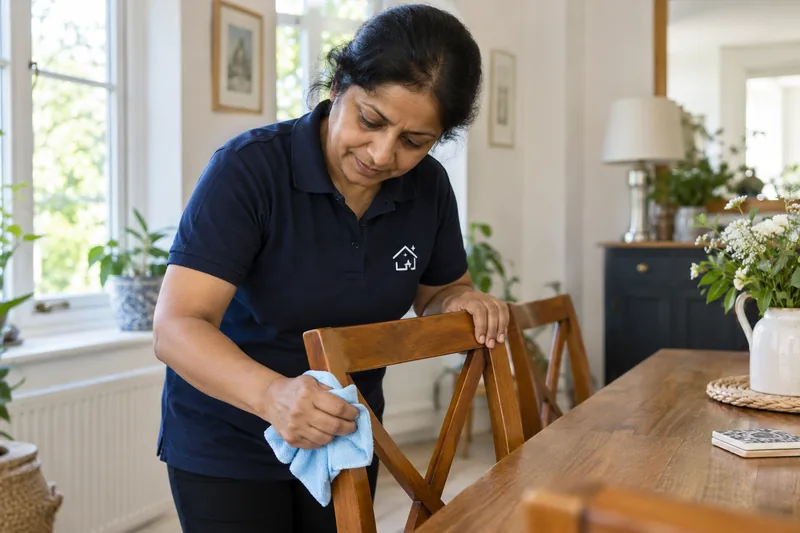
After the first clean, judge the result against the priorities you chose. Was the kitchen ready to use? Did the bathroom get the level of attention you needed? Were floors finished in the rooms included? Those answers are more useful than trying to score every corner of the home. If the initial brief gave too much time to a lightly used room, move that attention next time. A recurring arrangement should become more relevant as you understand what helps your household.
The agency is the contact for questions, changes and concerns about the service. A concise description usually helps: tell us the date, room and task, then explain what happened. A worktop left with residue, a bathroom fitting missed and a request for a different frequency each need a different response. You do not need to turn an ordinary concern into an argument at the property. Equally, identifying a specific issue gives us a fair basis for discussing it with the cleaner.
Keep the brief current as the home settles into a routine. Deliveries may stop, a spare room may become occupied, or you may decide the ironing is better handled on a different day. Those changes can affect the order and duration without requiring an entirely new household checklist. Tell us what has changed before the next appointment is confirmed. The aim is a manageable cleaning arrangement whose value you can see in the rooms you use, rather than a standing list nobody has reconsidered.
To start, give your Barking Riverside address, preferred date and time, property type, room details and the jobs you want help with. Include the main condition concerns and any access information needed to assess the visit. We can then consider the service and hours against your priorities and explain the proposed total. You stay in control of the decision. A confirmed plan should tell you what has been agreed, when it is due to happen and what the cleaner is expected to do.
Need to compare the details? See more cleaning questions →
Use your full Barking Riverside address when requesting a visit, including the house or block, flat number and complete postcode. Rivergate and Northgate are useful local references, but an appointment still depends on coverage, the requested service, timing and a suitable cleaner. We confirm the practical details rather than treating a neighbourhood name as a booking.
Yes, a request can focus on the rooms and surfaces that are accessible. Tell us where boxes or furniture deliveries still prevent access, and separate ordinary domestic cleaning from any building residue. We can assess a useful scope without assuming the entire property is ready or that unpacking is included.
At the standard weekly rate of £24 an hour, three cleaning hours are £72. Three hours is the minimum weekly appointment. The actual quote also depends on any applicable timing or other additions, and the work must fit the agreed hours. Ask for the complete visit price before confirming.
You can ask, but it needs a defined batch, safe agreed equipment and enough available time. If it changes the paid scope or requires longer, the extra work, period and price must be approved before it proceeds. Otherwise the cleaner follows the existing priorities and stopping time.
Take a look around the area, then use your full postcode to plan a clean for your own home.
Area reference only. This map does not mark a company office or confirm service boundaries.
This embedded map is provided by Google, which receives connection information and may use cookies. Google privacy information.
Postcode districts help you browse. They overlap neighbourhood boundaries; your full address and available cleaner time still need checking.
Start with your postcode. We’ll plan the clean around your home.