Weekly cleaning
£24per cleaner-hour
3 hours minimum · £72 daytime basePlan weekly cleaning
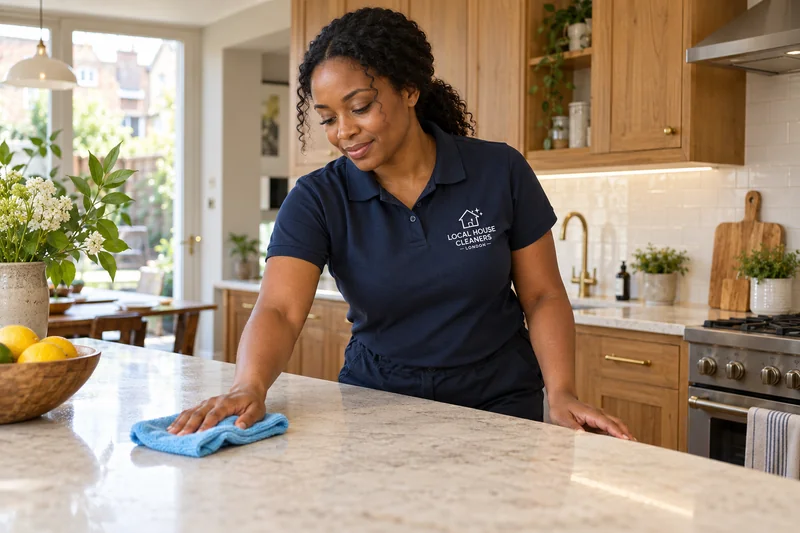
Choose useful home-cleaning help around Fenchurch Street with the tasks, hours and whole proposed cost understood before the visit. A regular routine, a one-off catch-up or a fuller starting service can be assessed, with defined household help where suitable. Give your complete residential address, the included rooms and their current condition. We consider workable timing and availability, then agree the practical appointment before confirmation.
Moving area names stop while hovered or focused. Press Enter or Space, or tap the moving area, to keep them still after leaving. Activate again to allow movement. Browse the directory for the complete list.
A regular helping hand, a proper reset or a clean before your next move. Choose the work your home needs.
Keep the kitchen, bathrooms and everyday rooms feeling cared for.
Explore regular cleaning02 ↗More time for reachable detail and the build-up that needs extra attention.
Explore deep cleaning03 ↗An agreed empty-property checklist, ready for your next chapter.
Explore tenancy cleaningA clear plan for your Fenchurch Street home, from the jobs you need to an agreed visit.
Add your contact details and save your home address.
Pick your service, tasks and property details. Choose a date and start time, then check the full cost.
Top up from £35, with enough to cover the whole visit. The booking amount is reserved from your balance when you confirm.
Agree the plan and an available time. Your visit details stay in your account.
These are starting points. The final scope, timing and suitable cleaner availability need confirmation.
£24per cleaner-hour
3 hours minimum · £72 daytime basePlan weekly cleaning£26per cleaner-hour
3 hours minimum · £78 daytime basePlan fortnightly cleaning£28per cleaner-hour
3 hours minimum · £84 daytime basePlan one-off cleaning£35per cleaner-hour
4 hours minimum · £140 daytime basePlan deep cleaningEarly starts, late finishes and next-day requests can cost more. The full breakdown is shown before agreement. See timing prices and assessed extras →
Studio & 1 bed from £189 · 2 beds from £269 · 3+ beds & houses from £329
 Fenchurch Street · EC3M
A clean is more useful when the cleaner knows exactly where to start. Pick your rooms, add your priorities and allow enough time for the work.
Ironing and laundry use the same booked time. A long checklist may need more than the minimum visit.
Build my cleaning planHouse, flat or studio—start with what matters most to you.
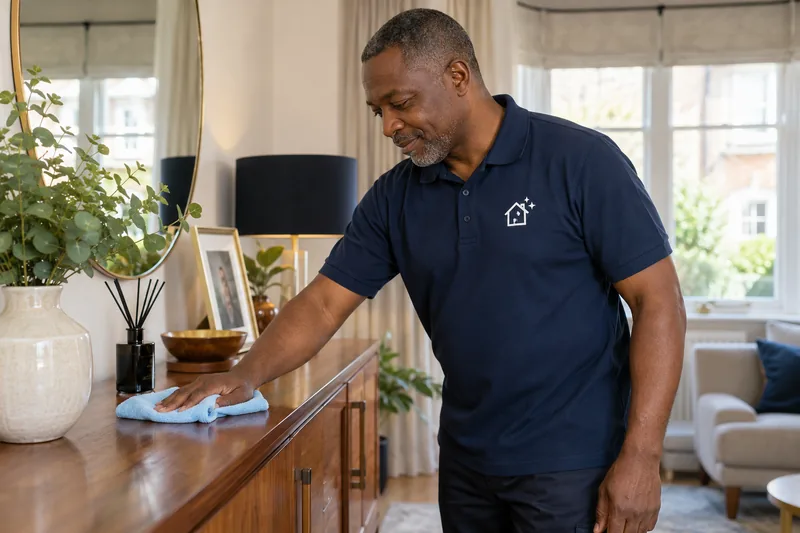
Useful cleaning help begins with the work you would most like someone else to handle. That may be regular attention to the bathroom, keeping kitchen surfaces manageable or appropriate floor care in the rooms you use most. Ironing or a defined linen change may be just as valuable. Start with that reason for booking. The service need not include every possible option; it needs an achievable purpose and enough time for it, so the main result is not lost inside an extensive list without a clear priority.
Describe a result you can recognise in ordinary use. The selected sink and counter attended to, reachable dusting completed or a bed changed with its correct fresh set are concrete jobs. They give the cleaner a more useful instruction than an undefined expectation for a perfect property regardless of its condition. If a particular item prompted the enquiry, name it alongside the rooms. One general label should not leave customer and cleaner expecting different amounts of detail, preparation, storage work and household help from the same period.
National Rail lists London Fenchurch Street station on Fenchurch Place, EC3M 4AJ. The City's architectural information places Fen Court's modern office development on Fenchurch Avenue. These local references support orientation, but your request concerns your own residential address. Give the full postcode and property details rather than directions to a public entrance or another building's reception. We assess the actual home and selected work, without inferring a standard interior, finish, access arrangement or available appointment from its proximity to a familiar local place.
A recurring plan can protect the useful core while occasional detail is chosen deliberately. Your main fixtures and floors may remain important each time, with a prepared interior or another room considered on one date. Explain whether the addition replaces a lower task or requires more hours. It should not quietly consume time intended for the original essentials. A routine remains easier to use when its priorities and allowance stay connected, rather than a list growing through additions while everyone assumes the same period will continue to cover it.
Explain the condition as it is now, including what has accumulated and the tasks needing closer attention. A room maintained regularly and one with established grease, deposits or postponed detail can need different service allowances. You may prefer a fuller first clean followed by upkeep, or a focused starting request for immediate essentials. Either can be assessed without a promise that every accumulated job fits the shortest visit. The appropriate plan follows the workload and suitable method instead of a category being expected to make intensive work smaller.
Count actual included spaces and fittings rather than only the property label. A studio or open-plan room can contain cooking, dining, living and working surfaces without doors between them. A second shower, separate toilet or internal staircase can add work while the advertised bedroom number stays unchanged. Some rooms may be excluded deliberately. These details help establish the allowance for your own home instead of expecting a standard duration inferred from a broad size description or the appearance of a building outside.
Room cleaning and household help need considering together. If the main bathroom remains essential while ironing is added, protect that bathroom in the priorities and explain what the new task replaces or whether the hours increase. The cleaner should not have to choose an important omission from several equally urgent items as the finish approaches. Where every selection matters on one date, ask for the combined request to be assessed. The minimum booking is time for work, not an unlimited choice of extras that use no part of it.
Shared homes benefit from one settled request. You could choose communal-room cleaning while private bedrooms remain excluded, or include particular bedroom work with permission. Make sure the person providing entry knows the current list and the contact for a genuine decision. Several occupants should not each supply an independent full set of tasks to the same appointment while assuming no time is added. A coherent household plan gives the cleaner clear boundaries rather than competing informal instructions about which new preference takes attention away from the original purpose.

In the kitchen, identify accessible counters, sink and hob exterior, adding selected unit fronts and suitable floor cleaning where wanted. Say which ordinary objects will be cleared and what remains in place. A task is easier to assess when its area is known rather than hidden behind a separate unagreed sorting job. If preparation help is useful, describe the permitted action and quantity. The cleaner can then attend to the work purchased without making private decisions about where unfamiliar belongings should go before a surface can be reached.
Request washing up explicitly if it belongs in the visit. Explain the likely amount and where clean pieces are placed, or say you will clear the sink first. A substantial dishwashing stage takes time alongside surface work; both sides should not assess the same area on different assumptions about readiness. Food disposal and storage reorganisation are separate choices. A cleaner should not guess what you no longer want just to uncover a shelf. Settle those decisions or identify a particular permitted task before accepting the allowance.
Select interiors separately rather than assume a kitchen heading includes every cupboard and appliance. Name the prepared fridge section, accessible empty cupboard or particular item, explain its condition and share relevant care guidance. Several interiors add quantity, and unfamiliar removable parts or a heavy unit raise other questions about method and access. Defined detail can have the right allowance considered before work begins. It protects the ordinary room attention from an unmentioned intensive extra appearing after the appointment's time has already been committed elsewhere.
Bathroom descriptions should count the fittings wanted. A bath, separate shower tray and enclosure, basin and toilet are distinct work where selected, with another small toilet or washroom identified too. Mention deposits and sensitive, loose or damaged parts. Appropriate cleaning can address accepted household dirt, but repairing a leak, replacing sealant or restoring a worn coating is different work. The expected result should respect that distinction rather than require a cleaner to make damage look new through stronger treatment during an ordinary domestic visit.
For reachable dusting, identify available furniture surfaces and the handling permitted. A cleared table and a delicate display are different jobs, as is a desk holding private work. Papers and devices can remain untouched while suitable surrounding areas are included. The cleaner should not have to reorganise confidential material or find new storage places to fulfil a broad room request. Clear boundaries enable useful care while the household keeps its own possessions arranged as intended, rather than someone unfamiliar deciding what matters.
Floor work should reflect materials and access across the included rooms. Identify carpet, rugs and hard finishes, sharing known guidance especially after replacement or refinishing. Include a hallway, internal stairs or landing where these matter to the result. State furniture that stays in position and areas blocked from safe reach. Accessible vacuuming and suitable mopping do not automatically mean very heavy moving to uncover every hidden patch. The assessment should follow the interior as it will actually be presented, not an empty-room assumption that does not match the home.
Standard weekly cleaning starts at £24 per hour, fortnightly at £26 and one-off visits at £28, each with a three-hour minimum. Deep cleaning starts at £35 an hour with at least four hours. Three standard fortnightly hours start at £78 before agreed additions; a four-hour weekly plan starts at £96. These examples show time at the stated rates, not identical whole-property packages. The actual tasks, condition and timing need assessment to establish the suitable service and hours rather than a price example alone determining what can be completed.
Read the complete amount alongside the frequency, chosen work, duration, date and actual start. Check the particular task behind the enquiry has been considered instead of assuming it is contained in a broad room name. A separate toilet, linen change or prepared interior might be that task. Clarify missing detail before confirmation. The price is easier to evaluate when customer and cleaner can recognise the same visit, rather than an hourly figure left to imply preparation, quantity and outcomes that have never been agreed.
Budget choices can preserve the most useful result without pressure for rushed care. Keep the busiest fittings, choose fewer rooms or arrange an occasional detail on another date. A fuller initial clean followed by routine essentials may also be appropriate to consider. Explain the outcomes that matter within the limit you have in mind. Retaining every option in less time does not reduce the work present. A focused achievable request can save more effort than a wide list that cannot deliver its main purpose within the allowance.
Early starts, evenings and urgent requests can be considered with suitable availability and any applicable additions. State the timing you actually need at the enquiry rather than obtain a daytime quote and change it later. A revised date, start or workload may require another proposal and cover check. Review the whole appointment before agreement. A selected preference is a request until confirmed, not a promise that a cleaner can attend every slot or remain indefinitely beyond the intended finish because another task needs attention.

Household tasks can be valuable parts of cleaning help when their quantity and priority are visible. You may want priority garments ironed rather than another room dusted, or a bed changed alongside the main bathroom work. Explain whether that selection replaces lower work or adds to a larger combined request. It should not depend on spare minutes appearing after an already full room list. The cleaner needs an achievable relationship between the tasks rather than a complete separate household workload expected inside time assessed only for cleaning.
For ironing, identify the selection and the order items are needed, leaving care labels available. Fabric and detail affect the work, so a piece count alone is not a fixed time promise. Agree safe appropriate equipment and a stable board with suitable space, plus hangers or the folding wanted. A delicate or unclear item can be left for discussion instead of treated experimentally. The useful outcome is an accepted selection handled appropriately, without a guessed promise that everything found in a basket will finish regardless of the remaining period.
A linen change needs the intended bed and a complete clean set of the correct size together. Say where removed bedding belongs and mention unusual fastenings or handling. Straightening the existing bed and washing the used set are separate actions from changing it. Choose the actual outcome rather than assume one bedding option includes every bed and the full laundry process. Clear preparation gives the cleaner a practical task with a finish point, instead of its allowance being spent discovering which unfamiliar set belongs where.
Request laundry by the stage ready to happen: an instructed wash loaded, suitable wet items hung, an available dry load folded or clothing placed into a permitted location. A machine cycle may still be running at departure. Agree who handles later stages instead of expecting the cleaner to stay until everything is dry. Useful help can remove a real part of the process while retaining an honest handover, without a promise that every quantity reaches a washed, dried and stored result regardless of readiness or cycle length.
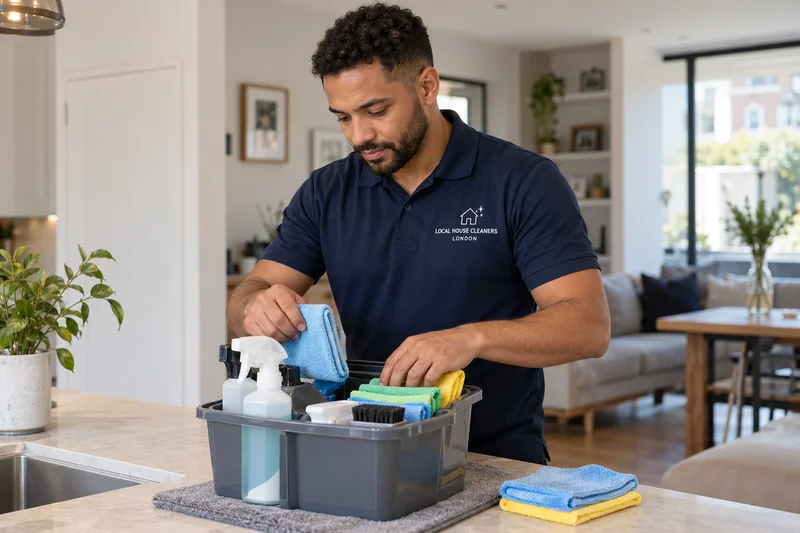
Before assignment, a cleaner must have agency identity and suitability approval. Your property brief then explains the boundaries and care information no general approval can reveal. Identify included rooms, possessions that remain untouched and areas kept private. A closed cabinet needs no disclosure of its contents to stay excluded. The cleaner can concentrate on accepted work rather than judge which unfamiliar items may be moved, assume storage can be opened or decide where important personal material should be rearranged to fulfil an undefined room request.
Share existing manufacturer guidance for a particular finish or fitting, and explain uncertainty where the material is unidentified. Some marks are staining, damage or wear rather than dirt suitable for ordinary treatment. A cleaner should be able to raise that item while continuing with appropriate work elsewhere. Stronger products and extra force are not automatically better care. Hazardous contamination, dangerous high access, specialist restoration and very heavy moving also need separate consideration rather than become silent expectations added to a normal domestic visit.
For recurring visits, provide a safe functioning vacuum, mop and bucket suitable for your home; the company arranges approved products, cloths and PPE. Make the agreed equipment accessible with the parts needed, and flag care restrictions before the date. Any different equipment arrangement belongs in the quote. Ironing needs its agreed safe iron and board too. Settled provision protects the working allowance for useful tasks rather than searches around the property, unsuitable substitutes or a discovery that both sides expected the same essential tool from the other.
Give final directions for the residential door, including any different bell label, block or flat designation. Arrange permitted keyholder or shared-door access beforehand rather than rely on an unknown visitor holding an entrance open. The person admitting the cleaner may not be authorised to approve extra spending, so identify the decision contact separately. Keep codes and security instructions private, outside public photographs and general directions. A station or office landmark can support orientation without replacing the final route that a first-time visitor needs to the correct home.
Choose a start that makes the accepted work accessible during the hours. A call or occupied room may need an agreed order, while a move or delivery can affect readiness more substantially. Explain the sequence and any further dusty work. Late room access does not automatically add unpaid waiting followed by a later finish for the original list. Agree departure too, including keys and securing the home. A concise usable handover connects arrival, available tasks and finish without unnecessary disclosure about the household's wider movements.
Send a revised request through the agency with the result, quantity and current condition described. Say what it replaces or whether it adds work needing another allowance. A prepared interior or extra room is not automatically an equal-time substitution for light dusting. After agreement, make sure anyone present knows the current plan. The cleaner should receive one coherent appointment instead of several informal additions competing for the same period, each assuming its own preference can take first place without affecting work already accepted.
If the workload is greater than described, keep the booked hours and protect the essentials or consider an available extension. Additional paid work requires the task, period and amount explained and accepted by an authorised contact before it begins. No answer is not consent to a larger bill, and agreement does not create time beyond the cleaner's other commitments. Where a change cannot be settled, the existing arrangement remains in place and remaining tasks can be reported, giving you a deliberate later choice rather than an open-ended cost.
Raise a concern about the particular agreed surface, fitting or household task and explain what you expected. Distinguish the issue from a new request or different preference for next time. A close image can help with one area if people, documents, screens and entry information are kept out of frame. The agency can discuss the circumstances and suitable next steps. A small concern does not require a general photographic record of private rooms, or mean repeated stronger treatment is appropriate for an unidentified material or damaged finish.
Review the service by the work it removes from your own week. A different room order, occasional linen help or greater allowance for a main bathroom may make it more useful. Keep the parts that help and revise the rest before the next visit, with changed hours and the complete amount agreed where needed. A recurring routine should reduce repeated organising rather than rely on an old list that grows at every arrival. A current achievable brief keeps the customer clear about the purchase and the cleaner clear about the accepted tasks.
Need to compare the details? See more cleaning questions →
Give your complete residential postcode and house, building or flat details, including the actual entrance. Fenchurch Place and other local landmarks help with orientation but do not identify your private doorway, household work or suitable appointment availability.
Yes. Identify the rooms, fittings and particular tasks, with condition and priorities explained. Standard weekly, fortnightly and one-off services have a three-hour minimum. The suitable allowance follows the actual request rather than the number of possible options.
Request each interior, its condition and what will be empty and accessible, with relevant care guidance. The work needs assessment for suitability and time alongside the ordinary rooms. A broad service or kitchen label does not establish every interior automatically.
Not automatically. Identify the authorised decision contact separately from the access role. Additional paid work needs the task, period and amount explained and accepted beforehand, subject to availability; otherwise the existing arrangement stays in place.
Take a look around the area, then use your full postcode to plan a clean for your own home.
Area reference only. This map does not mark a company office or confirm service boundaries.
This embedded map is provided by Google, which receives connection information and may use cookies. Google privacy information.
Postcode districts help you browse. They overlap neighbourhood boundaries; your full address and available cleaner time still need checking.
Start with your postcode. We’ll plan the clean around your home.