Weekly cleaning
£24per cleaner-hour
3 hours minimum · £72 daytime basePlan weekly cleaning
Choose a cleaning routine that makes the home easier to keep on top of, without making every visit an exercise in finding more time. For your London Fields property, Local House Cleaners can assess the work you want handed over and explain enough cleaner-hours for it. Start with the rooms and the result that matters, then add finite household extras where useful. You can consider regular upkeep, a one-off standard clean or a more intensive service, with the complete price and practical arrangement clear before confirmation.
Moving area names stop while hovered or focused. Press Enter or Space, or tap the moving area, to keep them still after leaving. Activate again to allow movement. Browse the directory for the complete list.
A regular helping hand, a proper reset or a clean before your next move. Choose the work your home needs.
Keep the kitchen, bathrooms and everyday rooms feeling cared for.
Explore regular cleaning02 ↗More time for reachable detail and the build-up that needs extra attention.
Explore deep cleaning03 ↗An agreed empty-property checklist, ready for your next chapter.
Explore tenancy cleaningA clear plan for your London Fields home, from the jobs you need to an agreed visit.
Add your contact details and save your home address.
Pick your service, tasks and property details. Choose a date and start time, then check the full cost.
Top up from £35, with enough to cover the whole visit. The booking amount is reserved from your balance when you confirm.
Agree the plan and an available time. Your visit details stay in your account.
These are starting points. The final scope, timing and suitable cleaner availability need confirmation.
£24per cleaner-hour
3 hours minimum · £72 daytime basePlan weekly cleaning£26per cleaner-hour
3 hours minimum · £78 daytime basePlan fortnightly cleaning£28per cleaner-hour
3 hours minimum · £84 daytime basePlan one-off cleaning£35per cleaner-hour
4 hours minimum · £140 daytime basePlan deep cleaningEarly starts, late finishes and next-day requests can cost more. The full breakdown is shown before agreement. See timing prices and assessed extras →
Studio & 1 bed from £189 · 2 beds from £269 · 3+ beds & houses from £329
 London Fields · E8
A clean is more useful when the cleaner knows exactly where to start. Pick your rooms, add your priorities and allow enough time for the work.
Ironing and laundry use the same booked time. A long checklist may need more than the minimum visit.
Build my cleaning planHouse, flat or studio—start with what matters most to you.

Consider which household tasks you would most like to stop carrying forward. A bathroom waiting for attention, cooking surfaces that need a proper clean or floors through the rooms used daily can provide a useful starting point. You do not have to select every space. Tell us the results you care about and rank them, so the cleaner has a purposeful sequence rather than a long group of equally urgent options competing for one short appointment.
List the actual rooms and fittings alongside the property type. An additional shower, separate toilet or study can change the workload while the bedroom count remains the same. A bedroom might need a linen task without wider cleaning, or floors and dusting with the bed left alone. We can assess those choices directly. The proposal should describe the help your household wants instead of using a general room label to imply every possible task inside it.
Be clear about the first result and the routine afterwards. If some areas have accumulated residue or been left longer between cleans, they may need a different allowance from later maintenance. That is useful information for assessment, not a reason to be embarrassed. A first date does not automatically make the request a deep clean, but a maintenance minimum should not be expected to absorb substantial catch-up work without any change to time or scope.
London Fields Park has its council-listed address on London Fields Westside in E8. A nearby park or the locality name is a useful reference, but the cleaning enquiry needs your full residential address and postcode. Include a house or flat number, building and separate entrance where relevant. The outward district does not identify the individual door or authorise entry. We should assess the particular home rather than infer its layout or condition from proximity to the park.
Agree the task boundaries with anyone sharing the property. You can concentrate on common spaces and keep private rooms untouched, with an authorised contact for questions. A room in use during part of the appointment may need a planned sequence. The cleaner should not have to negotiate conflicting instructions at arrival or repeatedly find another available area. Clear household decisions let the paid labour go into the useful work you selected.
In the kitchen, name accessible worktops, sink and taps, hob exterior and any agreed splashback or reachable fronts. Explain which surfaces need ordinary upkeep and where grease or dried residue requires concentrated attention. A useful estimate follows that condition. A maintained worktop and an established cooking-area build-up can need different time, even if both are entered as kitchen. The cleaner needs an achievable task rather than an unspecified expectation that every appliance and storage interior is included.
Make the selected preparation space available by clearing food, papers and small belongings yourself, or ask about a finite amount of straightening. Private storage decisions remain with the household. Heavy or connected appliances are not routine objects to move. Tell us what may be handled and share care guidance for sensitive finishes, pointing out loose parts or existing damage. Ordinary cleaning can address removable residue without a promise to restore wear or remove every stain through stronger treatment.
Include washing-up only with a useful description of the quantity and where finished items belong. A few cups, a full sink and several pans make different demands. The task can be assessed alongside the surface work without silently consuming time reserved for another room. Appliance interiors also need explicit requests: a hob exterior does not include an oven, while a fridge exterior does not imply removing its food and shelves. Preparation and suitable service requirements should be clear before acceptance.
Bathrooms need fittings counted, not just a room total. State the bath, shower enclosure, basins and toilets wanted, adding a separate cloakroom where included. Mirrors, reachable ledges and suitable flooring can also be selected. Soap residue and water marks may need patient appropriate attention, while damaged grout, failed sealant and worn surfaces may remain. Product restrictions, such as those for natural stone or coated glass, should be known so cleaning is not mistaken for repair or restoration.
Describe a sticking shower door, loose screen or leak before the cleaner is expected to work there. Accessible edges and runners can be assessed without forcing mechanisms or dismantling unfamiliar fittings. Give toiletries, towels and bathmats an arrangement too: you can clear the work surface, leave fresh linen ready or identify where used items should go. The cleaner should not search private cupboards to complete the finish, and replacing linen does not automatically include its later washing and drying.
Small finishing tasks can be useful when they are named. An accessible mirror above the basin, a kitchen table or agreed cupboard handles may matter more to you than another optional room. Identify the material and any sensitive frame or loose fitting. These are specific appropriate surfaces, not a promise of exterior-window work, high access or polishing everything visible. The selection should have time alongside the main kitchen and bathroom tasks rather than be treated as an effortless last-minute addition.
If the kitchen bin is part of the selected work, say whether you want an exterior wipe, emptying or another action assessed. Provide the appropriate replacement liner and identify the permitted disposal point where relevant. A bag should not be thrown away simply because it is beside the bin. Keeping this small task explicit allows the room to be left ready for use without a search through private cupboards or unagreed disposal decisions.

Reachable dusting can focus on open furniture surfaces and named shelves while collections and personal items stay untouched. Explain what may be moved and how it should be replaced. Handling many objects individually takes more work than cleaning an empty table. You can ask for a considered result without opening drawers, sorting paperwork or handing over decisions about storage. The cleaner should know where permission stops as well as which surface is the priority.
For floors, describe the material and areas included, with rugs and internal stairs named where relevant. Suitable vacuuming and mopping follow the actual finish and condition, with some surfaces requiring limited moisture or a dry approach. Heavy furniture is not routinely shifted to extend the floor area. If a concealed or awkward space matters, describe the obstruction for assessment rather than assume a cleaner can move a substantial cabinet or bed within ordinary room work.
An entrance, passage or landing may be a valuable priority in your own home. Decide what you will clear beforehand or whether a limited amount of handling should be assessed. Cleaning a floor is different from finding new storage for shoes, bags and household possessions. A safe route and a clear place for agreed movable items help the task finish sensibly. The visit should not become a wider organising project before the cleaner can reach its main work.
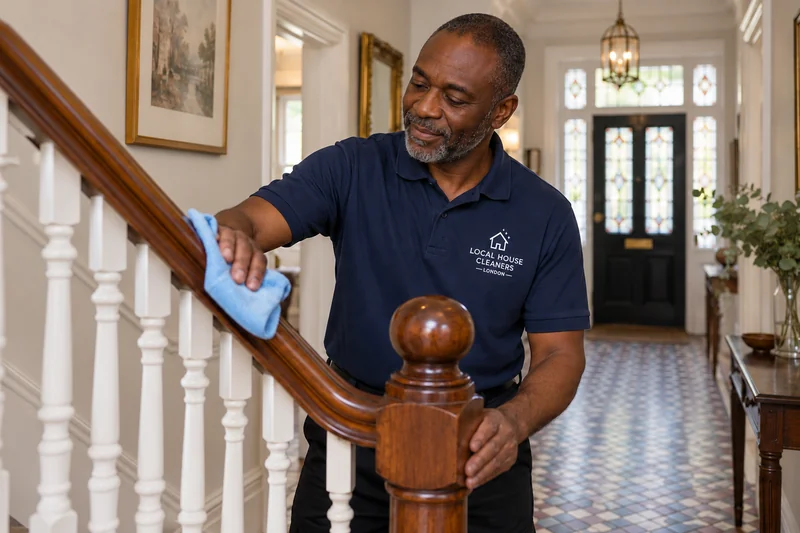
Internal steps and landings need their share of time. Include reachable rail detail where requested and flag a loose fitting or damaged edge. Equipment must move safely between floors, without an unsafe route being assumed simply because a room above has been selected. A rail clean does not mean repairs or reaching high decorative features above the stairwell. These limits give ordinary floor care a practical scope that can be completed appropriately.
If a room is also used for work, define a narrow task where that suits the household. A prepared floor and a specific shelf can be included while the desk, screens and papers stay private. Say when the room is available and handle confidential items yourself. The cleaner should not interrupt a meeting or interpret personal material to decide whether something can be moved. A limited, well-prepared selection can still make the space more comfortable.
For beds, identify the action you want and the number involved. Straightening covers already in use is different from a full change of linen. Put the correct clean replacement set out for an agreed change and say where used bedding should go. A duvet and several pillows take labour of their own. The cleaner should not search private storage for suitable pieces or begin a laundry sequence because the request did not separate those stages.
Describe laundry by what will be ready at arrival. You might have dry items to fold, a suitable load to hang or clothing needing an agreed machine cycle. These are different hands-on tasks. Care instructions and a practical handover matter, especially if washing or drying finishes after departure. A useful part of the work can be completed without promising that every cycle and later storage stage fits inside the cleaning appointment.
Give folding a clean clear surface and a destination for finished piles. You may want towels kept together or particular clothing groups left separately. Putting garments into private drawers is another task and permission, not a necessary conclusion to folding a basket. This keeps the help usable without asking the cleaner to guess who owns an item or search bedrooms to discover household storage preferences.
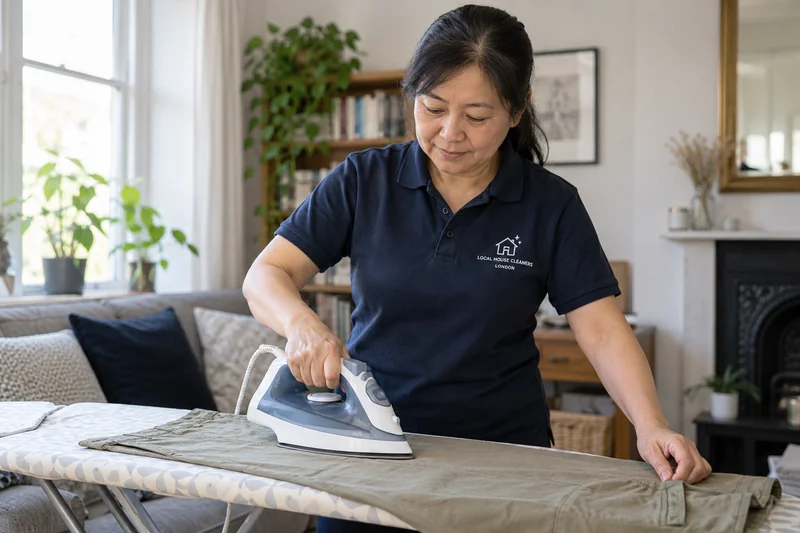
For ironing, select a finite batch of suitable garments with the pieces to prioritise first. Safe agreed equipment, a stable board and a suitable working area are required. Detailed clothing can take different labour from straightforward pieces, so the assessment should follow the actual group. Leave appropriate hangers or a finished-item space, keeping uncertain or specialist-care garments aside for clarification instead of pressuring a cleaner to treat them to empty the pile.
Other domestic help should identify an action, quantity and equipment. Light straightening of named items is different from decluttering storage or managing all household linen. The agency can assess whether the request is suitable and how much labour it shares with cleaning. A combination of several bathrooms, kitchen work, floors and clothing tasks may exceed the three-hour standard minimum. You can choose more time or a tighter priority list to obtain useful completed work.
Choose the cleaning interval with the household work in mind. Weekly standard cleaning is £24 per cleaner-hour; fortnightly standard cleaning is £26; one-off standard cleaning is £28 per cleaner-hour. All three require at least three hours. A single cleaner's three-hour starting standard labour total is therefore £72, £78 or £84. Those figures explain the starting allowance rather than promise the same result for any property, condition and selection of extras.
A cleaner-hour measures one person's paid working time. At the weekly standard rate, five hours supplied by one cleaner is £120. If staffing involves more than one person, the proposal should explain the combined labour and attendance arrangement. Two people working three hours contribute six cleaner-hours. Elapsed time alone does not show how much labour the price covers, and any proposed staffing must be confirmed with the appointment.
Deep cleaning is £35 per cleaner-hour with a minimum of four hours, making one cleaner's four-hour starting labour £140. Explain the concentrated work needed and check the actual surfaces, fittings or interiors accepted. Repairs, hazardous material and specialist restoration require different consideration. The service should identify what is appropriate rather than depend on a name suggesting that every possible household concern has been included.
Give the date and start time with practical limits on entry or room use. Early, evening, urgent and other applicable additions can affect the complete amount, with availability considered. A time request does not reserve a cleaner. Review the full proposal before relying on the slot, so the service, labour and practical arrangement fit together instead of the household organising its day around an unconfirmed selection.
Ask what extra labour would achieve if the list exceeds the available hours. Another paid hour can be useful when it finishes a defined room or garment task; a smaller selection may suit a fixed budget. The cleaner should not be expected to stay unpaid or decide an important omission at the end. A complete price helps you choose what is worth including and what can become a separate request.
Identity and suitability approval are necessary before a cleaner can be assigned. Household instructions serve another purpose: they explain the care and permission specific to the home. Tell us about sensitive finishes, existing damage and belongings that should remain in place. These relevant details support an approved cleaner without requiring an unnecessary record of private documents or unrelated information about the people living there.
For recurring visits, the household provides a safe functioning vacuum, mop and bucket. The company arranges approved products, cloths and protective equipment unless another provision is recorded in the quote. Check the essentials before the day and raise faults early. Appropriate floor work cannot be planned around a vacuum that fails or an unassessed substitute product, so a known equipment problem should be discussed while the arrangement can still be considered.
Agree the authorised residential door, secure handover and how the property should be left. If another person will assist, confirm their permission and practical timing beforehand. A public destination near London Fields is not responsible for admitting the cleaner to the home. Keep key and code information private, with a contact for an unexpected question, instead of leaving an unsecured key visible outside.
Explain occupied rooms, pets or a restriction affecting the sequence. The cleaner needs enough available work and safe access during the accepted time. Animal care and household supervision are not implied, and heavy furniture moves or unsafe high access need separate assessment. If conditions change, tell the agency what is different so the revised request can be understood rather than assumed to fit the original appointment.
Prepare the selected linen or garment group in the agreed place, with clean sets, ready items and appropriate hangers identifiable. Keep anything to leave alone separate from the task. This lets the cleaner begin useful work without interpreting a mixed pile or searching different rooms. You retain the household's private storage choices while the selected extra has a practical start and a recognisable finish.
Use the agency to resolve uncertainty before accepting the proposal. You may be comparing another bathroom with more kitchen attention, or deciding whether the ironing quantity fits. We can consider the actual combination and labour. A useful answer should help select a complete result, rather than leave the cleaner responsible for choosing which expectation to disappoint after the appointment is already under way.
Keep changes in one understood request. A room becoming occupied, an altered entrance or a larger clothing group can affect the service without changing the address. Tell us the practical difference and have it assessed and confirmed. Several household members should not add separate instructions that each assume use of the full time already allocated to other tasks.
Additional paid work needs a decision before it starts. An authorised person must accept the action, added cleaner-hours where needed and full charge, and the cleaner must have availability. If those points cannot be settled, retain the original finish and task list. The remaining work can be assessed separately without an unexplained overtime amount or expectation of unpaid additional labour.
Feedback is most useful when it concerns the work agreed. Identify the room and task, explaining what was expected and what you noticed. A close private image may help with one surface without showing people, documents, screens or security details. The agency can then consider the particular concern and appropriate response instead of needing unrelated information about the whole home.
Request your London Fields clean with full residential details, the room priorities and condition, frequency and preferred timing. Add domestic extras in realistic amounts and explain preparation or access limits. We can assess enough labour, set out the complete amount and confirm the practical arrangement. You keep clear choices about scope and spend while useful household jobs are taken off your own list.
Need to compare the details? See more cleaning questions →
Use the complete residential address and postcode for the actual home. The park's London Fields Westside address helps with local orientation but does not identify or authorise entry to a private property. Include flat, building and separate entrance details where needed.
Yes, identify the authorised rooms, surfaces and priorities, with excluded spaces clear. We can assess a focused service under the relevant minimum. The actual fittings, condition and extras still determine sufficient labour.
No. Describe the garment quantity and care requirements so its labour can be assessed alongside room cleaning. More time or fewer priorities may be needed. Safe agreed equipment and a suitable destination for finished items are also required.
Before added paid work starts, an authorised contact must accept its action, any extra labour and full charge, with the cleaner available. Without that agreement, the original scope and finish time remain. An optional task can instead be considered for a later appointment.
Take a look around the area, then use your full postcode to plan a clean for your own home.
Area reference only. This map does not mark a company office or confirm service boundaries.
This embedded map is provided by Google, which receives connection information and may use cookies. Google privacy information.
Postcode districts help you browse. They overlap neighbourhood boundaries; your full address and available cleaner time still need checking.
Start with your postcode. We’ll plan the clean around your home.