Weekly cleaning
£24per cleaner-hour
3 hours minimum · £72 daytime basePlan weekly cleaning
Arrange cleaning for your Woodford Green home around a clear list of rooms and household jobs. Tell us what you want help with, the current condition and how the cleaner will reach the property. We assess the appropriate service and hours, explain the complete amount and confirm an appointment only after the practical details and availability are agreed. The aim is a useful result with less last-minute organising.

Moving area names stop while hovered or focused. Press Enter or Space, or tap the moving area, to keep them still after leaving. Activate again to allow movement. Browse the directory for the complete list.
A regular helping hand, a proper reset or a clean before your next move. Choose the work your home needs.
Keep the kitchen, bathrooms and everyday rooms feeling cared for.
Explore regular cleaning02 ↗More time for reachable detail and the build-up that needs extra attention.
Explore deep cleaning03 ↗An agreed empty-property checklist, ready for your next chapter.
Explore tenancy cleaningA clear plan for your Woodford Green home, from the jobs you need to an agreed visit.
Add your contact details and save your home address.
Pick your service, tasks and property details. Choose a date and start time, then check the full cost.
Top up from £35, with enough to cover the whole visit. The booking amount is reserved from your balance when you confirm.
Agree the plan and an available time. Your visit details stay in your account.
These are starting points. The final scope, timing and suitable cleaner availability need confirmation.
£24per cleaner-hour
3 hours minimum · £72 daytime basePlan weekly cleaning£26per cleaner-hour
3 hours minimum · £78 daytime basePlan fortnightly cleaning£28per cleaner-hour
3 hours minimum · £84 daytime basePlan one-off cleaning£35per cleaner-hour
4 hours minimum · £140 daytime basePlan deep cleaningEarly starts, late finishes and next-day requests can cost more. The full breakdown is shown before agreement. See timing prices and assessed extras →
Studio & 1 bed from £189 · 2 beds from £269 · 3+ beds & houses from £329
 Woodford Green · IG8
A clean is more useful when the cleaner knows exactly where to start. Pick your rooms, add your priorities and allow enough time for the work.
Ironing and laundry use the same booked time. A long checklist may need more than the minimum visit.
Build my cleaning planHouse, flat or studio—start with what matters most to you.

Choose the work that regularly gets pushed into your own free time. It may be cleaning the shower, getting the kitchen floor done, preparing a guest bedroom or keeping accessible dusting under control. You can request a focused service rather than select every possible task. A visit is useful when it takes a recognisable part of the household workload off your hands. A short, realistic list can deliver a clearer benefit than an ambitious one where the cleaner has not been told which of many expectations matters most.
For recurring help, establish the essentials that you want addressed each time. State the rooms included and the main tasks inside them. Put occasional details below that core list and discuss whether they replace other work or require extra time. A selected interior or some ironing may be valuable, but should not quietly displace an essential bathroom clean. The cleaner should be able to follow the order you chose rather than decide alone which apparently equal priorities will be left when the attendance is full.
If more than one person uses the home, agree the brief together where necessary. Clarify permission for private bedrooms, storage and belongings, and nominate a contact for decisions. Somebody at the door may know how to provide access without being authorised to add tasks or spending. Let them know what has been arranged. One current list makes the service easier to hand over, because the cleaner is not trying to reconcile several different versions of the work while a single paid attendance is already underway.
A one-off request can have a specific purpose too. You may want a catch-up before guests, a clean before returning home or an assessed empty-property service linked to a move. Explain that purpose alongside the condition. A single appointment is not automatically a deep clean, and a move-related clean is not automatically equivalent to ordinary maintenance. We can consider the work you actually require before confirmation, instead of relying on a service label to hide a much larger checklist or assume all single visits have the same workload.
When preparing for visitors, choose the spaces they will use and include any bed or linen work from the outset. A bathroom, kitchen and guest room may be more valuable priorities than a private office. That is a choice you can make explicitly. If every part of the home must be ready together, request an assessment for the whole combination rather than leave extra work to be added at the doorway. The visit can then follow the occasion without losing sight of its realistic duration.
When choosing a frequency, consider the work you will keep doing between visits. A weekly appointment may be intended to protect a consistent set of essentials, while a more occasional clean may need a different allowance when tasks accumulate. Explain that expected division instead of assuming the same list always needs the same hours at any interval. We can discuss a service that complements your own routine, with its ongoing purpose clear enough that you do not have to rebuild the household brief from scratch before every appointment.
Vision RCL lists Woodford Green Library and Gym on Snakes Lane West with an IG8 0DX address. Redbridge Council also identifies Ray Park on Snakes Lane East in Woodford Green. These are useful local references, but neither replaces your own full postcode and property details. Include the number, flat or building designation and the entrance you use. A familiar nearby place does not identify a specific door, describe the rooms inside or establish an available appointment for a chosen date.
Give the final route that a visitor is authorised to use. If there is a shared gate, side entrance or bell that differs from the postal designation, explain it directly. Do not assume another resident or a neighbouring business will interpret an incomplete address. Where a keyholder or building representative is involved, agree their part before the date. A clear arrival process saves coordination during the appointment and lets the cleaner reach the agreed spaces without having to improvise around a secure doorway or a key nobody has agreed to release.
The current layout matters to the estimate. Count bathrooms, separate toilets and included living spaces as well as bedrooms, and mention internal stairs or levels. A spare room used for work may have papers and equipment that should remain untouched, while an unused bedroom may be excluded. We assess that actual combination rather than infer a standard floor area or task volume from a house, flat or studio description. Two homes with the same headline room count can still need very different attention.
If your request is around a move, explain when the home will be ready and who holds the keys. Removals, deliveries, furniture and further work can affect what is accessible. State what will remain on the cleaning date and whether interiors will be empty. A workable sequence is more useful than simply choosing a date between other appointments. The cleaner needs an opportunity to complete the assessed tasks, not an expectation to wait for belongings to be moved or clean surfaces that further work will immediately cover again.
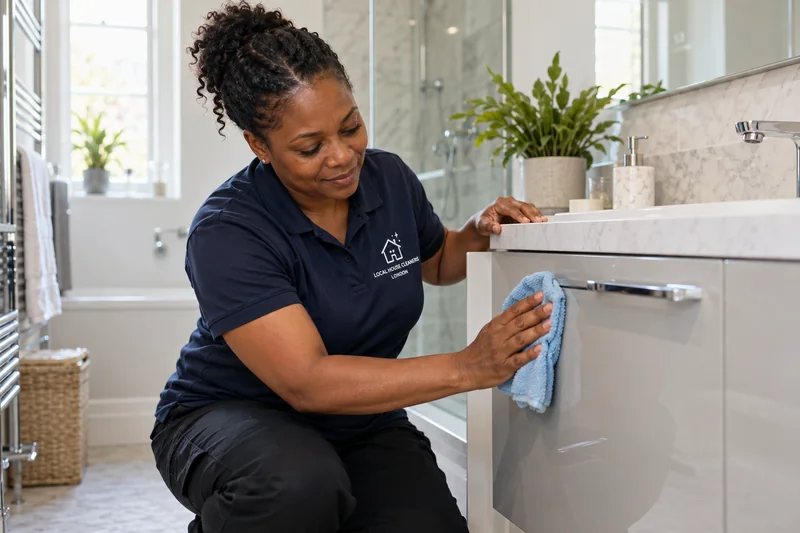
Tell us the starting condition room by room. A kitchen can look tidy while still needing attention to grease, and a small shower may have more deposits than a larger lightly used bathroom. A room blocked by possessions may need household storage decisions before cleaning is useful. Explain what is dirt, what is clutter and what you want help with. The assessment can then relate to the work that exists rather than a polished description that leaves the cleaner discovering a different job on arrival.
In the kitchen, specify accessible worktops, sink, hob exterior, cupboard fronts or suitable floor care, and select interiors separately. Say whether dishes and personal items will be put away first or whether washing up and permitted tidying need an allowance. A kitchen heading does not tell anyone whether you expect every cupboard and appliance interior. Making the detail visible helps us consider appropriate time and prevents an important expectation being treated as a small extra after the rest of the attendance is already committed.
In a bathroom, count fixtures and mention significant build-up, damaged seals or care-sensitive materials. Cleaning can address appropriate dirt and deposits, but it is not repair or restoration. The cleaner should not have to remove permanent damage through greater pressure or stronger chemicals where the finish cannot safely tolerate that approach. If a particular method or product is required, tell us before the date. An honest explanation lets expectations be discussed and reduces the risk of an unsuitable attempt to make every visible mark disappear.
For living spaces and bedrooms, choose the accessible dusting and floor tasks you want. Define objects and areas to leave untouched. Cleaning a reachable area under a bed is different from moving a heavy frame, and wiping a cleared shelf is different from reorganising its contents. Where you want a selected detail, include it in the assessment. A deeper first clean may have a different scope from later maintenance, so explain that sequence rather than expect an intensive catch-up list to fit repeatedly into ordinary recurring hours.
Floor care should follow the material and access. Tell us which areas need vacuuming, which can be mopped and whether a finish has manufacturer instructions. Put away items that prevent access if sorting is outside the service. If you want the entrance floor prioritised after ordinary outdoor use, say so as a household preference; living near green space does not mean we assume every property has that need. A precise floor request is easier to assess than one instruction that conceals several surfaces, obstacles and methods.

For ironing, choose a selection that represents the help you most need. Put priority garments together, retain care labels and say whether they should be hung or folded. A safe iron, stable board and clear working area should be available under the agreed arrangement. The type of garment affects the attention required, so a basket or piece count is not a universal time promise. An unsuitable item can be left for discussion rather than treated experimentally simply to finish an assumed number.
Bed changes need the correct complete linen sets, with instructions about which bed each is for and where removed bedding goes. Mention any unusual fitting or handling issue beforehand. Fresh bedding in place is a distinct result from washing and drying the used set. If you want both, the time and machine cycle need consideration. Agree what can finish during attendance and who handles a later stage, so a useful task does not end in uncertainty about a wet load or a missing clean set.
Laundry includes several separate stages: sorting or loading, hanging washed items, folding dry clothing and putting it away. Describe the stage requested and relevant care instructions. Machine running time can continue after the cleaner leaves, so a wash beginning during a visit is not a promise that every item will be dry and finished before departure. A practical handover gives you something clear to rely on. It is better than asking a selected option to imply an entire open-ended process regardless of quantity or cycle length.
Choose whether household help replaces room work or adds to it. You might prefer ironing to a lightly used spare room on one date, which can be an explicit substitution. If all rooms and all extras are essential together, request an assessment of their combined workload. For a stable recurring duration, a rotating detail may be considered when the core work and condition allow. Extra tasks should not silently push a priority bathroom out of the list or be expected to happen outside the agreed paid attendance.
Starting standard rates are £24 per hour for weekly cleaning, £26 for fortnightly cleaning and £28 for a one-off visit, each with a three-hour minimum. Deep cleaning starts at £35 per hour with a four-hour minimum. A three-hour weekly attendance at the standard rate is £72 before separately agreed additions. These are rates and minimum lengths, not a promise that any property and task list can be completed in the shortest booking. The suitable service and hours follow the condition and priorities you describe.
Compare the whole quote rather than the headline rate. Check the proposed tasks, frequency, duration, date and actual start time, and ask about an important item missing from the scope before confirmation. A recurring maintenance arrangement and a more intensive first assessment have different purposes. Selecting the lower figure does not change the work found at the property. You should understand what attendance is being arranged and what it is intended to achieve, instead of relying on an isolated hourly price to describe every aspect of the job.
A spending limit can make the priorities clearer. Tell us the results to protect and discuss a focused room list, a larger first clean or occasional detail on another date if appropriate. These are useful decisions about the plan. They should not become pressure for a cleaner to rush, ignore care instructions or continue beyond paid time. A smaller achievable service can be a better fit than an ambitious list whose main reason for booking cannot reasonably be delivered within the allowance you have chosen.
Include early, evening or urgent timing requirements in the initial enquiry so availability and applicable additions can be considered together. A changed slot may need a revised quote. During the visit, extra paid hours also need approval. Nominate who can decide and what the cleaner should do if that person cannot be reached. The original priorities can remain the basis of the authorised work, with outstanding items discussed afterwards. Neither silence nor an unexpectedly larger task should automatically create an open-ended attendance and charge.

The agency requires cleaner approval before assignment, including identity and suitability checks. Your property brief then adds specific permission and care details. Identify a fragile item, excluded storage or a finish with manufacturer guidance. A private drawer can stay untouched without its contents being disclosed. Where the home contains work equipment and papers, distinguish cleaning accessible surfaces nearby from handling those items. Clear boundaries help the assigned cleaner work confidently without guessing what unfamiliar possessions mean to the household or receiving unnecessary personal information.
Give surface instructions where known and explain uncertainty where the material is not identified. Dirt, staining, wear and damage are different, and more force or a stronger chemical is not always an appropriate answer. The cleaner should ask about an unclear treatment or leave the affected item for suitable assessment rather than experiment. Specialist restoration, hazardous contamination, dangerous high-level access and heavy furniture moving need separate consideration rather than be assumed within normal domestic work because they happen to be inside the property.
Confirm equipment and product arrangements. If your vacuum, mop or iron will be used, check it is safe, working and has the necessary parts. Leave suitable labelled supplies where they can be found, and agree any different provision while the service is assessed. Mention pets, occupied rooms and quiet periods that affect the sequence. Put valuables and private papers away from included surfaces. This preparation removes barriers and decisions outside the cleaning; it does not ask you to carry out the booked work before help arrives.
For entry and departure, explain who provides access, the authorised route and how the home should be secured. If a keyholder or building representative is involved, obtain their permission beforehand. Keep codes and security notes in the agreed private arrangement, with a contact if the normal locking method fails. A room unavailable until late does not automatically add free time after the planned finish, so discuss the usable sequence before the date. Clear practical arrangements let the appointment fit ordinary life without repeatedly interrupting the assessed tasks.
Keep one current instruction list and identify what any revision replaces. If more than one person uses the home, tell them the agreed scope and who may approve additional spending. A cleaner should not have to choose which of several conflicting messages carries authority. The agency provides a route for questions about access, tasks and cost to reach the appropriate person. This makes the service easier to manage without supervising every routine step or relying on whoever happens to be at the door to redefine the whole appointment.
If the work takes longer than described, consider the options before adding cost. Retain the booked hours with main priorities protected, leave a lower task for another date or approve more time after the amount is explained. If a task cannot proceed safely, discuss an appropriate alternative rather than treat speed or a stronger product as the answer. Where nobody authorised can be reached, the existing scope can remain in place and the reason for any outstanding work can be reported. Additional paid attendance should be a decision, not an assumption.
For a concern afterwards, name the room, item and agreed task. A close photograph may clarify a surface or existing damage, provided people, private papers, screens and security details stay out of frame. A focused explanation lets the agency discuss the actual brief and circumstances before considering a suitable next step. It is more useful than a broad judgement that does not identify whether the concern relates to cleaning, access, condition or work that was never part of the service. Keep follow-up practical so the particular issue can be understood.
Use feedback to improve later visits as well. A bathroom may need a larger allowance, a household task may work better on another date or a room may no longer need regular attention. Keep what helped and revise the rest before the next appointment, with the revised hours and amount understood. A good routine should involve less repeated organising over time because the cleaner receives a current achievable brief, you know the purpose of the attendance and there is one agency contact when you want a different arrangement.
Need to compare the details? See more cleaning questions →
Give the complete address, full postcode and any flat or entrance details. IG8 and local landmarks help identify the enquiry, but do not show your door, internal layout or availability for a particular appointment.
Yes. Explain the condition and selected details so the first service and hours can be assessed. Later upkeep can have its own brief; the initial catch-up should not be assumed to fit the same scope automatically.
You can request that substitution. Specify the quantity, care instructions and clean linen needed. If both the room work and household tasks are essential, the combined plan may require a longer attendance.
The options should be explained before additional paid work happens. You can keep the booked hours with priorities adjusted, leave work for another date or approve extra time after its cost is clear.
Take a look around the area, then use your full postcode to plan a clean for your own home.
Area reference only. This map does not mark a company office or confirm service boundaries.
This embedded map is provided by Google, which receives connection information and may use cookies. Google privacy information.
Postcode districts help you browse. They overlap neighbourhood boundaries; your full address and available cleaner time still need checking.
Start with your postcode. We’ll plan the clean around your home.