Weekly cleaning
£24per cleaner-hour
3 hours minimum · £72 daytime basePlan weekly cleaning
A cleaning visit can make the home easier to use without taking over every room for the day. For an Endlebury enquiry, tell Local House Cleaners which rooms are ready, which are occupied and what would make the greatest difference. We can assess the selected domestic work, the time it needs and suitable cleaner cover, then give you a complete proposal to consider. A kitchen, bathroom and working room can have different priorities, so the plan should reflect the actual household rather than a fixed list that ignores how you live.

Moving area names stop while hovered or focused. Press Enter or Space, or tap the moving area, to keep them still after leaving. Activate again to allow movement. Browse the directory for the complete list.
A regular helping hand, a proper reset or a clean before your next move. Choose the work your home needs.
Keep the kitchen, bathrooms and everyday rooms feeling cared for.
Explore regular cleaning02 ↗More time for reachable detail and the build-up that needs extra attention.
Explore deep cleaning03 ↗An agreed empty-property checklist, ready for your next chapter.
Explore tenancy cleaningA clear plan for your Endlebury home, from the jobs you need to an agreed visit.
Add your contact details and save your home address.
Pick your service, tasks and property details. Choose a date and start time, then check the full cost.
Top up from £35, with enough to cover the whole visit. The booking amount is reserved from your balance when you confirm.
Agree the plan and an available time. Your visit details stay in your account.
These are starting points. The final scope, timing and suitable cleaner availability need confirmation.
£24per cleaner-hour
3 hours minimum · £72 daytime basePlan weekly cleaning£26per cleaner-hour
3 hours minimum · £78 daytime basePlan fortnightly cleaning£28per cleaner-hour
3 hours minimum · £84 daytime basePlan one-off cleaning£35per cleaner-hour
4 hours minimum · £140 daytime basePlan deep cleaningEarly starts, late finishes and next-day requests can cost more. The full breakdown is shown before agreement. See timing prices and assessed extras →
Studio & 1 bed from £189 · 2 beds from £269 · 3+ beds & houses from £329
 Endlebury · E4
A clean is more useful when the cleaner knows exactly where to start. Pick your rooms, add your priorities and allow enough time for the work.
Ironing and laundry use the same booked time. A long checklist may need more than the minimum visit.
Build my cleaning planHouse, flat or studio—start with what matters most to you.

If somebody will be working, resting or studying at home, explain that when you enquire. You might make the bathroom available first, keep a desk room private until later and want the kitchen ready before lunch. These are useful planning details. They help the agency assess whether the wanted work can fit a sensible sequence, with a realistic amount of labour rather than a promise to work around an unspecified changing timetable.
List the selected rooms and the result wanted in each. Bathroom cleaning, appropriate floor care and ironing a prepared group of garments are separate pieces of work. A spare bedroom can remain private while its adjoining landing is included, provided the route is explained. You do not need to buy a whole-home task list to get useful help, but the agreed selection must be clear enough for the cleaner to understand before arrival.
For local orientation, Waltham Forest's highways material lists Mansfield Hill and Lawrence Hill in E4 under Endlebury. Its later service plan also uses Endlebury as a ward heading for named roads. A ward reference is not a precise boundary for every household's description of its neighbourhood. Give the complete address and postcode for your home, plus any building or flat detail, so the enquiry is assessed for the right entrance.
Describe what is currently preventing the selected rooms from feeling ready. It could be ordinary cooking residue, reachable dust, a bathroom needing attention or floors that have become harder to maintain. Explain a substantial accumulation separately. The first visit may need a different service or more labour than an established routine. That assessment should happen before choosing the duration, rather than leaving the cleaner to discover a larger first-clean requirement.
Keep one outcome at the top of the request. A customer using a room all day may value a properly cleaned bathroom and available kitchen more than another decorative shelf. Someone else may choose floors and a prepared bed. This order gives the visit a purpose and lets you compare a shorter selected scope with a larger allowance, instead of expecting every optional job to fit the same hours.
A desk room can be included as an ordinary domestic space where the selected work is suitable. Identify the reachable surfaces and floor that you want cleaned, leaving confidential papers and personal equipment outside the task. The practical preparation is to put documents away and make the chosen surface available. Dusting a clear shelf is different from sorting files, choosing where work belongs or handling somebody else's correspondence.
Describe the desk material and any care instructions, with damaged or unstable fittings pointed out. Screens, keyboards and other electronics need a clearly agreed suitable task; they should not be assumed part of wiping an ordinary surface. A private work area can remain untouched while the available floor receives appropriate care. This gives you a useful option if clearing the whole room would take more effort than the cleaning you currently need.
Make loose cables and small items safe before the visit where practical. The cleaner needs an appropriate working route, not a requirement to unplug unknown devices or move heavy equipment. State whether a chair can be moved normally and where any ordinary small item can rest during an agreed task. A restricted section can simply stay outside the scope while the remaining available space is assessed honestly.
If two household members share the room, agree what can be handled before the visit. One person may be happy for a clear table to be wiped while another needs a particular shelf left alone. Those boundaries can be simple and specific. Preparing a shared instruction protects useful cleaning time from becoming a discussion about ownership, with the selected available surfaces still receiving the care you actually requested.
Choose the floor method to suit the actual material. Suitable vacuuming may serve one area, while a hard floor needs an appropriate product and moisture level. A mat does not automatically have the same care requirements as the adjoining surface. Tell the agency about a concern such as loose edging or existing damage. Routine domestic cleaning is not repair, cable management or specialist treatment of an uncertain stain.
If the room becomes available partway through the visit, give a workable time and another ready task. The agency can consider the sequence before confirmation. An occupied room is not a reason to leave the cleaner waiting without agreed work, nor to extend the visit automatically. You can instead keep that room private on this occasion and use the accepted labour for the kitchen, bathroom or another prepared space.
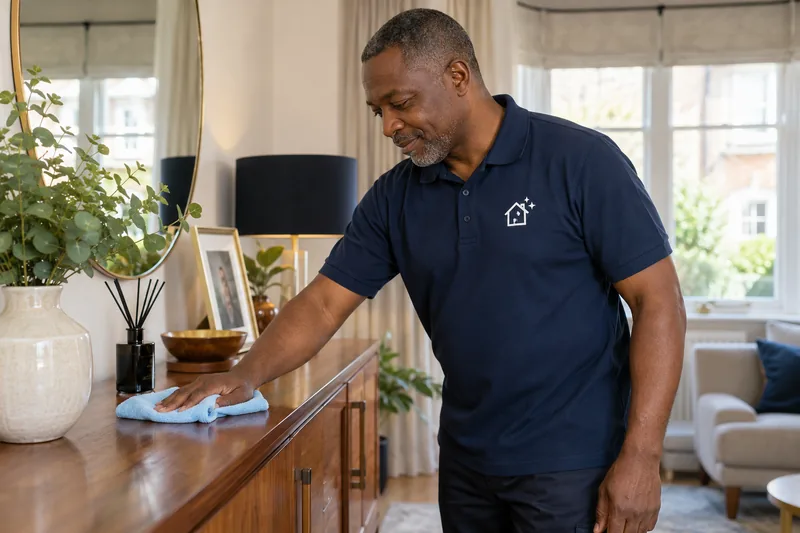
Think about how you want to use the kitchen afterwards. Clear suitable worktops, a cleaned sink and appropriate hob-exterior care may be the most useful combination. Identify fronts, reachable fittings and available floor areas wanted as well. This gives the agency something concrete to assess. A general instruction to do the kitchen leaves important questions unanswered about appliance interiors, dishes, storage and how much preparation is needed.
A small washing-up task can have a defined quantity and finish. Explain the ordinary plates and utensils selected, suitable washing arrangements and where clean pieces should go. Put sharp items where they are safely visible and mention special-care pieces. Washing a finite group may work well beside surface cleaning, while a large mixed pile can consume labour intended for the rest of the kitchen. Choose that balance before the visit.
Put food, paperwork and belongings away from the selected surfaces where practical. The cleaner can then work on the agreed material without deciding which household items should be discarded or stored elsewhere. If one worktop remains in use, say which part is available. You may still obtain a worthwhile kitchen result from a limited prepared area, with the unavailable storage or surface left outside the accepted work.
For a cupboard interior, explain that it is wanted and whether it will be emptied. Returning contents, sorting dates and reorganising shelves should be separate choices. Oven or other appliance interiors also need their actual condition and suitable service assessed. A cool accessible exterior is different from dismantling parts, dealing with a fault or removing substantial burnt-on residue. The quotation should reflect the task that will really be attempted.
Decide where ordinary rubbish from agreed cleaning belongs, with suitable liners or household arrangements clear. Heavy clearance, unknown waste and hazardous material require separate assessment. Keep the route between the sink, selected surfaces and floor usable. Completing these connected tasks can leave a kitchen easier to maintain without promising that a worn finish, damaged fitting or permanently marked surface will be restored by normal cleaning.

Describe the bathroom fittings individually: a bath, shower, basin, toilet and any additional unit you want included. Say how many bathrooms are selected and identify the current residue or concern. A small floor area does not necessarily mean a quick task if there are several fittings or substantial deposits. This information helps the agency allow labour for appropriate cleaning rather than assigning a duration from the room's label alone.
Give the material information you know, including a manufacturer's instruction or a sensitive finish. Existing damage, loose sealant and a leak should be disclosed before cleaning is agreed. Appropriate care can address suitable ordinary residue, while repair or significant mould needs another assessment. The cleaner should not need to experiment with an uncertain product to meet an expectation that was never matched to the fitting or its condition.
Make personal toiletries and medicines private, with the chosen surfaces accessible where practical. Explain which shelf or cupboard is outside the task. Towels and bathmats can be handled only to an agreed destination as part of a suitable request. Replacing a liner or tidying a prepared surface is different from deciding what belongs in a medicine cabinet. A defined bathroom finish respects the household's possessions while keeping useful cleaning work central.
Choose the order of bathroom and bedroom work around practical readiness. For example, a bed can be made once the right clean set is laid out, while a shower needs to be available and suitable for its agreed cleaning. Do not rely on the cleaner finding missing pieces in private cupboards. Preparing those few items can make the accepted combination easier to complete without expanding it into a broader household search.
If a bed change matters, state the bed size, which bed is selected and whether the clean correctly sized linen will be ready. Say where used linen should go. Changing the bed is a distinct result from washing, drying, folding or ironing it. A cleaner can make an agreed bed ready without the household expecting an entire laundry cycle to appear within the same short task allowance.
For bedroom dusting, choose available bedside units, shelves or other reachable surfaces, with floor access described. Putting small personal items away beforehand can protect privacy and leave more of the booked labour for cleaning. Heavy furniture movement and unsafe high reach are not assumed. An unused room can stay closed, allowing the visit to concentrate on the bedroom and bathroom that will actually benefit the household that day.
The proposed price should follow the service, cleaner-hours, time and any accepted additions. Standard daytime weekly cleaning is £24 per cleaner-hour, fortnightly cleaning £26 and a one-off domestic visit £28, with a three-hour minimum for these services. For example, four weekly cleaner-hours have a £96 base and four fortnightly cleaner-hours a £104 base. The household can compare those proposals against the actual selected work.
A three-hour one-off visit has an £84 base, but that is not a promise that every first-clean list will fit three hours. If the condition calls for a deep clean, the daytime base is £35 per cleaner-hour with a four-hour minimum, or £140 for one cleaner working four hours. Explain the surfaces and condition first so the agency can assess the appropriate service rather than changing its label merely to match a budget.
Cleaner-hours measure the labour supplied by each person. Two cleaners each working three hours provide six cleaner-hours, giving a £144 weekly base or £156 fortnightly base. They do not provide a three-cleaner-hour job just because the clock shows a three-hour visit. The proposed team and practical sequence must be suitable and available; requesting more people does not itself confirm a shorter elapsed appointment.
Starts and finishes can also affect the total. For the part of an agreed visit between 6am and 8am or 8pm and 10pm, the timing premium is £5 per cleaner-hour. Other parts keep their applicable rate. Next-day priority and applicable bank-holiday pricing need to be included where relevant. Ask for the complete amount for your chosen date and time before accepting, with availability confirmed separately from any estimate.
The account funding minimum is £35, which is different from the amount needed for a visit. An accepted £104 base, for example, needs its complete applicable total available before the booking can be confirmed and funds reserved. If you later request another task or overtime, approve the work, labour and full charge beforehand, subject to cleaner availability. Without that agreement, the original accepted scope remains the basis of the visit.
A cleaner must complete identity verification and agency approval before a confirmed assignment. The agency also needs to consider suitability for the actual requested work. Describe any requirement that could affect the match at the enquiry stage, rather than relying on a generic room list. This is especially useful where a customer wants garment care, a particular surface method or a working sequence shaped by an occupied room.
Set out the authorised way into the home, including any internal route relevant to the agreed task. If you will be present, explain which rooms are ready and how to reach you about a real change. If you will be out, arrange an appropriate authorised handover through the agency. Personal entry details should stay in the booking arrangements, while the complete private address identifies the property to be assessed.
For recurring cleaning, provide a working vacuum, mop and bucket, with the company arranging approved products, cloths and protective equipment unless a different provision is quoted. Describe unusual floor materials or product restrictions first. A broken vacuum, missing suitable head or leaking bucket can change the work that is achievable. It is more useful to resolve the equipment arrangement before the cleaner arrives than to retain the same floor list without the means to carry it out.
Make the selected working route reasonably clear and explain a practical restriction such as a narrow passage or occupied room. Heavy movement and removal of a large accumulation should not become unexpected preparation duties. You can select ready areas and leave the rest private. If a household member is joining a call or resting, identify a realistic sequence so the accepted cleaning can proceed with suitable work available.
Photos can help clarify a surface or a completion concern, but keep them focused on the work. Exclude people, private documents, screens and security information. A close view of the fitting can be more useful than an entire private room. Explain the relevant material or condition in words too, so a photograph is not treated as permission to handle everything visible or as a guarantee of a particular treatment result.

Before completion, the selected work should have a recognisable finish: the named bathroom fittings addressed, the prepared surfaces cleaned suitably and any agreed bed or finite extra completed within its scope. A clear handover can distinguish completed work from an unavailable room or an issue that needs assessment. The household should understand the result without receiving an unnecessary inventory of personal belongings or an implication that private rooms were included.
If a concern needs agency help, describe the particular task, location and outcome. Say whether the issue is missed agreed work, a material concern, an access problem or a request for a different future scope. A focused account helps the agency consider an appropriate next step. It also keeps a wish for more work separate from a concern about the work that had already been accepted.
When reviewing a regular visit, note which tasks genuinely helped rather than adding a new room by default. If a shelf stayed clear but the kitchen needed more attention, the next request can reflect that observation. Explain a changed household quantity as well, such as more garments or another selected bed. A useful routine responds to the work and your priorities, with any price or labour change agreed before confirmation.
An ongoing arrangement can keep a dependable core while varying a limited extra. You might retain the main bathroom and kitchen, then request a prepared bed change on one visit and a finite ironing group on another. These choices still need a suitable labour allowance. The pattern should be built from actual completed visits, rather than increasing the household list each time while assuming its price and duration will stay fixed.
If the cleaner encounters an unexpected condition or the household asks for a change, pause the affected decision and involve the agency. Extra paid labour needs customer approval and suitable cleaner availability before it proceeds. A task that needs specialist assessment can be held back while other accepted suitable work continues where practical. This preserves useful progress without turning an unclear instruction into an open-ended bill.
To enquire about cleaning in Endlebury, send the full address, service preference, proposed date and time, selected rooms and the most important outcome. Add useful quantities for ironing, laundry or beds and explain any unavailable area. Local House Cleaners can then assess a complete domestic proposal for you to consider, with the planned cleaner-hours, applicable price and practical preparations clear before confirmation.
Need to compare the details? See more cleaning questions →
Explain which room is occupied and when the selected work could be available. The agency can assess a practical sequence with other ready tasks. You can also keep that room private and select different areas. Availability, scope and the proposed visit still need confirmation.
Ordinary suitable surfaces and available floor care can be requested. Electronic equipment needs an expressly agreed suitable task, while private documents should be put away. Sorting files, handling confidential papers and unplugging unknown equipment are not assumed parts of dusting a desk room.
£35 is the minimum account top-up. The complete accepted booking amount must be available and is reserved on confirmation. The applicable service, cleaner-hours, date, time and agreed extras determine that amount; a minimum top-up does not reduce the visit to £35.
Request a finite garment group, the required finish and suitable agreed equipment. The agency can consider whether it is a practical change within the accepted labour. Any additional paid work or overtime needs your approval of its scope and full price beforehand, with cleaner availability also confirmed.
Take a look around the area, then use your full postcode to plan a clean for your own home.
Area reference only. This map does not mark a company office or confirm service boundaries.
This embedded map is provided by Google, which receives connection information and may use cookies. Google privacy information.
Postcode districts help you browse. They overlap neighbourhood boundaries; your full address and available cleaner time still need checking.
Start with your postcode. We’ll plan the clean around your home.