Weekly cleaning
£24per cleaner-hour
3 hours minimum · £72 daytime basePlan weekly cleaning
Take a useful share of the housework out of your own week. Request Highwood Hill cleaning for the rooms, surfaces and domestic tasks you want attended to, with the actual condition and practical access explained from the start. Local House Cleaners London assesses the work before proposing suitable hours and a complete cost. Choose regular upkeep or an individual visit with a defined purpose. You review the accepted plan before confirmation, and the cleaner can arrive knowing what matters rather than trying to interpret an open-ended household list.

Moving area names stop while hovered or focused. Press Enter or Space, or tap the moving area, to keep them still after leaving. Activate again to allow movement. Browse the directory for the complete list.
A regular helping hand, a proper reset or a clean before your next move. Choose the work your home needs.
Keep the kitchen, bathrooms and everyday rooms feeling cared for.
Explore regular cleaning02 ↗More time for reachable detail and the build-up that needs extra attention.
Explore deep cleaning03 ↗An agreed empty-property checklist, ready for your next chapter.
Explore tenancy cleaningA clear plan for your Highwood Hill home, from the jobs you need to an agreed visit.
Add your contact details and save your home address.
Pick your service, tasks and property details. Choose a date and start time, then check the full cost.
Top up from £35, with enough to cover the whole visit. The booking amount is reserved from your balance when you confirm.
Agree the plan and an available time. Your visit details stay in your account.
These are starting points. The final scope, timing and suitable cleaner availability need confirmation.
£24per cleaner-hour
3 hours minimum · £72 daytime basePlan weekly cleaning£26per cleaner-hour
3 hours minimum · £78 daytime basePlan fortnightly cleaning£28per cleaner-hour
3 hours minimum · £84 daytime basePlan one-off cleaning£35per cleaner-hour
4 hours minimum · £140 daytime basePlan deep cleaningEarly starts, late finishes and next-day requests can cost more. The full breakdown is shown before agreement. See timing prices and assessed extras →
Studio & 1 bed from £189 · 2 beds from £269 · 3+ beds & houses from £329
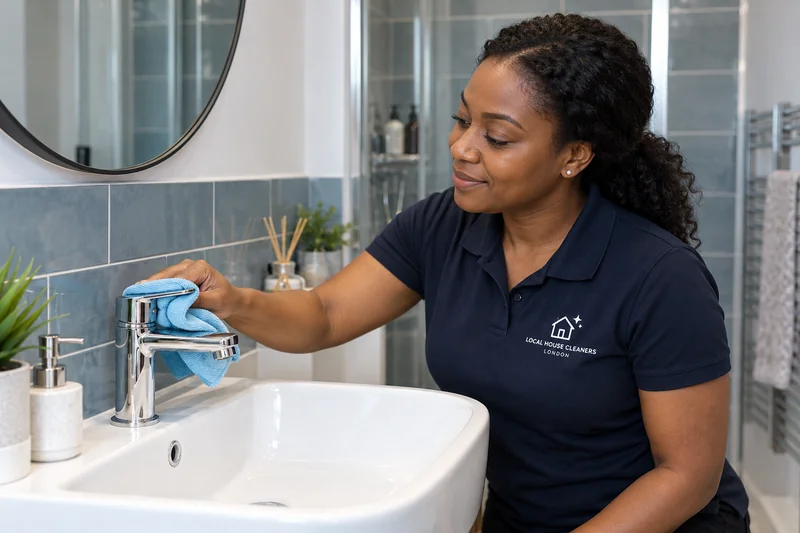 Highwood Hill · NW7
A clean is more useful when the cleaner knows exactly where to start. Pick your rooms, add your priorities and allow enough time for the work.
Ironing and laundry use the same booked time. A long checklist may need more than the minimum visit.
Build my cleaning planHouse, flat or studio—start with what matters most to you.
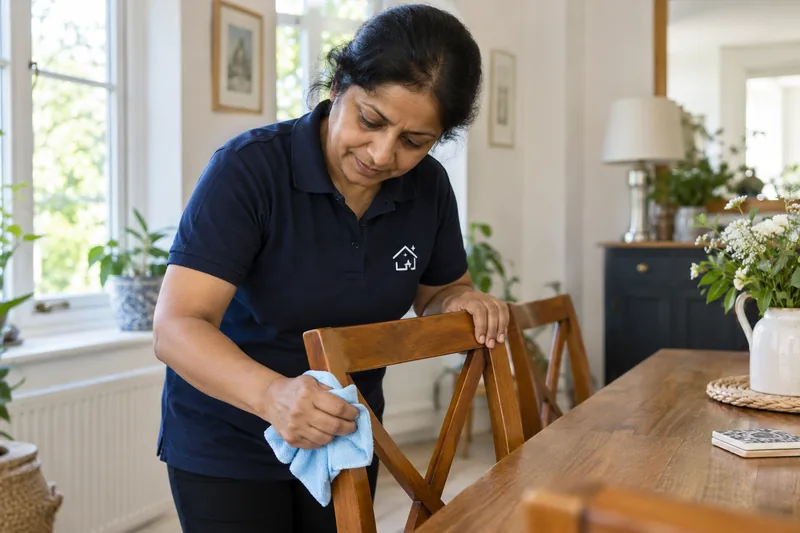
Barnet Council's Mill Hill conservation information identifies a cluster of houses at the top of Highwood Hill as part of the area's village-like character. That setting gives useful local context, but it does not tell a cleaner the layout, floor finishes or condition inside your home. Describe the property you are requesting help with, including the selected rooms, bathrooms and internal levels. A house name or bedroom count alone cannot establish its workload. The assessment needs the actual household details so you can choose useful help rather than an appointment based on a general impression of the location.
Begin with what you would most like to hand over. Kitchen and bathroom care may be the work that keeps consuming your free time, or suitable floors and a defined batch of ironing may be more useful. Place that result at the centre of the request. Additional rooms can be considered with appropriate hours, while private or unused spaces can stay excluded. A focused selection should still meet the service minimum and fit the condition described. You are choosing a practical task for the cleaner to perform, not measuring the value of an appointment by how many available choices can be ticked.
Explain a first-clean backlog or significant deposits before choosing the service. An established shower concern or kitchen grease may require a different approach from maintaining the same room later. You can describe the real condition without doing the main clean before you enquire. State what will be accessible and what needs preparation, including furniture or belongings affecting an area. The agency can assess an initial visit and later upkeep separately where that would help. Each should have a realistic purpose, rather than assuming one minimum duration will fit every starting point and every future combination of domestic tasks.
Rank the accepted work in a usable order. Essential rooms and actions should precede lower-priority detail, with a clear stopping point when the agreed hours are used. If the central result itself needs more time, discuss a suitable allowance or narrower purpose before confirming. Priorities are a way to guide a workable appointment, not a way to promise too much within too little labour. The cleaner should know which work takes precedence and what remains excluded, while you can review the outcome against an understood list instead of an unlimited expectation to leave every possible part of the home finished.
Weekly domestic cleaning starts at £24 per cleaner-hour with a three-hour minimum. Fortnightly service starts at £26 per cleaner-hour and the same minimum. A four-hour standard daytime base would be £96 weekly or £104 fortnightly before applicable additions. Compare those examples with the tasks and condition actually assessed, not with an assumption that a particular house always fits a fixed allowance. The interval affects what will be waiting, so explain which chores the household will manage between appointments. A suitable recurring plan should remove enough useful work from the list rather than repeatedly leave its main purpose under-resourced.
An occasional domestic appointment begins at £28 an hour and requires at least three hours. Deep cleaning starts at £35 an hour with a four-hour minimum, with the intensive detail and preparation assessed. Request specific concerns so the agency can explain the appropriate service and method. Extra maintenance hours do not automatically provide restoration, specialist fabric treatment or every appliance and cupboard interior. The useful proposal should identify the difference in work, not simply offer a label whose meaning is left for the cleaner and customer to negotiate when the appointment begins.
The preferred date and start should be considered with the price. Early or later work, short notice and applicable official holidays can affect the complete amount. 25 December uses twice the base service charge, while another applicable UK bank holiday uses one and a half times the base. Holiday labels do not compound into additional holiday multipliers, and other relevant additions should stay visible in the itemised quote. If another start would genuinely suit your arrangements, provide that option during assessment. Suitable availability still requires acceptance, so flexibility cannot independently guarantee a cleaner, appointment or particular cost.
For a funded booking, the entire accepted amount must be available before its reservation. The £35 minimum top-up is a funding threshold, not the price of a minimum clean or an automatic part-payment that confirms a larger service. Distinguish available balance from money already reserved and from charges or adjustments shown in the history. Check the booking status beside those entries. Funding alone does not approve a task or appoint a cleaner. If you need the proposed spend changed, agree an appropriate variation before confirmation rather than leave the person arriving to infer a budget from the money in the account.
Identity and suitability approval are required before cleaners can accept work. The particular job also needs relevant skills, suitable equipment, coverage and available time. Explain an unusual material or treatment early if it is the main reason for seeking help. Domestic approval should not be taken as an agreement for every specialist repair or restoration. The agency can assess what is appropriate and identify the work accepted before you rely on the visit for that result. The cleaner then receives a practical assignment, rather than an unexpected technical task added to an ordinary room-care appointment after arrival.
Provide relevant manufacturer guidance where a floor, worktop or fitting needs a particular method. A building's age or external appearance does not identify every interior finish, and surfaces that look similar can have different tolerances. State uncertainty if the material is unknown. Point out worn areas, scratches, loose fittings and damaged seals, because suitable cleaning may not correct those conditions. A persistent mark is not automatically a reason to keep increasing product strength or force. The useful scope should distinguish domestic care from an underlying maintenance issue so an achievable cleaning result is understood before the method is used.
Recurring cleaning needs the agreed safe working vacuum, mop and bucket available at the property. Check usability and required parts, and raise a problem in advance rather than wait for the cleaner to find it during the appointment. The company arranges approved products, cloths and protective equipment. Describe a relevant sensitivity or product restriction with the affected area. If ironing is accepted, safe agreed equipment and a practical workspace are also needed. These preparations help the cleaner carry out the work you chose instead of spending its allowance trying to make an unsuitable tool work or selecting among uncertain household mixtures.
Set clear permissions for personal objects and storage. Reachable dusting can be included while a display or private cupboard remains untouched. A floor can be attended to without opening drawers, handling papers or moving heavy furniture. Where practical, expose a selected surface by moving small private items yourself, or request a defined suitable action with the destination understood. The cleaner should not decide what a household wants discarded or how valued belongings should be arranged. Awkward high work and specialist handling need separate consideration, so an ordinary room choice does not quietly expand into unlimited responsibility for everything within reach or beyond it.
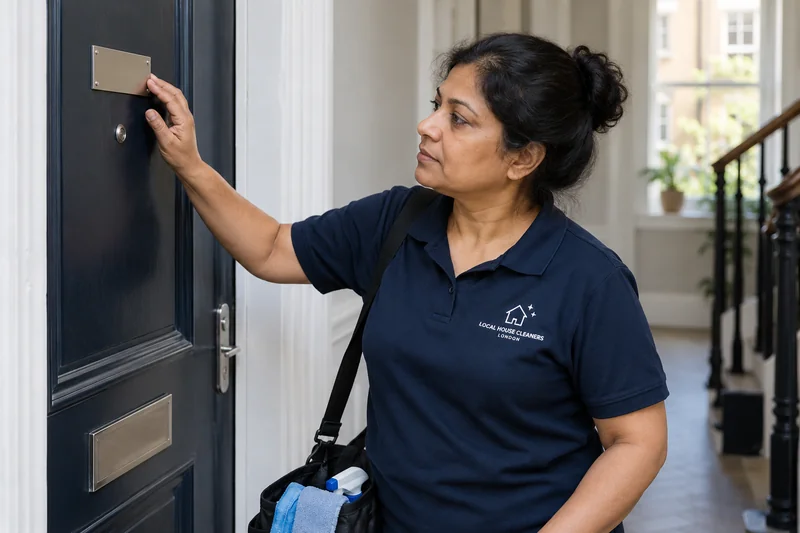
The council's Highwood Hill material sits within its wider Mill Hill conservation description, which also refers to The Ridgeway. Those local names are useful orientation, but the cleaning destination needs a complete residential address and postcode. Include the property number or name, any building or flat identifier and the visitor entrance. A familiar house or road name should not require the person arriving to infer which gate or doorway you have authorised. The agency can assess the actual home and appointment rather than treat the wider locality as proof of an available cleaner or a confirmed travel duration.
If the home is reached from a side approach, beyond a shared entrance or through a particular gate, describe the final route plainly. Confirm who can admit the cleaner at the proposed start and ensure a representative knows the accepted arrangement if somebody else is involved. A short instruction about the correct bell or property name can be more useful than a long description of neighbouring landmarks. Give an authorised contact for a problem. Entry should not depend on an uninformed person appearing on the day or on a visitor using another property's route in the hope that it reaches the right door.
Check visitor permission or parking requirements for the actual property where they affect the job, with whoever is responsible for those arrangements. A general countryside or conservation description cannot establish private access, an unrestricted place to stop or a suitable method of reaching every home. Tell the agency the material constraint before acceptance. Confidential entry information belongs in private communication. If a gate, bell or handover arrangement changes, report it before the appointment is relied on. A workable start is based on a route you can authorise and provide at the agreed time, not assumptions about what a person will be able to resolve after travelling.
The finish should be equally practical when you will be away. Agree how the home is secured and how a key is handled or returned where relevant. A person receiving the property needs authority and an understood role, with a contact available if the planned process cannot be completed. Keep codes, keys and security details out of public comments and photographs. Tell the agency about a material change to the arrangements. An agreed handover allows suitable cleaning while you are elsewhere, without leaving the cleaner to invent responsibility for access or securing the property when the accepted working time has ended.

A regular list can give essential work a stable place while leaving occasional detail for a separately accepted rotation. Decide which jobs must happen each visit and check that lower-priority tasks do not take their allowance. In the kitchen, accessible counters, sink, hob exterior and suitable floor care can be distinct choices. Washing up needs its likely amount and priority explained because it uses labour too. Appliance and cupboard interiors should be requested for assessment, with contents and preparation understood. A broad kitchen selection should not require the cleaner to decide which unmentioned dish or interior displaces the main room result you wanted.
Count bathroom spaces and fixtures explicitly where included. A separate toilet, shower room or ensuite creates work that a bedroom total does not show. Describe established scale or deposits while choosing the service. You can focus on a main bathroom or ask for a wider selection with sufficient time. Include relevant care restrictions and distinguish a seal, loose fitting or other maintenance concern from the cleaning task. The plan should support an achievable result for those surfaces, rather than assume more force or a larger hourly allowance can repair every fault or remove every mark regardless of its cause.
For living areas and bedrooms, identify accessible dusting and appropriate floor care with the actual finishes stated. Mention rugs, internal stairs, existing damage or areas that must stay dry. Routine vacuuming and mopping should not imply specialist extraction, upholstery treatment or a promise to remove every stain. Ask for a particular concern to be assessed separately. Shared halls and stairs outside a private flat also need authority and their own scope. Keeping those boundaries visible lets the allowance serve the accepted home instead of silently adding work in every common area the cleaner passes through on the route to it.
Adjust the routine when the way you use rooms changes. A guest arriving, someone working at home or another space becoming regularly occupied can affect both workload and sequence. Describe the available surfaces and exclude papers or devices where appropriate. If a call or resting period limits access to essential work, say so while planning. The cleaner should not be expected to wait indefinitely and still finish the same list in unchanged hours. A suitable change of order, substitution or revised allowance can be assessed, keeping flexibility connected to an achievable appointment and an understood price rather than open-ended extra work.

For ironing, identify an approximate load and the garments needed first, with relevant labels and specialist exclusions. Separate the intended items from used laundry and have appropriate hangers or a clear destination for finished work. Safe agreed equipment and a suitable workspace need to be ready. A defined batch can provide useful help alongside cleaning, while a large mixed basket may call for another allocation. The cleaner should be able to recognise the task's endpoint instead of deciding at the end of the visit whether every remaining garment or the accepted room priorities are meant to take precedence.
Laundry assistance needs the particular hands-on stage wanted. Sorting, loading a suitable wash, hanging washed items and folding dry clothes begin from different conditions. Explain what will be ready and who deals with a machine programme finishing after the appointment. Bed work needs a count and an action, such as straightening or a full change, with the correct clean sets available and the destination for removed linen clear. These tasks use the same working allowance as room care. A combined request therefore needs realistic time rather than an assumption that domestic extras somehow happen outside the hours already committed to cleaning.
An empty-property tenancy or move-in clean has starting packages of £189 for a studio or one bedroom, £269 for two bedrooms and £329 for three or more bedrooms or a house. The full assessment needs the actual bathrooms, appliances, condition and preparation. One oven, empty cupboard interiors and accessible internal windows already belong to the defined tenancy scope, so those items should be accounted for without duplicate extras. Coordinate readiness and key arrangements around removals. An occupied or partially packed property may need another assessment, and a cleaning checklist cannot guarantee a landlord's inspection decision or return of a deposit.
Use Other to describe a household action that the ordinary choices do not explain, including its amount, material and relevant equipment. Suitability still needs assessment. If new work is wanted during the appointment, agree its task, time and charge before it is accepted. A suitable substitution might fit the existing allowance, while an extension needs approved overtime. The cleaner should not infer your spending limit or absorb a longer list indefinitely. An updated order and endpoint make the variation practical, giving the customer a choice about further help and the person doing it a clear understanding of the work authorised.
Before confirming, look for your original reason to seek help in the accepted proposal. Review the room actions, quantities, material restrictions and important exclusions beside the appointment, total cleaner-hours and full amount. Raise a central task that is missing now instead of expecting it to be understood on arrival. Routine work can be described concisely when the decisions are clear. The record gives the cleaner a usable plan and gives you a concrete basis for reviewing the appointment afterwards, without relying on different interpretations of what an unspecified clean should include for a home in this location.
Contact the agency if a practical problem changes what can be done. An unavailable room, failed required tool or revised entry process can affect the scope or timing even when the booked duration stays the same. Explain the difference so the plan can be reconsidered. A requested future change also depends on suitable availability and applicable terms. Keeping those decisions coherent is helpful when a representative is involved, avoiding separate versions of the appointment in which the customer expects a larger list while the cleaner is still acting on the old hours and no revised charge has been accepted.
For a concern about missed agreed work, identify the task, room and particular surface promptly, within 48 hours where possible. A relevant private photo can help explain it, provided people, documents, screens, keys and security information stay outside the image. This reporting request preserves statutory rights and does not determine a remedy before the facts and terms have been considered. The agency can compare the concern with the accepted instructions. An excluded room or unrequested specialist treatment is different from included work that appears to have been missed, so specific information is more useful than a general impression of the whole property.
Start the Highwood Hill enquiry with your complete home postcode and property details. Choose the service and preferred date and start, mark the rooms and domestic help wanted, then add concise condition, care or access information that affects the assessment. Review the proposed work, hours and full quote before confirmation. The aim is an easier household week, with a suitable cleaner informed about the accepted job and enough labour for its purpose. Keep the agency route available for a question or change, and choose the practical share of routine work that would leave you more time for the home and life around it.
Need to compare the details? See more cleaning questions →
Include the actual property name or number alongside the complete residential address and postcode. Explain the correct visitor entrance if a gate or side approach makes it unclear. A familiar local name is useful context but does not itself establish the authorised doorway or appointment availability.
No. Describe the actual condition, surfaces and result wanted. Age or external character does not identify every interior material or establish the service needed. An intensive first visit and later maintenance can be assessed separately where appropriate, with suitable methods and hours for each.
Yes, identify the objects or areas to exclude and select the accessible cleaning wanted around them. Move small private items where practical or request a defined suitable clearing action. General room cleaning does not authorise rearranging collections, opening storage or handling every possession.
Review a complete assessed scope and amount before confirming, with a useful priority order and clear exclusions. Discuss a suitable narrower list or different arrangement if needed. Additional tasks, hours and charges require approval; available account funds do not independently authorise an extension.
Take a look around the area, then use your full postcode to plan a clean for your own home.
Area reference only. This map does not mark a company office or confirm service boundaries.
This embedded map is provided by Google, which receives connection information and may use cookies. Google privacy information.
Postcode districts help you browse. They overlap neighbourhood boundaries; your full address and available cleaner time still need checking.
Start with your postcode. We’ll plan the clean around your home.