Weekly cleaning
£24per cleaner-hour
3 hours minimum · £72 daytime basePlan weekly cleaning
Hand over useful household jobs with an assessed Barnhill cleaning plan. Describe the rooms, condition and priorities, including suitable linen or clothes help where wanted. Local House Cleaners London considers the service and appointment before proposing the labour and complete amount. A practical brief prepares the cleaner and gives you a way to compare ongoing upkeep with a catch-up, with agency support for questions and changes.
Moving area names stop while hovered or focused. Press Enter or Space, or tap the moving area, to keep them still after leaving. Activate again to allow movement. Browse the directory for the complete list.
A regular helping hand, a proper reset or a clean before your next move. Choose the work your home needs.
Keep the kitchen, bathrooms and everyday rooms feeling cared for.
Explore regular cleaning02 ↗More time for reachable detail and the build-up that needs extra attention.
Explore deep cleaning03 ↗An agreed empty-property checklist, ready for your next chapter.
Explore tenancy cleaningA clear plan for your Barnhill home, from the jobs you need to an agreed visit.
Add your contact details and save your home address.
Pick your service, tasks and property details. Choose a date and start time, then check the full cost.
Top up from £35, with enough to cover the whole visit. The booking amount is reserved from your balance when you confirm.
Agree the plan and an available time. Your visit details stay in your account.
These are starting points. The final scope, timing and suitable cleaner availability need confirmation.
£24per cleaner-hour
3 hours minimum · £72 daytime basePlan weekly cleaning£26per cleaner-hour
3 hours minimum · £78 daytime basePlan fortnightly cleaning£28per cleaner-hour
3 hours minimum · £84 daytime basePlan one-off cleaning£35per cleaner-hour
4 hours minimum · £140 daytime basePlan deep cleaningEarly starts, late finishes and next-day requests can cost more. The full breakdown is shown before agreement. See timing prices and assessed extras →
Studio & 1 bed from £189 · 2 beds from £269 · 3+ beds & houses from £329
 Barnhill · HA9
A clean is more useful when the cleaner knows exactly where to start. Pick your rooms, add your priorities and allow enough time for the work.
Ironing and laundry use the same booked time. A long checklist may need more than the minimum visit.
Build my cleaning planHouse, flat or studio—start with what matters most to you.

Begin with the chore you would most like taken off your own list. A main bathroom kept in routine, cooking surfaces attended to or appropriate floor care through everyday rooms can provide a clear purpose. Add secondary actions in a priority order, including any domestic extras that matter. If the total needs more labour than intended, discuss a narrower useful list alongside a longer appointment. That gives you a meaningful choice before confirmation instead of the cleaner being expected to satisfy several equally urgent results inside hours chosen without regard to the work.
Chalkhill Primary School gives its public address as Barnhill Road, Wembley, HA9 9YP. Brent Council also documents Barn Hill as part of the Fryent Country Park setting. These are local orientation references rather than boundaries for a cleaning service or descriptions of a customer's property. Supply your precise residence for assessment. A familiar name cannot show the private entrance, room layout, condition or access permission, so the proposal should follow the home you describe rather than a general impression drawn from a nearby public place.
Choose House, Flat or Studio, then count the spaces and actions included. A bedroom can need floor care alone while another also has linen and accessible dusting. Separate toilets and ensuites need consideration independently of bedroom totals. Include internal stairs and halls where wanted, with private rooms excluded clearly. Those distinctions let the cleaner recognise the task without opening every door or deciding what a whole-home description must imply. A focused list can still be precise, giving the assessment real work rather than only property labels to consider.
Explain a first-clean backlog before choosing routine hours. Significant kitchen grease, established shower deposits or obstructed surfaces can change what the same rooms require. A catch-up and later maintenance may need different lists and allowances. You do not need to complete the principal cleaning yourself before requesting help; agree what practical preparation makes the accepted work accessible. An initial proposal based on the actual condition is more useful than assuming an ordinary upkeep minimum can absorb intensive first work around every action intended for later recurring appointments.
Keep household instructions consistent before the visit. One person may want a study's papers left alone while another expects that room to be tidied; one may prioritise clothes while another assumes every room comes first. Resolve those choices into an understood brief and identify a contact for genuine questions. That leaves personal decisions with the household instead of requiring the cleaner to reconcile competing directions at arrival. Material changes can then be referred for consideration rather than quietly displace a priority whose labour was already accepted.
Weekly domestic cleaning starts at £24 per cleaner-hour with at least three hours. An ordinary daytime minimum base for one cleaner is £72 before applicable additions. Fortnightly cleaning starts at £26 per hour with the same minimum, giving a £78 equivalent base. Consider those figures with the actual rooms, condition and domestic work. The minimum describes the service's starting allowance; it cannot establish that every home or selection fits inside three hours. The proposal should connect useful tasks to realistic labour rather than imply an unlimited whole-home package.
One-off cleaning starts at £28 per hour and a three-hour minimum for an assessed occasional request. Deep cleaning starts at £35 per hour with at least four hours for its intensive scope. Describe the condition or particular interior result prompting the enquiry. Extra ordinary hours do not automatically provide every specialist method or restoration process. Review inclusions, preparation and the whole amount, allowing the service to be chosen on the work being proposed rather than assuming a broad name explains every action, material and piece of equipment that could be needed.
Cleaner-hours count labour. A suitable accepted two-person appointment of three hours each represents six cleaner-hours, with elapsed attendance of three hours. Staffing, tools and the way tasks divide still need consideration. Not every job can be shortened conveniently by adding another person, and suitable availability must be checked. Give a genuine deadline during assessment. The accepted labour and attendance should be understood together so keys and household commitments can be organised around an agreed appointment rather than a hoped-for team arrangement that has not been confirmed.
The actual date and start affect the complete calculation. Applicable early starts, later work and urgent requests should have additions itemised before agreement. 25 December uses twice the base service charge; another applicable official UK bank holiday uses one and a half times the base. The highest relevant holiday rate applies once, with other applicable additions remaining separate. Check the dated quote and suitable availability before confirming. A normal daytime illustration gives a base rather than establishing the price or confirmation of a differently timed appointment simply because its hours are similar.
For funded reservations, top-ups begin at £35 and enough available balance must cover the entire accepted amount. Check money reserved for other appointments and the history of charges or adjustments separately from what is available. Account funding cannot choose the tasks, confirm a cleaner or give advance approval for overtime. If the proposed combination needs changing to suit the intended budget, settle a realistic version before confirmation. The funds set aside should correspond to the job deliberately chosen, rather than a general balance being treated as permission to extend the work indefinitely.
Cleaners require identity and suitability approval before accepting work. Appropriate task skills, coverage and available time also matter for the specific appointment. Tell the agency when an unusual material or specialist concern is important to the request. General domestic approval cannot show that every method a property might require is suitable. An early description helps the agency consider the right work, gives the cleaner preparation information and allows the customer to decide whether the proposed service addresses the concern that made them seek help in the first place.
Share relevant care guidance for the exact surface. A moisture-sensitive floor, coated screen or natural counter can need a different approach from a similar-looking material. Identify uncertainty if the finish is unknown rather than assume a stronger product is appropriate. A remaining mark does not automatically justify extra force. Cleaning can be useful while a permanent stain or existing flaw remains, so keep the intended outcome realistic. The accepted method should respect the surface present instead of relying on a blanket expectation that every sign of wear will disappear.
Point out faults that affect handling. A loose tap, damaged seal or unstable fitting can change a task even though it appears in an otherwise familiar room. Repair and restoration are separate considerations from suitable domestic cleaning. Heavy moving and awkward high areas require discussion too. The proposed scope may need preparation, limits or a different arrangement. The cleaner should not be left to improvise every difficult condition while expected to preserve a task list and finish that were assessed for another, more accessible or secure starting point.
Recurring appointments need the agreed safe working vacuum, mop and bucket ready at home. Check the usable parts needed for the chosen floors and raise missing or broken essentials before arrival. The company arranges approved products, cloths and protective equipment. Explain relevant sensitivities and restrictions at assessment. Equipment needs to be a usable setup, not simply something the household owns somewhere. Preparing it helps the cleaner use the paid labour for the selected work rather than discover an avoidable tool obstacle after the appointment has already begun.
Keep personal organisation boundaries clear around accessible cleaning. You may identify a ready table section while documents stay untouched, or request floor care without devices and papers being moved from a desk. Put small private items away where practical. Suitable clearing help can be requested with its quantity and destination considered. Opening drawers, choosing what to discard and rearranging collections should not become decisions the cleaner must infer from a room selection. Those permissions let them follow an identifiable task while the household retains control of belongings outside it.

The Barnhill Road school address is a public reference with its own postcode. Give the full residential postcode, number or name and any building or flat identifier for the home you want assessed. A public site is not a default meeting point or evidence of permission to enter another property. If you mention it for orientation, keep the actual destination separate. The cleaner needs the agreed residence and authorised route, rather than arrive at a landmark and determine which unspecified home nearby must be expecting the appointment.
Explain the final approach when the correct entrance differs from the apparent frontage. A separate flat door, side access or building bell can be described briefly. State who admits the cleaner at the accepted start. An authorised representative should know the appointment and their role if you will be elsewhere. Leave a practical contact for a problem. Entry should not depend on an uninformed neighbour recognising the visitor or another household member finding a key they were never told would be needed for that particular time.
Check any visitor process or managed entrance that actually applies with whoever controls it. Pass the material constraint to the agency before acceptance and keep codes or security instructions in private booking communication. An area page cannot grant parking entitlement, residential access or a fixed travel duration. Report a changed bell, gate or lock so the plan stays workable. A useful start needs an entry route you can genuinely provide at that appointment, instead of an old note or an unconfirmed building permission left for the person arriving to resolve.
For an unattended home, agree how the visit ends. Decide who secures the property, returns any key and helps if the intended process fails. An authorised key holder should understand what is expected and the accepted finish. Avoid putting security details in public reviews or photographs. A sound end arrangement supports useful help while you are away without asking the cleaner to improvise custody of keys or responsibility for a door after finishing the selected work and reaching the end of the appointment's working window.
For kitchen work, identify accessible preparation surfaces, sink and hob exterior, with suitable floors where wanted. Explain whether dishes will be cleared or washing up is requested, giving its likely amount. It uses some of the same labour as surface care. Oven, fridge and cupboard interiors need a specific request with condition and contents preparation assessed. A general kitchen option cannot settle every interior action or where food and private belongings should be moved, so make those decisions before the cleaner is expected to begin the work.
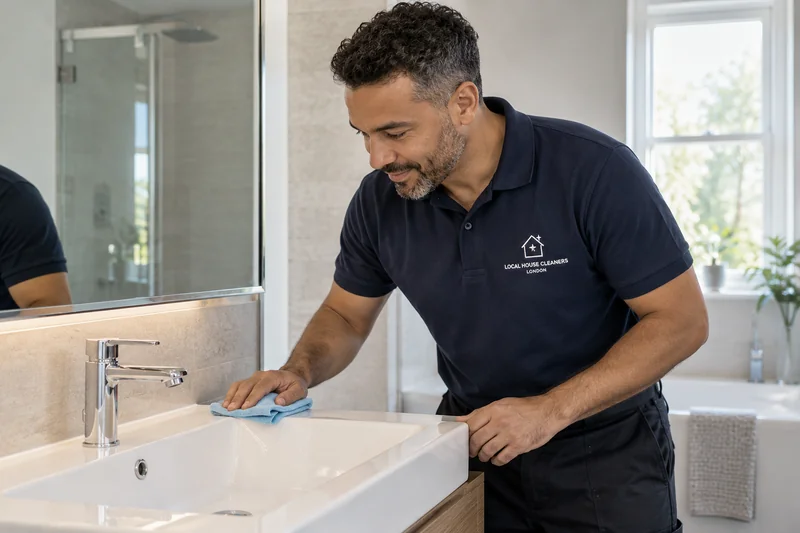
For bathrooms, list the spaces and fittings wanted, including additional showers, ensuites and separate toilets. Describe established scale or significant deposits before the allowance is agreed. A principal bathroom may need a different assessed frequency from a rarely used room; a broader combination can need more time. Keep care restrictions and existing faults visible too. Appropriate cleaning concerns the actual surfaces and suitable method rather than an assumption that every seal, permanent mark or maintenance issue is restored because the room has been selected for attention.
In bedrooms and living areas, choose accessible dusting and floor care appropriate for the finishes present. Name rugs, internal stairs and places to keep dry, alongside belongings that remain untouched. Specialist extraction and fabric restoration need separate consideration of the concern, tools and price. Shared building corridors outside a private flat also require relevant authority and a defined scope if requested. These boundaries keep the labour connected to the customer's home instead of informally adding every space encountered along the visitor route to a list whose hours are already committed.
Update the routine deliberately when room use changes. A guest arriving may add linen and more floor work, while a space no longer occupied can need attention less often. Explain the actual difference so a suitable substitution, rotation or revised allowance can be assessed with its price effect. Regular help should remain relevant now. Recording that adjustment gives the cleaner current priorities instead of an expanding series of informal requests around the same old hours, with no clear decision about which earlier action should lose its share of the appointment.

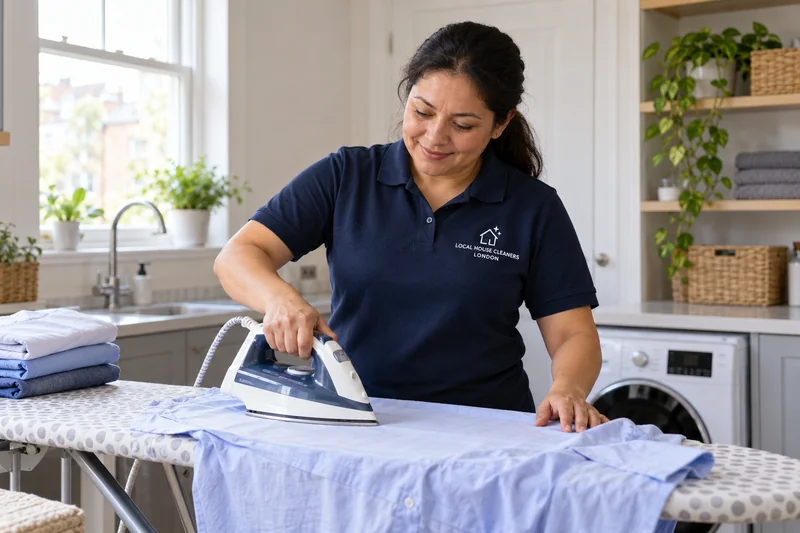
For ironing, identify an approximate ready group and the pieces you need first. Give care labels and specialist exclusions. Safe agreed equipment and a usable workspace should be ready, with suitable hangers or a clear destination for completed clothes. A finite selected load can be considered beside room work. An expanding basket has a different endpoint and cannot be presumed to fit into spare moments around a full cleaning list. Compare more time with a smaller useful garment group so the proposed combination has a realistic chance to serve its purpose.
Laundry assistance needs a named hands-on stage. Folding dry clothes, hanging an available wash and starting a suitable programme involve different preparation. Say what will be ready on arrival and who deals with a cycle finishing later. Washing or drying can continue beyond the cleaner's attendance. A defined contribution still removes useful effort from the household list while the next responsibility remains understood, instead of a general laundry selection being interpreted as a promise that every machine cycle and later handling task finishes within a fixed working window.
For beds, state whether straightening or a full linen change is wanted and give the number. Put the correct clean sets ready as agreed and identify where removed bedding belongs. Explain a handling difficulty before acceptance. These actions use labour even where the bedrooms already have floor care selected. Several bed changes and other domestic extras can therefore require a longer allowance. They should be considered in the combined list, rather than treated as work outside paid hours merely because the room appears elsewhere on the request.
Use Other for an action absent from the ordinary choices, with its quantity, material, equipment and intended endpoint. Folding a ready guest-towel group into a named place differs from organising a whole cupboard whose contents require personal decisions. Suitability must be considered. If the request changes during the appointment, agree whether a suitable substitution works or extra time is needed. Additional work, charges and overtime require approval before proceeding, keeping the customer in control of spending and giving the cleaner an understood finish instead of an open-ended extension.
For an empty-property handover, request the tenancy assessment with actual rooms, condition and readiness explained. A studio or one-bedroom package starts at £189 before the full checklist and additions are settled. Its defined work already includes one oven, empty cupboard interiors and accessible internal windows, avoiding duplicate extras for those inclusions. Coordinate preparation and keys with removals or other workers. The service concerns accepted cleaning; inspection and deposit outcomes remain another party's decisions and cannot be guaranteed by the appointment or starting-price category.
Before confirming, check the proposal against the household need prompting the enquiry. Are the included spaces, actions, quantities and main priority clear, with exclusions and care guidance understood? Read preparation beside the accepted date, start, total labour and complete charge. A concise record can be precise without describing every ordinary movement. Raise a central omission while a suitable revision can be considered. The customer and cleaner should share a practical reference rather than different interpretations of an undefined instruction to do everything inside the whole home.
After a first appointment, give one concrete adjustment for the next visit. You might value more bathroom attention than an occasional room, or want a different balance between clothes and floors. Explain which result should remain and what should change so suitability, time and price can be considered together. A recorded revision makes the service more useful. It avoids informal additions accumulating around an unchanged duration while leaving the cleaner to infer which earlier priorities should now lose the time they originally received in the accepted plan.
Useful feedback separates the agreed result from another task you have since noticed. For example, identify whether attention was requested for the shower fittings, the separate toilet or both, and explain the particular concern with the booking details. Contact the agency as soon as practical, ideally within 48 hours, to help establish what happened. That request does not reduce statutory rights. If a photograph clarifies the issue, keep its frame limited to the affected area and exclude private or identifying household information. A remedy depends on review of the facts and applicable terms.
Request Barnhill cleaning with the full home postcode, the first job you want delegated and a preferred date and start. Add the other spaces and domestic actions with their quantities and condition. Review a suitable complete proposal before confirmation, asking about an achievable core if the wider combination needs reconsidering. The process should leave a clearer household plan, an appointment the cleaner can prepare around and a route for follow-up, giving fewer agreed chores a claim on the rest of your own time.
Need to compare the details? See more cleaning questions →
Use the full residential address and postcode, with property name or number, flat or building detail and the authorised entrance. Public school and park references provide orientation only. They do not establish the private doorway, route or permission for the residence being assessed.
State included spaces and actions clearly, with private rooms and belongings excluded. A focused list can be assessed where the service minimum and real workload are met. The cleaner should follow understood permissions rather than infer access to drawers, papers or storage from a general room count.
Specify straightening or a full linen change and the number of beds, leaving correct clean sets and a used-linen destination ready as agreed. A defined bed-only request can be considered for suitability. Its labour still counts alongside the other accepted work and must fit the proposed allowance.
Ask for the effect on suitability, time, price and availability to be considered before extra work is accepted. A suitable substitution may be possible, while a wider task list can require more hours. Additional charges and overtime need approval rather than being assumed from a casual request.
Take a look around the area, then use your full postcode to plan a clean for your own home.
Area reference only. This map does not mark a company office or confirm service boundaries.
This embedded map is provided by Google, which receives connection information and may use cookies. Google privacy information.
Postcode districts help you browse. They overlap neighbourhood boundaries; your full address and available cleaner time still need checking.
Start with your postcode. We’ll plan the clean around your home.