Weekly cleaning
£24per cleaner-hour
3 hours minimum · £72 daytime basePlan weekly cleaning
A focused cleaning visit can help the household get back to a useful routine after time away or a period when ordinary chores have waited. For a Ponders End request, begin with the home as it is now and the result that would make the biggest difference. Local House Cleaners London can assess the ready rooms, current condition and domestic quantities together. You can choose enough labour for that particular contribution, with practical preparation and the complete amount understood. The cleaner receives a clear first job, and any later routine can be considered from the household's actual needs rather than an assumption that one catch-up appointment must cover every outstanding task at the shortest allowance.
Moving area names stop while hovered or focused. Press Enter or Space, or tap the moving area, to keep them still after leaving. Activate again to allow movement. Browse the directory for the complete list.
A regular helping hand, a proper reset or a clean before your next move. Choose the work your home needs.
Keep the kitchen, bathrooms and everyday rooms feeling cared for.
Explore regular cleaning02 ↗More time for reachable detail and the build-up that needs extra attention.
Explore deep cleaning03 ↗An agreed empty-property checklist, ready for your next chapter.
Explore tenancy cleaningA clear plan for your Ponders End home, from the jobs you need to an agreed visit.
Add your contact details and save your home address.
Pick your service, tasks and property details. Choose a date and start time, then check the full cost.
Top up from £35, with enough to cover the whole visit. The booking amount is reserved from your balance when you confirm.
Agree the plan and an available time. Your visit details stay in your account.
These are starting points. The final scope, timing and suitable cleaner availability need confirmation.
£24per cleaner-hour
3 hours minimum · £72 daytime basePlan weekly cleaning£26per cleaner-hour
3 hours minimum · £78 daytime basePlan fortnightly cleaning£28per cleaner-hour
3 hours minimum · £84 daytime basePlan one-off cleaning£35per cleaner-hour
4 hours minimum · £140 daytime basePlan deep cleaningEarly starts, late finishes and next-day requests can cost more. The full breakdown is shown before agreement. See timing prices and assessed extras →
Studio & 1 bed from £189 · 2 beds from £269 · 3+ beds & houses from £329
 Ponders End · EN3
A clean is more useful when the cleaner knows exactly where to start. Pick your rooms, add your priorities and allow enough time for the work.
Ironing and laundry use the same booked time. A long checklist may need more than the minimum visit.
Build my cleaning planHouse, flat or studio—start with what matters most to you.
Identify the part of the household list you most want handed over. You might want a defined washroom and accessible kitchen contribution, suitable floor care in selected rooms or another ready domestic task. A different household may have a smaller or broader priority. These are examples of describing a request, not claims about Ponders End residents or the condition of homes after an absence. State the actual result wanted. The assessment can then consider a worthwhile contribution for this appointment, with the cleaner following a clear purpose instead of an open-ended instruction to catch up everything accumulated while ordinary life was elsewhere.
Give the residence's full private address and postcode, choosing House, Flat or Studio and adding building or flat identifiers where relevant. National Rail lists Ponders End station on South Street, Ponders End EN3 4QB, providing a public local reference. Your home has its own entrance, layout and authority. Count the selected internal levels, bathrooms and separate toilets, with private halls or stairs included where wanted. A familiar station or locality helps place the enquiry, while the actual cleaning work comes from this particular household's rooms, condition and quantities rather than an assumption that every residence nearby has the same needs.
Describe what is ready now and what the household still needs to decide. A room may be accessible for care while unpacked belongings occupy another area. Food, personal papers and storage decisions should stay with the people responsible for them. If a specific clearing contribution is wanted too, give its objects, amount and destination for suitability assessment. You can select useful work in ready areas and consider another request once the remaining preparation is complete. The cleaner's first task list should be realistic for attendance, rather than depend on every household decision or unpacking stage finishing before a time nobody has confirmed.
Explain the starting condition without assuming its cause from the time away. Everyday soil, established deposits and significant grease need their actual state considered. Say what you have observed and where you are uncertain. If damage or another specialist concern is present, raise it separately. A useful proposal can distinguish appropriate cleaning from maintenance questions. The customer can choose focused help or more assessed labour with realistic expectations. The first visit should address what the cleaner will actually encounter, not an ideal maintenance state or a presumption that every concern is ordinary dirt because the household's main intention is simply to get back on top of its chores.

One-off cleaning starts at £28 per cleaner-hour with a three-hour minimum. An ordinary four-hour allowance has a £112 base before applicable additions, giving one more cleaner-hour than the shortest three-hour visit. The extra labour is useful to compare, but it does not guarantee a fixed number of rooms or domestic actions. Have the actual combination and condition assessed. The household can ask for a focused contribution that fits its priorities or a broader allowance where wanted. A recognisable job with enough working time is more useful than an unchanged whole list expected inside the minimum regardless of what has been described.
Keep the first result separate from a possible future routine. The present request may need attention to work that will not require the same contribution every time, while other tasks may remain useful regularly. Explain both aims if relevant. The initial proposal should still account for what is waiting now. A recurring allowance should not silently carry an expectation of absorbing every intensive catch-up action before its ordinary work begins. You can decide what help is worth purchasing for this stage and consider maintenance on its own practical terms later, with actual condition, readiness and household contribution between visits understood.
Give the real date, preferred start and genuine household or entry deadline. The full proposed amount identifies relevant timing and holiday additions. Suitable staffing and practical access need to support the work selected; a return date or other important event alone does not confirm a preferred appointment. An ordinary daytime base helps explain labour, while accepted attendance establishes the real arrangement to plan around. Choose that proposal with the preparation able to work. The household can then coordinate unpacking, access and other responsibilities around actual agreed help instead of mistake a requested slot or an hourly example for confirmation that every part is available.
Customer top-ups start at £35, with sufficient available balance required for the complete accepted reservation. Other reservations and transaction history remain distinct. Money held in the account cannot itself confirm a cleaner or authorise a wider contribution. If more work is wanted, review its suitability, labour and full amount through the agency. Extra charges and overtime require prior agreement before proceeding. The customer can choose additional assessed help, a suitable substitution or leave another task for later. This keeps the scope and spending decision aligned with the useful first result rather than treat a catch-up intention as an unlimited commitment of available funds.
Share material and handling guidance for the actual selected areas. Reliable manufacturer information can help where available, with uncertainty stated where a finish or method is unknown. A photograph or general description of appearance may not establish what a surface is. The assessment needs an honest basis for suitable care. A persistent mark can require consideration of its cause and material rather than stronger treatment assumed appropriate. The customer can ask for useful household cleaning while recognising when restoration, repair or another specialist concern needs separate judgment. This keeps the proposed contribution realistic for the home in its current condition.
Identify known damage and wear separately from dirt. A loose fitting, worn coating or damaged seal can affect handling even where ordinary soil also needs attention. Explain observations without supplying a diagnosis the household cannot support. Appropriate cleaning may address suitable dirt while a physical defect remains a maintenance matter. Give the information to the relevant part of the brief so the cleaner can recognise the surface concerned. A general instruction to get the home back to normal should not become an expectation that every underlying problem can be resolved within a domestic allowance, whatever the condition or appropriate method actually permits.
Check the practical equipment arrangement for the service accepted. The company arranges approved products, cloths and protective equipment, with relevant sensitivities and restrictions shared. For recurring domestic work, the household provides the agreed safe working vacuum, mop and bucket. Confirm expectations for the particular catch-up scope rather than assume any tool for any task appears automatically. Raise faults and missing essentials while the setup can be considered. Put agreed usable kit where it can be found. The cleaner should use paid labour on accepted actions, rather than spend it searching boxes or private storage for an essential item whose location and working condition nobody has checked.
Cleaner identity and suitability approval is required before accepting work, with relevant skills, coverage and time considered for the assignment. The actual task description supports that matching. Identify unusual handling and any specialist or access concern during assessment. Secure valuables, medication and confidential documents, making the agreed working areas ready while private storage or displays remain untouched. If movement of an identified group is wanted, give its amount and destination. Personal sorting and disposal decisions stay with the household. These preparations let an appropriate cleaner pursue a recognisable contribution rather than infer permissions and methods for every object encountered while the home is being put back into use.
Give the private residence and authorised entrance, with the home identifiers and concise approach details a visitor needs. A building or flat number and relevant intercom information may be useful even where the street address is familiar. South Street station is a public reference, not the cleaning destination or an unarranged key point. The cleaner needs the household expecting the accepted work and a usable way inside. Accurate private directions connect the allowance to reachable tasks, instead of rely on a local landmark to identify an unspecified residence or ask nearby premises where a customer might have arranged help.
Choose who admits the cleaner at the accepted start. If an authorised representative will help while the customer is elsewhere, they need the date, usable access and an understanding of their role. Give a practical contact for difficulties, and handle security details privately through the agreed process. A person who normally checks the home may still need to confirm availability for this appointment. The useful arrangement is an action somebody is ready to perform, not a general assumption that someone nearby will probably be able to answer. The cleaner should begin the accepted contribution rather than use its working allowance locating an uninformed key holder.
Explain any genuine admission or room window during assessment. Returning belongings, another household activity or a managed-building visitor procedure can affect access to selected tasks. Check relevant requirements with the responsible person and share what the household can actually arrange. Update changes to contacts, entry equipment or approach promptly. Journey estimates cannot guarantee arrival or create private parking rights. The proposal should use accepted attendance and a practical setup, rather than depend on a chain of other activities finishing in an uncertain order while every original result is still expected in the same unchanged allowance.
Settle the end where the residence will be unattended. Identify who secures the property and the authorised key return process or next custodian, with a contact if the plan fails. A representative needed at departure should expect that role too. Keep sensitive instructions protected. The cleaning contribution should finish with a practical handover, leaving household security decisions with the responsible people. A clear closure arrangement helps the customer organise a catch-up visit while dealing with other commitments, without asking the cleaner to improvise where keys should be left or wait for someone whose presence was never actually arranged.

Choose the actions the household most wants first and make those areas reachable. A defined kitchen contribution may involve accessible preparation surfaces and a ready sink, with hob-exterior or suitable floor care where selected. An identified washing-up amount, appliance interior or cupboard interior needs its condition and contents preparation considered. Decide who handles food and personal storage. The cleaner should pursue accepted care rather than work out how every item is meant to be moved to expose the task. A practical first sequence starts with real prepared work instead of a room option whose access is still blocked by decisions nobody has made.
Describe washroom work by the actual fixtures and concerns. A main bathroom, separate toilet and ensuite add distinct labour, with relevant deposits and material guidance explained. Known damage should remain separate from suitable soil removal. The customer can choose the useful result wanted on this visit and have the broader combination assessed where appropriate. The allowance should account for those quantities instead of infer them from the bedroom count. A cleaner should recognise the accepted task list, rather than discover several further washrooms with different conditions after the household has already selected time on the assumption of one ordinary bathroom contribution.
For living and sleeping spaces, identify accessible surface and suitable floor actions, with private contents boundaries understood. A room still being unpacked can remain outside the first scope while another ready area receives useful care. Include your own hall, stairs and landings where wanted because connecting areas need labour too. Explain rugs, material changes and wet-treatment restrictions where known. The household can choose a focused result without every room being included. What matters is a list whose preparation is realistic and whose accepted actions make sense for the actual home, rather than an ideal whole-house request that cannot be reached during attendance.
Keep a practical alternative if readiness changes. If an expected room is still stored or another activity occupies the kitchen, identify the effect through the agency. The customer can consider an appropriate substitution, another allowance or a different request where useful. A changed task needs its suitability and labour understood, even if it sounds similar to an action already selected. Flexibility comes from deliberate choices about reachable work and the full amount. The cleaner should follow one accepted version rather than keep waiting for areas to become free while all original outcomes and several fresh suggestions remain expected unchanged.

If fresh linen would make the catch-up useful, count the beds and distinguish straightening from full replacement. Have matching clean sets ready as agreed and explain where removed bedding goes, with unusual handling raised during assessment. The work uses labour beside the rooms, even where a bedroom is already selected for floors and surfaces. Choose the quantity wanted for this visit rather than expect every bed encountered to become an implied addition. A clear action and ready set give the cleaner a practical contribution while leaving personal storage choices with the household that knows the home and its contents.
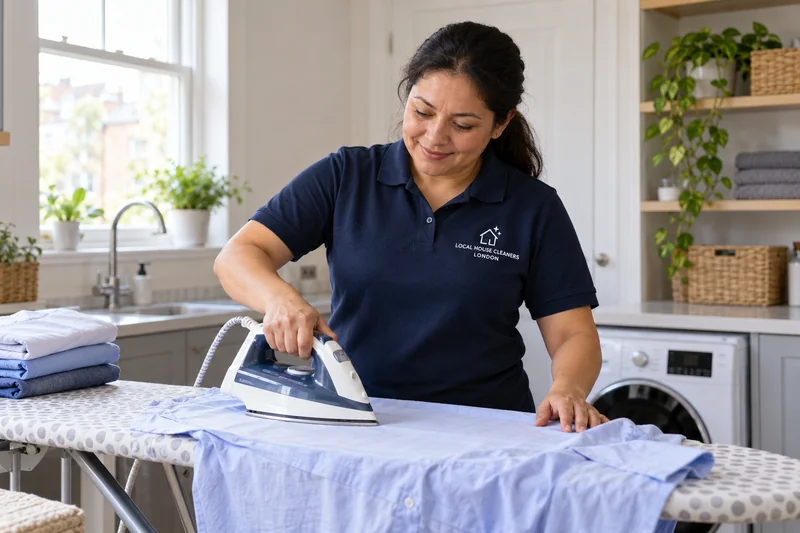
For ironing, identify a ready garment group and useful priorities, sharing relevant labels and specialist exclusions. Arrange safe agreed tools, a suitable workspace and destinations for completed pieces. A larger group needs its labour assessed beside the rest of the work. If the household mainly wants a few selected pieces handled, state that focused need. The cleaner should pursue the group accepted, not an unlimited basket whose contents and care decisions are only discovered during attendance. Clear quantities help the customer choose the contribution worth purchasing while preserving the working time already committed to its main room priorities.
Laundry help can be a defined hands-on stage. A dry group ready for folding needs an amount and destinations, while an accepted wash needs suitable instructions and somebody responsible when a programme ends after attendance. Later drying and storage may remain household tasks. Machine cycles do not necessarily fit the cleaning allowance. A limited useful contribution can still save effort when its endpoint is understood. Describe the stage that will actually be ready on this appointment, rather than assume the cleaner will manage every process associated with returning clothing or household linen alongside all the selected room work.
Other offers a route for a particular unfamiliar action. Give its amount, material, tools, permission and intended finish. Caring for one accessible empty shelf and placing an identified group into household-chosen spaces differs from sorting all the belongings unpacked into a room. Personal decisions about organisation and disposal stay explicit. Heavy movement, unsafe reach and specialist concerns need separate consideration. Additional work, charges and overtime require prior agreement before proceeding. The customer can choose more assessed help or a useful adjustment, keeping the cleaner's responsibility clear instead of one broad option carrying every activity involved in getting the household back into its preferred routine.
Share the accepted list with anyone preparing the home or providing access. They should know the core priorities, domestic quantities and what remains outside this visit. A brief check can reveal a missing tool, unready surface or linen set that needs the household's attention. Send the practical update through the agency while a workable revision can be considered. One coherent version helps the cleaner follow the contribution selected and lets the household understand what its reservation supports, rather than several people each introduce another catch-up expectation from memory that has never been assessed with the actual combination.
Review a specific accepted action if its outcome needs attention. Supply the booking and identify the room, fitting or item group, explaining relevant condition, preparation or handling context. A focused private image may help where appropriate, keeping people, papers and security details outside the frame. Prompt reporting is requested, within 48 hours where possible, without limiting statutory rights. The agency considers facts and applicable terms. A new request for another stage of household work should stay distinguishable from a concern about the contribution purchased, helping the practical response address the actual issue instead of treating every later chore as an original obligation.
After the first useful contribution, decide what help remains worthwhile. You may want ordinary selected tasks maintained, another ready room assessed or occasional domestic help when needed. For a Ponders End enquiry, give the real home details, current work and useful priorities, then add the date and start. Review labour, preparation and the full amount before choosing suitable accepted attendance. The cleaner gets a job based on the home as it is now, while the customer retains choices about the next arrangement, with agency support for practical questions and deliberate revisions as household needs and readiness change.
Need to compare the details? See more cleaning questions →
Describe the actual condition and useful actions. Ordinary upkeep, significant deposits and specialist concerns need their own assessment rather than an assumption based on the length of an absence. Choose a realistic first contribution with appropriate labour and preparation for the home as it will be found.
Identify the selected areas and the spaces or contents to leave untouched. A focused contribution can be assessed with enough useful labour, while another room is considered when the household is ready. Tell the agency promptly if readiness changes an accepted task.
Deep cleaning begins at £35 per cleaner-hour with a four-hour minimum for the assessed intensive scope. Weekly domestic cleaning starts at £24 with at least three hours; fortnightly starts at £26 with the same minimum. The actual condition, work and date determine the complete proposal.
25 December doubles the service base; another applicable official UK bank holiday increases it by half. Only the highest holiday premium applies once, with other relevant timing additions separately identified. Review the complete dated proposal instead of relying on an ordinary daytime labour example.
Take a look around the area, then use your full postcode to plan a clean for your own home.
Area reference only. This map does not mark a company office or confirm service boundaries.
This embedded map is provided by Google, which receives connection information and may use cookies. Google privacy information.
Postcode districts help you browse. They overlap neighbourhood boundaries; your full address and available cleaner time still need checking.
Start with your postcode. We’ll plan the clean around your home.