Weekly cleaning
£24per cleaner-hour
3 hours minimum · £72 daytime basePlan weekly cleaning
The right cleaning visit can give you fewer jobs to carry into the evening and a clearer household routine. For Hornsey customers, Local House Cleaners London helps you arrange the work around your own rooms, priorities and timetable. Choose the kind of help you need, describe the starting condition and review suitable hours and a complete price. A focused one-off appointment or regular domestic plan should leave the cleaner with a practical assignment and leave you knowing what has been agreed before the door opens.

Moving area names stop while hovered or focused. Press Enter or Space, or tap the moving area, to keep them still after leaving. Activate again to allow movement. Browse the directory for the complete list.
A regular helping hand, a proper reset or a clean before your next move. Choose the work your home needs.
Keep the kitchen, bathrooms and everyday rooms feeling cared for.
Explore regular cleaning02 ↗More time for reachable detail and the build-up that needs extra attention.
Explore deep cleaning03 ↗An agreed empty-property checklist, ready for your next chapter.
Explore tenancy cleaningA clear plan for your Hornsey home, from the jobs you need to an agreed visit.
Add your contact details and save your home address.
Pick your service, tasks and property details. Choose a date and start time, then check the full cost.
Top up from £35, with enough to cover the whole visit. The booking amount is reserved from your balance when you confirm.
Agree the plan and an available time. Your visit details stay in your account.
These are starting points. The final scope, timing and suitable cleaner availability need confirmation.
£24per cleaner-hour
3 hours minimum · £72 daytime basePlan weekly cleaning£26per cleaner-hour
3 hours minimum · £78 daytime basePlan fortnightly cleaning£28per cleaner-hour
3 hours minimum · £84 daytime basePlan one-off cleaning£35per cleaner-hour
4 hours minimum · £140 daytime basePlan deep cleaningEarly starts, late finishes and next-day requests can cost more. The full breakdown is shown before agreement. See timing prices and assessed extras →
Studio & 1 bed from £189 · 2 beds from £269 · 3+ beds & houses from £329
 Hornsey · N8
A clean is more useful when the cleaner knows exactly where to start. Pick your rooms, add your priorities and allow enough time for the work.
Ironing and laundry use the same booked time. A long checklist may need more than the minimum visit.
Build my cleaning planHouse, flat or studio—start with what matters most to you.

Walk through the spaces where household work repeatedly builds up. You might need the kitchen and main bathroom maintained, with floors next and spare-room dusting further down the list. Another household might prioritise fresh bedding and an ironing allocation alongside a smaller clean. Make that choice visible before the visit. A cleaner can use an agreed priority order, while a list that makes every task equally urgent gives no clear direction about what matters when the time is limited.
Hornsey station is on Tottenham Lane, according to National Rail, while Haringey's Priory Park management plan places the park between Middle Lane and Priory Road. These are useful local reference points without describing the inside of your home. Enter the actual address and full service postcode, then the property type, bedrooms, bathrooms and internal levels. A studio, flat or house can have different practical needs even where the surrounding streets or headline room counts look similar.
Describe tasks in a way that can be followed. In the kitchen, accessible worktops, hob exterior and suitable floor care are different from an oven interior or an empty cupboard treatment. Bathroom fittings, mirrors, accessible surfaces and floors can be listed, with heavier deposits identified if they need assessment. Bedrooms may involve dusting and vacuuming, with a separate instruction for a linen change. A room's name should not leave the cleaner guessing which of several possible jobs the customer intended.
Count domestic additions. State the beds, approximate garments ready to iron and the laundry stages wanted. Washing and drying have their own timings, so several loads may not reach a completed, put-away stage during a short appointment. If tidying is requested, explain what may be moved and where it belongs. The cleaner should not decide which personal papers can be discarded or how private possessions should be stored simply to produce a clear surface. Those choices need to remain with the household.
Set the hours with the whole list and starting condition in mind. A three-hour minimum on certain domestic services does not guarantee that every selected task fits every home. You can keep a budget by choosing a smaller priority scope, or request more time for the full list. Agree what can wait if the hours are used. A practical stopping order is easier to carry out and review than an open-ended request with no allowance for the quantity or condition of the work.

Weekly domestic cleaning starts at £24 per hour with a three-hour minimum, so the starting minimum visit totals £72. Fortnightly domestic cleaning starts at £26 per hour and one-off domestic appointments at £28 per hour, each with a three-hour minimum. The frequency and suitable hours belong in the comparison. An hourly number separated from its service pattern does not tell you the total cost of the work you want arranged at your property.
Deep cleaning starts at £35 per hour and requires at least four hours, giving a starting total of £140 before applicable additions. Describe the condition needing sustained attention, including accumulated grease, scale or accessible areas that have not received detailed care recently. The agency can assess an appropriate scope from those facts. A first intensive reset and recurring maintenance afterwards can need different arrangements even if the address, rooms and customer remain unchanged.
Timing can affect the final calculation. Early starts, later visits and short-notice requests may carry applicable additions that should be clear before agreement. 25 December uses twice the normal base service charge, while other applicable official UK bank holidays use one and a half times the base. The relevant holiday premium is applied once rather than compounded through overlapping holiday descriptions. Review the complete dated quote, especially where a special appointment differs from the ordinary daytime routine you are comparing it with.
The customer account funding minimum is a £35 top-up, while the available balance must cover the full agreed booking. A funding threshold is different from a fixed cleaning price. Money reserved for an appointment should be distinguishable from the amount still available, with the history explaining movements and adjustments. Check the booking's actual status alongside the funds. Adding money to the account does not itself confirm a requested service, date, start time or cleaner assignment.
Keep any change connected to its charge. If you add hours, another room or a task outside scope, approve the revised work and cost before the extra work proceeds. You can choose instead to retain the original duration and prioritise a shorter list. The agency can assess suitable options and whether an extension is available. This gives the customer a clear spending decision and the cleaner a definite instruction, rather than leaving an unplanned overrun and unexplained amount to be discussed afterwards.
Give the agency the care information you know about the home. A worktop, floor or fitting may need particular products or methods that cannot be identified from appearance. Share relevant manufacturer guidance and identify any delicate object that should remain untouched. The cleaner should not have to guess a finish or assume a stronger treatment is suitable because a mark persists. Appropriate care follows the actual surface and task rather than a general idea of what every Hornsey property contains.
Point out recent decoration and existing damage before work begins. A loose handle, cracked surface, leak or faulty electrical item affects the working situation; it is not dirt to be repaired or hidden by a cleaning visit. Persistent marks can reflect wear or staining requiring another assessment. Domestic cleaning is not specialist restoration or dismantling. Where something cannot safely be moved or reached, agree an accessible alternative instead of treating a complete-looking checklist as a reason to attempt an unsuitable method.
Recurring domestic service requires the agreed working vacuum cleaner, mop and bucket at the property. Approved products, cloths and protective equipment are arranged under the service equipment policy. Show where the tools are stored and identify any required attachment. Contact the agency beforehand if equipment is missing or unsafe. It is more useful to plan an appropriate arrangement early than find that the booked floor-care task cannot be carried out with a machine that does not work as required.
Ironing requires a safe iron, stable board and clear work area. Identify ready garments, care restrictions and the destination for finished items. Laundry also needs sorting and drying instructions that account for the length of machine cycles. Several loads can extend beyond a short visit, so establish the intended finishing stage. The cleaner should not guess whether a delicate garment can be tumble-dried or what should happen to damp clothing once the available appointment time ends.
If more than one person shares the home, agree the working boundaries before the visit. A flatmate's closed bedroom, private desk or personal laundry should not become part of the request without the appropriate arrangement. Identify pets and product sensitivities relevant to the tasks and keep small valuables secure. The cleaner needs permission about the household spaces they are entering, not an expectation that they will negotiate disagreements between residents while trying to complete the booked work.
A local direction towards the station or Priory Park is not enough to identify a private door. Give the full postcode, street number or building name and flat identifier where relevant. Explain a separate side or lower-ground entrance if the route differs from the postal frontage. The area map helps locate Hornsey; it does not identify a customer's home or claim a cleaning-business office at a public landmark. The actual service address belongs in the private booking details.
Include the floor, stairs and lift arrangements, plus further internal levels between requested rooms. If the intercom uses a different label, explain which one reaches your home. These details help the cleaner understand the working route and equipment needs before arrival. Shared halls, stairs and corridors are not automatically part of a private domestic clean. If work is wanted there, establish the appropriate permission and separately agreed scope rather than expanding the task informally at the moment the appointment begins.
If you will be away, confirm an approved key or access arrangement for the particular date. A neighbour, keyholder or building contact should understand what they have agreed to do. An old favour should not be assumed to remain available. Keep codes and key details in the appropriate private channel and update them when an entry system changes. One confirmed route into the property is easier to follow than several alternatives involving people who have not been told about the booking.
At a handover, show equipment storage, confirm priorities and identify sensitive surfaces. Leave agreed fresh linen ready and explain where completed ironing or laundry belongs. Give the leaving instructions, including doors and pets, before you go. If your availability at the start is short, record the essential information beforehand. The cleaner should be able to begin the intended work without searching unrelated cupboards or repeatedly interrupting the household for the basic supplies assumed by the task list.
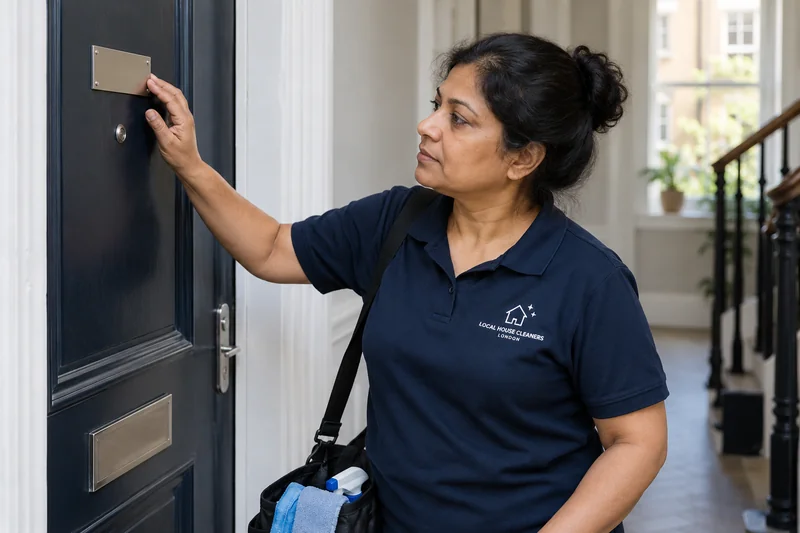
Have a contact reachable for entry problems or an important change on the day. Arrival updates can help with timing, but they do not authorise access or resolve an unusable key. Tell the agency promptly when the original plan cannot be followed so the situation can be recorded and the next step considered. An organised start protects the cleaning time from avoidable confusion and gives both customer and cleaner a clearer understanding of what should happen.

A recurring appointment is easier to manage when the instruction explains the normal week. List the rooms that need attention each time, then mark the jobs that happen less often. If a bedroom becomes a study during the day, say when it can be entered. If the second bathroom receives little use, decide the attention it needs rather than automatically copying the main bathroom's allocation. The customer knows those patterns; the cleaner needs them described in a usable form.
Choose the frequency alongside the amount of work between appointments. A weekly visit can support a steady maintenance list. With a longer interval, more may accumulate and the same priorities can need different hours. Do not assume a fortnightly pattern is simply a cheaper way to purchase an identical result. Explain what is done by the household between visits and what you want the cleaner to take on, then assess a duration that makes the arrangement practical.
Put optional work in an actual order. For instance, an accessible shelf in a spare room could follow the essential bathroom tasks, with ironing given its own planned allocation on a different visit. That is clearer than telling the cleaner to fit every occasional request into whatever time remains. A rotating job needs to be ready when scheduled: bedding available, garments identified and the relevant room accessible. Otherwise it can displace other work without producing the result you wanted.
Changes should tell the cleaner what to stop doing as well as what to add. If guests are leaving and the spare bedroom replaces ironing this week, say that explicitly. A new instruction should not leave both tasks appearing compulsory in unchanged hours. When the change is substantially larger, ask about another assessment or extra time and its cost. Keeping the current plan concise helps prevent a routine becoming an archive of every request a customer has ever made.
You can refine the arrangement after seeing how a visit works. Ask which part of the agreed list took longer and compare that with the priorities you want maintained. Adjust the next brief where useful rather than demanding that a fixed duration always absorbs more work. The benefit is predictability: a customer can prepare a few relevant items, a cleaner can follow a current plan, and neither needs another lengthy negotiation about the entire home at every arrival.
Detailed cleaning works best when the preparation is part of the plan. Before a cupboard-interior task, establish who will remove and replace its contents. For a fridge, discuss the required preparation and the point at which it will be ready. Boxes left during a move can prevent access to floors or skirting that appear on a handover list. Tell the agency about those limits while the job is being assessed, rather than assume the cleaner will make them disappear inside the same hours.
Make the task description narrow enough to be priced and understood. 'The oven' might mean an exterior wipe or an interior treatment, and those are different requests. Count the appliances and give any manufacturer restriction. Some work is included within specific service packages, particularly end-of-tenancy cleaning, so review the inclusions before adding individual items. An included task should not attract a second charge because it has also been written in a customer's additional notes.
For a moving-out visit, agree when the home will actually be available for cleaning. Give the property size, bathrooms, empty or occupied condition and the relevant handover deadline. Explain whether keys remain with you or another authorised person. If decorators or removals are still using the rooms, the order may need reassessment. Cleaning can address an agreed scope, but the cleaner cannot determine an agent's inspection decision or guarantee the return of a tenancy deposit.
If the condition is different from the description, a decision is needed before extra work proceeds. The customer may prefer a narrower priority list rather than an extension. Where more time is available, establish the revised task and charge and seek approval. This avoids a cleaner feeling obliged to stay indefinitely and avoids a customer receiving an unexplained amount afterwards. The agency can help record the choice so the person doing the job receives one clear instruction.
Some discoveries need a different service altogether. Suspected hazardous material, substantial mould, pest contamination and damaged fittings should be referred for assessment rather than treated by guesswork. An inaccessible exterior window does not become a domestic extra because it can be seen from indoors. Explain the issue and let the agency establish an appropriate limit. A clear boundary makes the useful cleaning easier to plan and helps the customer arrange the right assistance for anything beyond it.
After a first clean, take a moment to look at the priorities you actually agreed. Were the main rooms given the place you wanted, and does the duration suit the combination of cleaning and household tasks? Those questions can help improve a regular plan. A customer does not need a new checklist for every object in the house. Useful feedback identifies the part of the arrangement that needs attention and leaves the parts that are working clear.
If an included task appears unfinished, describe the room, item and concern. Note any access restriction that affected it and distinguish the task from an extra that was discussed but never approved. The agency can then compare the report with the actual brief. A problem in one area need not become an unsupported account of every room. Equally, the customer should not have to minimise a specific concern to raise it through the appropriate contact route.
An image can help when it shows the issue closely enough to understand without exposing unrelated household details. Leave papers, faces, identity documents and other private belongings out of the frame. Explain when the photograph was taken and what task it concerns. The image needs the context of the booking; it is not a complete account on its own. Keep it within a private reporting conversation rather than making another person's home public to demonstrate a point.
For a timing or charge query, give the appointment date and the change you believe was or was not agreed. Keep the relevant messages and booking details together so the agency can understand the sequence. Ask for an explanation of an unclear movement in the account history instead of treating every reservation as a completed charge. If something needs changing before the next visit, have the revised instruction recorded so the same question does not return at the next appointment.
Check the booking's reporting, cancellation and refund terms and contact the agency promptly when a concern arises. The service arrangements operate alongside statutory consumer rights. The practical purpose of support is to establish the facts, explain the available next step and help maintain an understandable plan. A customer should be able to finish the discussion knowing what response has been given, what happens to the booking and what information still needs to be supplied.
Need to compare the details? See more cleaning questions →
Submit the actual property address and full postcode with the service and preferred date. The park is a supported local orientation reference, not confirmation of cleaner coverage or immediate availability for every nearby property. The actual request needs assessment from the home details and work required.
No. National Rail lists the station on Tottenham Lane, but that reference does not identify a private door. Give the full address, flat identifier and correct entrance with any intercom or floor instructions. A short local reference can support precise directions rather than replace them.
Discuss the rotation and record which tasks repeat and which are scheduled for particular appointments. The hours should still fit the agreed priorities. If guests change the plan, identify what takes priority and what can wait rather than automatically adding the entire new request on top of the existing list.
Tell the agency that the material or method is uncertain and share any available manufacturer information. The cleaner should not guess or keep increasing product strength to force a result. Some marks need specialist assessment or reflect wear, and ordinary domestic cleaning does not include restoration or repairs.
Take a look around the area, then use your full postcode to plan a clean for your own home.
Area reference only. This map does not mark a company office or confirm service boundaries.
This embedded map is provided by Google, which receives connection information and may use cookies. Google privacy information.
Postcode districts help you browse. They overlap neighbourhood boundaries; your full address and available cleaner time still need checking.
Start with your postcode. We’ll plan the clean around your home.