Weekly cleaning
£24per cleaner-hour
3 hours minimum · £72 daytime basePlan weekly cleaning
The value of a cleaning visit is the work you no longer need to fit around the rest of your week. For a home in Harrow town centre, Local House Cleaners London can assess the rooms and domestic tasks you choose, with suitable time for the condition described. Start with what would help most, then review the appointment, access arrangement and full price. A clear brief lets you hand over household work deliberately, with fewer questions left until the cleaner reaches the door.

Moving area names stop while hovered or focused. Press Enter or Space, or tap the moving area, to keep them still after leaving. Activate again to allow movement. Browse the directory for the complete list.
A regular helping hand, a proper reset or a clean before your next move. Choose the work your home needs.
Keep the kitchen, bathrooms and everyday rooms feeling cared for.
Explore regular cleaning02 ↗More time for reachable detail and the build-up that needs extra attention.
Explore deep cleaning03 ↗An agreed empty-property checklist, ready for your next chapter.
Explore tenancy cleaningA clear plan for your Harrow town centre home, from the jobs you need to an agreed visit.
Add your contact details and save your home address.
Pick your service, tasks and property details. Choose a date and start time, then check the full cost.
Top up from £35, with enough to cover the whole visit. The booking amount is reserved from your balance when you confirm.
Agree the plan and an available time. Your visit details stay in your account.
These are starting points. The final scope, timing and suitable cleaner availability need confirmation.
£24per cleaner-hour
3 hours minimum · £72 daytime basePlan weekly cleaning£26per cleaner-hour
3 hours minimum · £78 daytime basePlan fortnightly cleaning£28per cleaner-hour
3 hours minimum · £84 daytime basePlan one-off cleaning£35per cleaner-hour
4 hours minimum · £140 daytime basePlan deep cleaningEarly starts, late finishes and next-day requests can cost more. The full breakdown is shown before agreement. See timing prices and assessed extras →
Studio & 1 bed from £189 · 2 beds from £269 · 3+ beds & houses from £329
 Harrow town centre · HA1
A clean is more useful when the cleaner knows exactly where to start. Pick your rooms, add your priorities and allow enough time for the work.
Ironing and laundry use the same booked time. A long checklist may need more than the minimum visit.
Build my cleaning planHouse, flat or studio—start with what matters most to you.
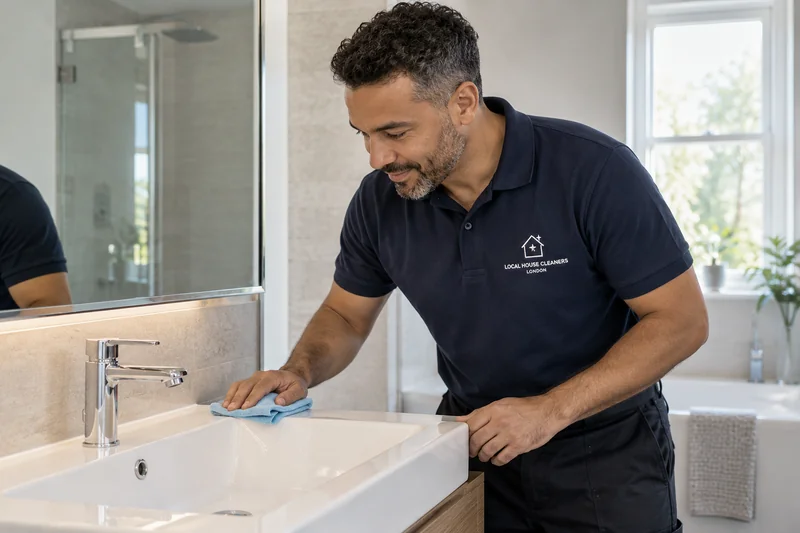
A useful request can start with one recurring frustration. You may be tired of cleaning the kitchen after a working day, losing weekend time to the bathroom or leaving the floors until they become a bigger job. Put that work at the front of the enquiry. You can keep a visit focused on the main areas rather than spread minimum hours across every occasional room. The agency can assess a purpose you can recognise, and the cleaner knows which finished result matters most before deciding where lower-priority detail belongs in the sequence.
The property type helps describe the home, but its actual layout and use matter too. Include the bathrooms, additional toilets and internal levels you want covered. Mention a bedroom used for storage, a desk that must remain private or stairs inside a flat. A label such as compact does not explain reachable surfaces or condition. The agency needs those details to consider suitable work and hours. A first appointment involving a detailed catch-up should not be presented as ordinary upkeep if the cleaner will find substantially more work than the request describes.
Room selections should identify the tasks. Accessible kitchen worktops, sink, hob exterior and suitable floor care are different from an oven interior or cupboard interiors. In bathrooms, explain the fittings and any established deposits for assessment. State where reachable dusting and floor cleaning are wanted elsewhere. If tidying would help, define what may move and where it belongs. The cleaner cannot choose which private letters to discard or reorganise personal storage simply because belongings cover a surface. A few clear notes make the work more usable than a broad instruction to do everything properly.
Town-centre locations can have several uses behind one frontage. Harrow's monitoring report describes Greenhill Library as part of a residential and retail development on College Road. That is a local example, not a description of every home. For your request, give the actual address and private entrance, with the room list inside it. The cleaner should not have to infer a residential route from a shop or public building nearby. You can use a familiar town-centre reference to orientate the enquiry while keeping the booked property and its access details precise.
Include domestic tasks when deciding the total allowance. Count bed changes, describe the ironing selection and identify the laundry stage needed. They use working time alongside the rooms. Three hours is a minimum for certain domestic services, not a forecast that any combination will fit a property of any condition. You can assess more suitable hours or a smaller set of priorities. Make clear what may wait when the agreed time has been used, so a realistic appointment has a defined finish instead of an expectation to complete an unlimited list regardless of the allowance.
Weekly domestic cleaning starts at £24 per hour and requires at least three hours, giving a standard starting minimum of £72 before applicable additions. Fortnightly service begins at £26 per hour, with the same minimum hours. Think about the interval and how the household is using the rooms when comparing them. A less frequent appointment may need a different allowance if more work is waiting. You want a complete proposal that can maintain the chosen areas, rather than the lowest hourly number attached to too little time for the task that prompted the booking.
A one-off domestic visit starts at £28 an hour with a minimum of three hours. Deep cleaning starts at £35 an hour with at least four hours, so its starting minimum is £140. Describe why the more detailed work needs assessment, whether that is settled bathroom build-up, kitchen deposits or another accessible area that has fallen behind. An initial reset and later maintenance may be different requests. Consider the proposed tasks, hours and total together so the service type is a response to the real work rather than a reassuring label without a defined scope.
The actual start and date also belong in the price review. Applicable early, late or short-notice additions may affect the quote. 25 December uses twice the base service charge, while other applicable official UK bank holidays use one and a half times that base. The holiday uplift applies once rather than compounding overlapping holiday descriptions. If alternatives would suit the household, give them while the agency is assessing a workable appointment. An ordinary daytime starting example is not confirmation of another date's price, a particular cleaner's availability or a slot that has not been accepted.
Funding requires a separate check. The account top-up minimum is £35, but enough money must be available for the entire accepted booking before it can be reserved. Look at existing reservations as well as the available amount, and use the history to understand accepted charges. Adding money alone does not confirm an appointment. Keep the booking status, service and full cost beside the balance when deciding what has been arranged. If the proposal exceeds your intended budget, discuss suitable scope or timing choices before confirmation rather than leaving the cleaner to resolve the spending question at arrival.
Cleaner eligibility includes identity and suitability approval before work can be accepted. The individual booking still needs its tasks, relevant skills and equipment requirements considered. Raise an unusual need at the enquiry stage, particularly if it is the central reason for arranging help. An approved cleaner is not automatically expected to provide every specialist treatment within routine domestic cleaning. A suitable assignment lets the cleaner work to an understood scope and lets the customer learn which concern needs another assessment before it becomes an expectation at the property.
Provide useful care information about the actual surfaces. Manufacturer guidance can help where you have it, and uncertainty should be flagged where the material or finish is not known. Stone, wood, coated fixtures and delicate trim may require different approaches despite a familiar appearance. A persistent mark should not prompt an improvised strong treatment. The cleaner can raise a question through the agency before proceeding. Existing wear, damaged finishes and loose fittings also need mentioning, because appropriate cleaning may not repair them or produce the result that separate maintenance would be needed to achieve.
For recurring domestic work, the agreed safe, working vacuum, mop and bucket should be accessible at the home. Check essential parts and raise a fault beforehand. Approved products, cloths and protective equipment follow the service policy. Relevant sensitivities or product restrictions should be considered with the tasks, so explain them during assessment rather than after the cleaner has begun. An unlabelled mixture is not a suitable assumed method for several different surfaces. Having the right instructions and tools ready keeps the appointment focused on accepted cleaning work rather than diagnosing equipment or product problems.
Clarify what should remain untouched. A private room, display of fragile belongings or desk with personal papers can be excluded explicitly. Clear small objects yourself where you want the reachable surface beneath cleaned, or request defined suitable tidying. Heavy furniture, electrical interiors and awkward high areas need separate consideration instead of being inferred from a broad dusting or floor option. The cleaner should be able to ask a question about a doubtful task without being expected to take a risk to finish an unrealistic idea of a complete room. Clear boundaries protect the usefulness of the service.

Greenhill Library is listed by the council at Perceval Square on College Road, HA1 1GX. TfL gives Harrow-on-the-Hill station an address at Station Approach, HA1 1BB. These are useful local references, not the destination for a customer's private clean. Enter the property's own full postcode, number and building or flat designation. Add the visitor entrance if it differs from the first frontage a map suggests. The cleaner needs one precise door and an agreed means of entry rather than a general direction to arrive around the town centre or station.
Settle who provides access at the requested time. If you will be there, make the correct bell identifiable and answerable. If a relative, housemate or building representative will admit the cleaner, confirm the plan with them before relying on it. Identify the authorised contact if access fails. Explain whether the person present can approve tasks and spending or is opening the door only. That distinction keeps the cleaner from being caught between different household instructions about work and money, especially where the customer who funded the booking is away.
Relevant building procedures should be included while the appointment is assessed. Mention reception requirements, internal stairs, an additional locked door or a known lift issue that affects the route. Use the appropriate private process for sensitive keys and codes. If a room is occupied, state when it is unavailable and whether another agreed task can be done first. Waiting can affect what remains possible within the hours, so access constraints should not be left until arrival. A practical sequence may help, but it still needs to fit the work and time being considered.
Departure needs a plan too. Agree authorised key handling, relevant locking instructions and the doors that should stay closed. Explain where pets will be without assuming animal care is included in cleaning nearby rooms. If your own return changes the exit arrangement, update the agency. The appointment should not end with an unresolved wait for an unspecified person or a decision about handing keys to somebody unknown. A clear handover makes the end of the visit as deliberate as its start, with the home left according to the arrangement you accepted.

After an appointment, look at which work gave the household useful time back. The main rooms might have fitted the hours while ironing needed a smaller selection. Another home may benefit from rotating a less-used room rather than including it every time. Tell the agency what you learned before the next visit. A recurring plan can be refined with suitable time and any price change considered openly. It should not keep accumulating every informal suggestion until the cleaner receives several visits' worth of occasional detail on top of a full ordinary brief and unchanged allowance.
Ironing needs a clear ready selection, care instructions and an order of priority. Keep specialist-care garments separate and have suitable safe equipment available as arranged, with hangers or a folding space for finished work. A mixed basket is not a fixed amount of labour. If ironing is the main household task you want help with, give it a deliberate place beside the cleaning. That is more useful than treating it as whatever might fit after all rooms have used the time, then finding that the work you valued most was never reached.
Bed changes and laundry need practical preparation as well. Count the selected beds, distinguish straightening from changing linen and put the correct clean sets ready with a place for used sheets. For washing, explain whether sorting, loading, hanging or folding is wanted and what will be available at arrival. A cycle may continue beyond the visit, so decide who takes over then. Several machine stages should not be assumed to finish within the same period as cleaning the rooms. A defined endpoint gives the customer and cleaner a manageable handover.
Update the agency for changes that affect the arrangement. A different work schedule, occupied room or longer absence may alter the sequence and workload. Discuss booking changes through the relevant terms and review their effect on price and availability. A move within Harrow also needs new entrance, layout and condition details, even if you still describe the location as the town centre. Useful preferences can carry forward, while the actual property and hours require consideration. Familiarity with an account does not make a different home's cleaning brief known without an assessment.

Identify the task you want added and why it matters. An appliance interior, cupboard interiors or another accessible area needs its condition and preparation explained. Agree who clears contents and what handling remains to be considered. The agency can assess a suitable service option, more time or another visit. You may decide to leave the addition for later instead. The choice is easier when a defined piece of work has a proposed cost, rather than a cleaner being expected to divert time from accepted priorities to an unpriced task discovered during the appointment.
Tenancy cleaning has a defined assessed checklist and separate starting figures: £189 for a studio or one-bedroom property, £269 for two bedrooms and £329 for larger homes. One oven, empty cupboard interiors and accessible internal windows are already included within that defined scope. Check the accepted list and any separately priced treatment so an included item is not added again as an extra. Explain the condition, remaining belongings and relevant handover requirements honestly. Cleaning can address the agreed work, but a landlord's wider decision about a deposit is not something an appointment can guarantee.
Other gives you a way to describe work that ordinary choices do not capture. Explain the object, quantity and intended result, with a focused relevant image if it helps assessment without exposing private information unnecessarily. Some work may need specialist treatment, repair or hazardous handling rather than routine domestic cleaning. Suitability needs an answer before the customer relies on the visit, especially if the unusual task is its main purpose. An open-ended selection should start a clear conversation, not become automatic acceptance of any possible job or method a household has in mind.
Extra paid hours need their own approval. Ask what remains, the duration proposed and the additional price before accepting a suitable available extension. You can retain the original finish with a different priority order or consider a follow-up instead. A cleaner should not be expected to finish an enlarged list unpaid, and a customer should not find an unapproved overtime amount afterwards. Keep the decision with the booking so the handover and history reflect the same agreement, including where different authorised people were involved in funding the visit and admitting the cleaner.
A useful handover explains the visit against the agreed priorities. Check which tasks were completed and whether something was left by agreement or because a specific constraint prevented it. If you were away, review the update while the details are fresh and ask a precise question where needed. Attendance alone does not explain every outcome, and a general claim about a clean home may not address what mattered most. The record helps you judge the appointment fairly and consider whether the next request needs a revised allowance, different preparation or a more useful working order.
For a concern, identify the booking, room and task, then explain how the result differs from the accepted instruction. Relevant supporting information helps the agency assess it with the brief and authorised changes. A photograph should focus on the issue while keeping people, private documents, screens and access details out of view. Raise urgent safety, access or possible damage matters promptly rather than save them as a casual preference before another routine clean. A focused report gives the actual issue a clearer basis for consideration than an unrelated collection of images across the whole private home.
Use the recorded entry for a money query. Check the booking reservation, agreed charge and any approved addition in the history, then identify the amount that needs explanation. Card security details are not required to ask about a cleaning-service transaction. Retain a relevant approval if someone present requested a change while the account holder was out. That gives the agency a factual record to consult instead of expecting several people to reconstruct a doorway conversation or interpret different messages after the financial decision has already affected the available balance.
Begin a Harrow town centre enquiry with the service, property, full postcode and key household tasks. Add the preferred date, actual start time and realistic hours, then practical care and entry notes for the exceptions. Review the complete proposed quote and appointment before confirmation, and inform the agency if anything important changes. Useful help should let you hand over the right household jobs with fewer unresolved decisions. A clear brief gives the cleaner a practical assignment and gives you a better way to keep those jobs from filling the free time you wanted for something else.
Need to compare the details? See more cleaning questions →
No. Greenhill Library on College Road and Harrow-on-the-Hill station at Station Approach can help orientate an enquiry, but the cleaner needs your own complete address and postcode. Include the actual visitor entrance and any building, flat or bell designation. A precise private destination and agreed access arrangement are needed to assess a workable visit.
Explain the door visitors should use, the route from the frontage and any relevant reception or shared-building procedure. Mention stairs or a known lift issue, and identify the authorised contact for an entry problem. Keep sensitive keys and codes within the appropriate private process rather than public notes.
Selected rooms and tasks can be requested within a suitable assessed service, agreed hours and the relevant minimum. Describe fittings, condition and priorities so the proposed allowance fits the work. Appliance or cupboard interiors should be identified distinctly rather than assumed to belong to every kitchen selection.
You can ask the agency to assess an available extension and its cost, but extra paid time needs approval before it changes the charge. You may keep the original finish and revise priorities or discuss another visit instead. A larger task selection alone does not authorise overtime or require the cleaner to stay unpaid.
Take a look around the area, then use your full postcode to plan a clean for your own home.
Area reference only. This map does not mark a company office or confirm service boundaries.
This embedded map is provided by Google, which receives connection information and may use cookies. Google privacy information.
Postcode districts help you browse. They overlap neighbourhood boundaries; your full address and available cleaner time still need checking.
Start with your postcode. We’ll plan the clean around your home.