Weekly cleaning
£24per cleaner-hour
3 hours minimum · £72 daytime basePlan weekly cleaning
Choose the work that would make your home easier to manage, then have the cleaning assessed around that result. A Bromley Common enquiry can focus on everyday room care, a defined catch-up, suitable deeper attention or prepared linen and garment help. Explain the priorities, amount and starting condition of the work. We consider the property, paid labour and preferred timing together, giving you a complete proposal and a practical appointment where suitable cover is confirmed.

Moving area names stop while hovered or focused. Press Enter or Space, or tap the moving area, to keep them still after leaving. Activate again to allow movement. Browse the directory for the complete list.
A regular helping hand, a proper reset or a clean before your next move. Choose the work your home needs.
Keep the kitchen, bathrooms and everyday rooms feeling cared for.
Explore regular cleaning02 ↗More time for reachable detail and the build-up that needs extra attention.
Explore deep cleaning03 ↗An agreed empty-property checklist, ready for your next chapter.
Explore tenancy cleaningA clear plan for your Bromley Common home, from the jobs you need to an agreed visit.
Add your contact details and save your home address.
Pick your service, tasks and property details. Choose a date and start time, then check the full cost.
Top up from £35, with enough to cover the whole visit. The booking amount is reserved from your balance when you confirm.
Agree the plan and an available time. Your visit details stay in your account.
These are starting points. The final scope, timing and suitable cleaner availability need confirmation.
£24per cleaner-hour
3 hours minimum · £72 daytime basePlan weekly cleaning£26per cleaner-hour
3 hours minimum · £78 daytime basePlan fortnightly cleaning£28per cleaner-hour
3 hours minimum · £84 daytime basePlan one-off cleaning£35per cleaner-hour
4 hours minimum · £140 daytime basePlan deep cleaningEarly starts, late finishes and next-day requests can cost more. The full breakdown is shown before agreement. See timing prices and assessed extras →
Studio & 1 bed from £189 · 2 beds from £269 · 3+ beds & houses from £329
 Bromley Common · BR2
A clean is more useful when the cleaner knows exactly where to start. Pick your rooms, add your priorities and allow enough time for the work.
Ironing and laundry use the same booked time. A long checklist may need more than the minimum visit.
Build my cleaning planHouse, flat or studio—start with what matters most to you.

Begin with what you would like ready at the end. That might be a prepared kitchen, the main washing room and suitable floors in selected living spaces. A guest bed and an ironing group may be more helpful than another room, or an occasional interior task may be the priority. Put the essentials in order and identify optional additions. The agency can assess realistic labour for the result you value, letting you compare a focused selection with a suitable fuller allowance.
Bromley’s local walk leaflet names Magpie Hall Lane and Holbrook Way, while Holy Trinity Church gives its own address on Church Lane. For your enquiry, supply the complete residential address and postcode of your home, with the correct entrance and any building or flat details. These local references are orientation only, with no affiliation to the cleaning service. Select house, flat or studio and describe the actual rooms wanted, giving the property and task information that matters inside.
Count included spaces beyond bedrooms. An additional shower, separate toilet, private staircase or further living room can add attention. A compact home may need substantial kitchen work, while a larger property can have a narrow selection with private rooms excluded. Say what will be available and mark the boundaries directly. A useful visit can focus on prepared areas you choose, with its paid labour following the real condition and quantity of the included work.
Explain whether the first appointment needs maintained upkeep or a more substantial reset. Established cooking residue and bathroom buildup may need different attention from surfaces already cared for regularly. An initial fuller clean and a later repeatable core can have separate purposes and selections. The agency can assess appropriate work for the home as it is now and explain the labour needed. That gives the first visit an achievable target and helps you choose which result you would like to maintain over time.
Give approximate amounts for chores sharing the appointment. A ready bed change, a defined group of garments and dry towels to fold provide useful assessment details. Larger quantities need appropriate labour alongside room care. You do not need to invent minutes for every ordinary movement. Explain the action, amount and care guidance, then compare the complete proposal with your priorities. This keeps the choice of work and spend with the household and gives the cleaner an understood practical job.
Identify suitable accessible worktop sections, sink and taps, the hob exterior and selected reachable fronts wanted. A prepared eating surface or particular splashback may also form part of the result. Explain concentrated grease or dried food so its condition has an appropriate allowance. These choices give the kitchen a recognisable purpose and make its labour easier to compare with other rooms. Put the working areas you most want ready first when a focused kitchen result is your priority.
Prepare the chosen worktop by finding a household place for loose food, post and personal belongings. If one portion will stay occupied, identify the ready part and keep the other excluded. Limited straightening can be described with an amount, permission and suitable destination. The cleaner can then approach appropriate removable dirt on the selected surface directly. You retain the private storage and disposal choices, while paid time goes towards the cleaning result you asked someone else to provide.
Choose a washing-up batch where it would make a useful difference. Give the approximate quantity and delicate pieces, with a suitable drying or return place. A group of everyday dishes and cookware with established residue need different consideration. You may prefer help with that batch, or prepare the sink yourself to keep more paid attention for surrounding surfaces and the bathroom. Both can be practical. The assessed proposal can include the actual preparation and cleaning selected, with a clear role for each stage.
For a fuller kitchen reset, identify any oven, fridge sections or empty cupboard shelves wanted. Describe the interior condition and readiness, arranging suitable food storage and a household place for contents. Have method, labour and the complete amount considered with the room work. An interior clean and an exterior wipe are separate choices, each with its preparation understood. Naming an important interior early helps the proposal follow the finish you value and the surfaces the cleaner will be able to reach.
Provide material guidance for a sensitive finish and flag known faults during assessment. A hob needs safe cool conditions for the accepted care. Appropriate cleaning addresses removable dirt; repair, dismantling and specialist restoration have other purposes, and gas or electrical parts stay undisturbed. Clarify an uncertain treatment before it is accepted so the cleaner can use suitable care on the actual item. The result can then be reviewed against the selected actions and the condition originally described.
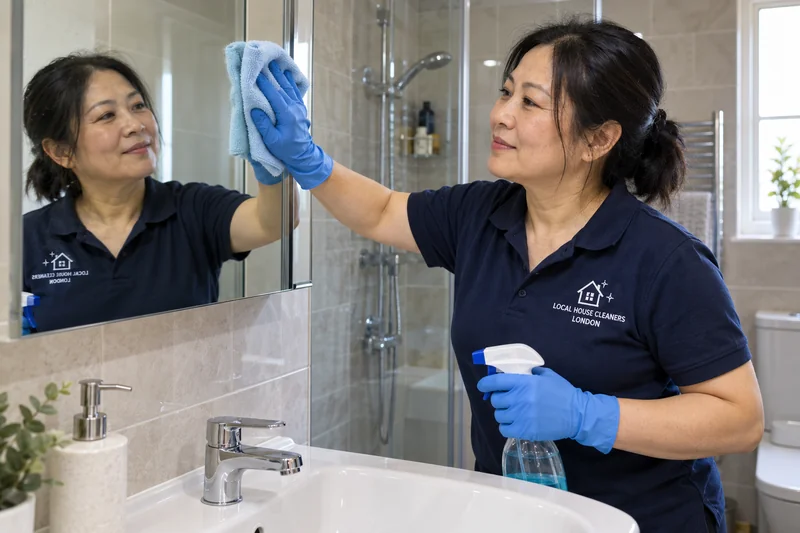
Name each bathroom, ensuite or separate toilet included and identify its bath or shower, basin, taps, toilet, suitable mirror and accessible floor. Extra fittings add labour even where bedroom numbers stay unchanged. Put the main washing room first if that is the result you need most. You can compare a focused option with appropriate time for additional spaces. This gives the appointment a tangible set of actions and helps make the proposed allowance and later review more understandable.
Describe substantial scale or soap residue before the labour is proposed. Intensive first attention and maintained care may need different methods and time. Suitable cleaning can improve removable deposits; etching, worn coatings, failed seals and damaged parts can have other limits. Share known defects and material guidance so the agency can consider appropriate care. A clear description gives the cleaner a realistic task and keeps any repair or specialist treatment visible as a separate need.
Put medicines and personal toiletries away privately where practical, leaving the selected basin edges and ledges ready. Identify a fragile accessory that stays untouched and any modest group that may be moved to an agreed place. This provides access to the surface beneath and a clear permission for the objects involved. Private storage can remain closed while ready washing areas receive useful care, with the extent of any limited handling help understood as part of the work.
Plan a workable order if the bathroom needs to stay available during part of the visit. Give that time constraint with the other rooms selected. You may want the washing space attended to first, or another suitable area can be considered as the starting point. The sequence needs to fit the accepted hours and real room availability. Sharing this information helps the household organise the day and lets the cleaner move through the chosen selection with a practical route.
Describe the particular bathroom detail that would improve the result for you. A basin rim and the reachable area around taps are different from the inside of a vanity unit; a chosen shower screen can have its accessible faces identified. Give the care guidance and any unstable fitting or difficult access affecting that task. The agency can assess appropriate safe work, and the cleaner has a tangible action to approach. A specific fitting-level request is useful both when planning the allowance and when discussing the finish afterwards.
For living-room detail, select suitable reachable furniture tops, a prepared side table or chosen internal sills. In a bedroom, you may want equivalent surfaces attended to while a private desk remains excluded. Give handling limits for papers, electronics and fragile displays, with any modest preparation described. This lets you choose useful room care while retaining personal storage decisions. The cleaner has a defined group of ready surfaces and the permissions relevant to that task.
Give floor materials and relevant care guidance, including a known damaged edge or sensitive finish. Suitable vacuuming, mopping and reachable edge attention depend on the actual surface, condition and equipment. A particular textile concern can be assessed separately for extraction or another appropriate method. Ordinary care and restoration serve different purposes. Choose the process suited to the result you need, with enough information for the cleaner to respect material limits while providing the accepted cleaning.
Consider areas beside furniture as well as the walking route through the room. Shoes, bags, boxes and loose cables can restrict edges or the space near a bed. Decide what you will clear and whether a modest preparation task would help. Heavy furniture movement needs separate consideration. A realistic ready area lets the allowance match the home as it will be presented, including any excluded corner. It gives the cleaner direct work to approach during the accepted period.
For recurring cleaning, provide your safe functioning vacuum, mop and bucket with the needed attachments ready. The company arranges approved products, cloths and protective equipment unless another provision is quoted. Check an essential tool beforehand and report a known fault so a suitable alternative can be considered. Equipment and material guidance support the work you are buying. Their preparation helps paid attention stay on the room and floor result, with fewer practical obstacles to resolve once the cleaner arrives.
Name private internal halls, landings or stairs included alongside rooms. A flat’s own spaces differ from shared corridors and a communal lobby requiring relevant authority and a separately agreed scope. Give access restrictions and practical pet arrangements for the selected route. The cleaner can then reach the included areas with the working boundary clear. Private rooms stay excluded, and shared-building work can be considered appropriately, keeping the domestic appointment focused on the useful household selection you chose.

For ironing, give the approximate garment count and mix, identifying priority pieces and care labels. A few straightforward shirts and detailed mixed clothing may need different labour. Prepare the agreed safe iron, stable board and clear workspace so the task has a practical starting point. Its paid time can be assessed alongside room cleaning. You can choose a useful priority group or a fuller allowance for the combination, with the amount considered beside the benefit you want to receive.
Have suitable hangers or a clear folding destination for completed pieces. Keep the accepted clean group separate from used laundry and specialist items. The intended result can be simple: the selected garments finished in the identified place. This makes the help tangible while private wardrobe choices remain with the household. If the quantity grows before the appointment, review the effect on the whole selection. A smaller group or suitable extra labour can be compared with kitchen, bathroom and floor attention still visible.
A ready dry laundry group can be an easy task to describe: the towels to fold, the agreed place for them and anything needing different handling. If the request concerns washing instead, state the programme stage and who will deal with the load later. A machine still running near the end of the visit may leave a later household action to complete. Choose a finish that can be reached during the booked period, so the accepted labour removes a useful part of the chore and the handover stays practical.
Prepare bedding for the actual bed selected, keeping its clean pieces together and identifying any item to leave unchanged. A full linen change and tidying the existing bedding are different requests. Decide where used pieces will go and include a suitable surface or floor task if the room also needs attention. This gives a guest-room preparation request a clear finish. Several beds can be assessed as a larger group, while one priority change remains a useful choice alongside the kitchen and bathroom work you want.
Start an unusual household request with its useful finish. You might want prepared clean linen placed on an identified ready shelf, or a small permitted set of guest-room items arranged in an agreed place. Use Other to describe the action and amount, with handling limits and equipment requirements. The agency can consider suitability and explain the appropriate allowance. Personal sorting, heavy movement and specialist treatment need separate consideration. That gives a defined extra its own work allowance alongside the selected room cleaning.
At standard daytime starting rates, weekly cleaning is £24 per cleaner-hour, fortnightly £26 and a one-off clean £28, with a three-cleaner-hour minimum for each. Deep cleaning starts at £35 per cleaner-hour with at least four cleaner-hours. Match the service to the condition and purpose. A minimum is a starting allowance, and extra fittings or a substantial task quantity may need further time. Compare the full proposal so the useful work and the amount it requires are considered together.
For a single-cleaner daytime example, four weekly hours have a base labour amount of £96 and four one-off hours £112. The four-hour deep-cleaning minimum has a base labour amount of £140 at its starting rate. These describe different services and allowances. Give any longer visit a useful purpose in the assessment, such as suitable additional room care or a defined garment group. The arithmetic does not guarantee a fixed room output; work and practical conditions guide the proposal.
If the request follows completed building work, explain the residual condition and readiness for an after-builders assessment. This service starts at £38 per cleaner-hour with a five-cleaner-hour minimum; five standard daytime cleaner-hours have a base labour amount of £190 before applicable additions. An empty-property tenancy or move-in request also needs its own checklist and readiness considered. Continuing trades, removals, retained contents and appliance requirements affect what is available to clean. Describe that actual purpose so a suitable service can be proposed.
Cleaner-hours count each person’s working time. A suitable confirmed team of two cleaners working three hours each provides six cleaner-hours within a three-hour team window. Review total labour and elapsed time separately. Give the preferred date, actual start and any genuine entry or finish constraint with the task list. Early requests from 6am are subject to relevant rules and suitable cover; evening work, next-day urgency and applicable holidays can affect the complete quote. Staffing, schedule and the practical appointment need confirmation.
Use priorities to adjust the scope if the complete amount exceeds your intended spend. You might retain the main rooms while deferring an interior, or choose a smaller garment group. Suitable additional paid labour is another option where cover allows. A further action or extension needs its work and full added charge accepted in advance, with required time available. For confirmed funded work, sufficient balance covers the accepted reservation; the £35 minimum top-up concerns adding money and is separate from a cleaning-visit price.

Before a cleaner is allocated, identity verification and suitability approval are required. Your part is to identify the home details that change the work: a fragile fitting to avoid, a finish with particular care instructions or a room that stays private. Give practical pet arrangements and relevant hazards with the selected tasks. The brief can stay concise while supplying this important information. Routine cleaning follows its own assessed scope; repairs, high access, heavy handling or supervision need an appropriately separate arrangement with the right person.
Arrange authorised secure entry if you will be away and agree how the property will be left. A keyholder can have an access role while spending decisions remain with the appropriate customer contact. Settle building requirements and make the residential doorway clear, keeping confidential codes out of general room photographs. One practical handover helps the cleaner reach the right home and begin the chosen tasks. Pass a material access change through the agency so the arrangement used on the day stays current.
Keep approval for a paid addition explicit even where funds are available. The new work, time and full charge need acceptance, with cleaner availability checked; money present and silence do not provide that consent. The original accepted scope and finish remain in place where a change cannot be arranged. A useful extra may be considered for another visit instead. This lets the household decide its value in context and gives the cleaner an understood limit for the period already booked.
For a cleaning concern, identify the particular detail: a selected cupboard shelf appears overlooked, for example, or a requested mirror still has a removable mark. A focused private picture may help explain it, keeping people, records and security information out. Send the task and appointment details promptly so the agency can consider the circumstances. To request Bromley Common help, begin with the home address, priorities and preferred timing. Realistic labour and the complete proposal can then be assessed together for a suitable confirmed appointment.
Need to compare the details? See more cleaning questions →
Yes. Describe the starting condition and useful first result. More intensive first attention and maintained upkeep can need different services or allowances. The agency assesses the actual purpose, with room and household-task quantities included so a repeatable selection can be considered separately.
The service starts at £38 per cleaner-hour with a five-cleaner-hour minimum and an assessed scope after works are complete. Five standard daytime cleaner-hours have a base labour amount of £190 before applicable additions. Describe residual condition, readiness and any ongoing trades or inaccessible areas.
Packages start at £189 for a studio or one bedroom, £269 for two bedrooms and £329 for three or more bedrooms or a house, subject to assessment. Check the actual checklist, condition and additions for the complete quote. Cleaning does not guarantee a deposit decision or another party’s inspection outcome.
Request the garment count and mix, bed numbers and sizes, with correct clean linen ready. Prepare the agreed safe ironing equipment and a destination for completed items. Their labour is assessed alongside room care so the accepted combination has enough paid time.
Take a look around the area, then use your full postcode to plan a clean for your own home.
Area reference only. This map does not mark a company office or confirm service boundaries.
This embedded map is provided by Google, which receives connection information and may use cookies. Google privacy information.
Postcode districts help you browse. They overlap neighbourhood boundaries; your full address and available cleaner time still need checking.
Start with your postcode. We’ll plan the clean around your home.