Weekly cleaning
£24per cleaner-hour
3 hours minimum · £72 daytime basePlan weekly cleaning
You do not need to ask for everything to make a cleaning visit useful. A properly finished bathroom, a kitchen with working space again or fresh linen on a selected bed can make an immediate difference at home. For cleaning in Crofton, tell Local House Cleaners London what you would like done and which result matters most. The rooms, household extras, preferred time and working allowance can be assessed as one practical request. You can choose regular help or a particular clean, with the agreed scope and cost made clear.

Moving area names stop while hovered or focused. Press Enter or Space, or tap the moving area, to keep them still after leaving. Activate again to allow movement. Browse the directory for the complete list.
A regular helping hand, a proper reset or a clean before your next move. Choose the work your home needs.
Keep the kitchen, bathrooms and everyday rooms feeling cared for.
Explore regular cleaning02 ↗More time for reachable detail and the build-up that needs extra attention.
Explore deep cleaning03 ↗An agreed empty-property checklist, ready for your next chapter.
Explore tenancy cleaningA clear plan for your Crofton home, from the jobs you need to an agreed visit.
Add your contact details and save your home address.
Pick your service, tasks and property details. Choose a date and start time, then check the full cost.
Top up from £35, with enough to cover the whole visit. The booking amount is reserved from your balance when you confirm.
Agree the plan and an available time. Your visit details stay in your account.
These are starting points. The final scope, timing and suitable cleaner availability need confirmation.
£24per cleaner-hour
3 hours minimum · £72 daytime basePlan weekly cleaning£26per cleaner-hour
3 hours minimum · £78 daytime basePlan fortnightly cleaning£28per cleaner-hour
3 hours minimum · £84 daytime basePlan one-off cleaning£35per cleaner-hour
4 hours minimum · £140 daytime basePlan deep cleaningEarly starts, late finishes and next-day requests can cost more. The full breakdown is shown before agreement. See timing prices and assessed extras →
Studio & 1 bed from £189 · 2 beds from £269 · 3+ beds & houses from £329
 Crofton · BR5 / BR6
A clean is more useful when the cleaner knows exactly where to start. Pick your rooms, add your priorities and allow enough time for the work.
Ironing and laundry use the same booked time. A long checklist may need more than the minimum visit.
Build my cleaning planHouse, flat or studio—start with what matters most to you.

Describe the part of your home you want to feel ready for use. A kitchen for preparing dinner, a comfortable guest bedroom or a main bathroom that needs attention gives the request a purpose. List the tasks that produce that result, then add other rooms in priority order. You can leave a room out when it does not need help. The cleaner should know which jobs are essential, and the proposed hours should give those jobs enough time.
Start with the property type, the selected rooms and the number of bathrooms. Say if the work is spread over different levels, and mention a layout detail that affects access. A compact kitchen with accessible surfaces differs from one with many items to handle; a largely clear bedroom differs from one being used for storage. These are ordinary practical differences, and explaining them is useful. A realistic description helps avoid choosing a duration that has little connection to the work waiting.
One useful request could be a sitting room and adjoining dining area. You might choose reachable furniture surfaces, the accessible dining table and the floor around the seating. Put loose papers and personal items safely aside, and identify ornaments that should not be moved. If one shelf of small objects needs detailed handling, include that as a separate task. This gives the cleaner a sensible route through the room and keeps the main cleaning from being overtaken by unplanned sorting.
For homes around Towncourt Lane or Crofton Road, give the full residential postcode and the correct entrance with the request. Crofton Infant School is listed on Towncourt Lane, while the council’s Crofton Roman Villa information refers to Crofton Road. Those names help place the locality; your own address identifies the home. Neither a local landmark nor a BR5 or BR6 reference establishes the size, condition or availability for a particular visit. The assessment follows the details of the property you want cleaned.
You can choose a narrow task group and still ask for a good finish. For example, an accessible hall ledge, the reachable floor and a selected internal door surface might be the entrance-area priority. Explain what is included, the relevant finish and any objects that stay in place. The cleaner can then focus on that defined work. A small complete result is often easier to use and review than a large list whose most important parts have never been identified.
Standard daytime cleaning costs £24 per cleaner-hour weekly, £26 fortnightly and £28 for a one-off visit. The minimum for these services is three hours. Three hours from one cleaner therefore has a base of £72 weekly, £78 fortnightly or £84 as a one-off. The selected work and any applicable timing adjustment form the full quote. These examples help you compare the services while leaving the actual hours to reflect your home and the tasks you choose.
Count the people as well as the duration when comparing a proposed team. One cleaner-hour is one person working for an hour. Two cleaners working three hours each provide six cleaner-hours, with a standard fortnightly labour base of £156. A team arrangement depends on the scope and available cover; it is not automatically included because a home has more bedrooms. The quote should make both the working time and the organisation of the visit clear so you can see what is being proposed.
A kitchen, two bathrooms and several household extras may need more than a minimum visit. Identify the work you want completed and give a useful estimate of its size. You can increase the hours or reduce the list after assessment. A longer allowance should have a purpose, such as the second bathroom or a defined ironing group. That keeps the decision connected to a result you value, with a cleaner who can work through the list at a sensible pace.
Deep cleaning is £35 per cleaner-hour with a four-hour minimum, giving a £140 standard daytime base for one cleaner working four hours. After-builders cleaning is assessed separately at £38 per cleaner-hour with a five-hour minimum. A first clean with accumulated work and a home ready for routine maintenance do not need identical plans. Describe the surfaces, current condition and detailed work you want addressed so the suitable service and labour allowance can be considered together.
Early starts from 6am, evening visits, next-day work and holiday dates can change the price and depend on cover. Give the preferred time with the date, not just a duration. If you have another workable option, include it for consideration. A postcode search, estimate or account funding alone does not reserve a visit. The confirmed arrangement should bring the selected service, start time, working hours, tasks and full charge into one clear plan.

The cleaner’s identity and suitability must be verified and approved before assignment. A clear home brief then helps that person work with care. Mention a surface that needs a particular product, a manufacturer’s instruction or an existing defect. Keep a relevant care note available where useful. The right response to an unfamiliar finish is to understand the material and suitable method. A harsh treatment should not be assumed simply because a mark has been difficult to remove.
In a bathroom, select the fittings you actually want cleaned. A basin, its surrounding accessible surface, the mirror, toilet and shower faces make a defined group. If the shower has a particular coating or the floor needs a product instruction, include that detail. Put personal bottles and small items in an agreed position so the chosen areas can be reached. Damaged grout, worn fittings and failed sealant need distinguishing from ordinary cleaning. The plan can then focus on the accessible work it is intended to cover.
For kitchen care, identify the worktop, sink and accessible hob exterior alongside any relevant splashback or cupboard fronts. Explain which small items can be moved safely and returned, and set private papers or medicines aside. A visible patch by the hob might need more attention than a largely clear section elsewhere. Point out that priority with the surface material. Detailed appliance interiors, dismantling and repair are separate matters; they do not follow automatically from a general kitchen-cleaning instruction.
A furnished bedroom may need a few reachable surfaces and a clear floor more than it needs every drawer emptied. Choose accessible bedside units, ledges and the floor areas you want included. Fragile objects and personal possessions can remain untouched when that is the preferred instruction. If you want detailed handling of one surface, explain the objects and destination. The cleaner can then give that task its own allowance, while keeping the simpler room work clear and manageable.
For recurring cleaning, you supply a working vacuum cleaner, mop and bucket. The company arranges approved products, cloths and PPE unless different provision is quoted. Mention any tool that is faulty and any floor-care requirement that affects the method. The selected accessible floor can be cleaned around the furniture as agreed. Moving a heavy bed, fixed appliance or cabinet is a different job from ordinary floor work, and should not be assumed within the routine allowance.
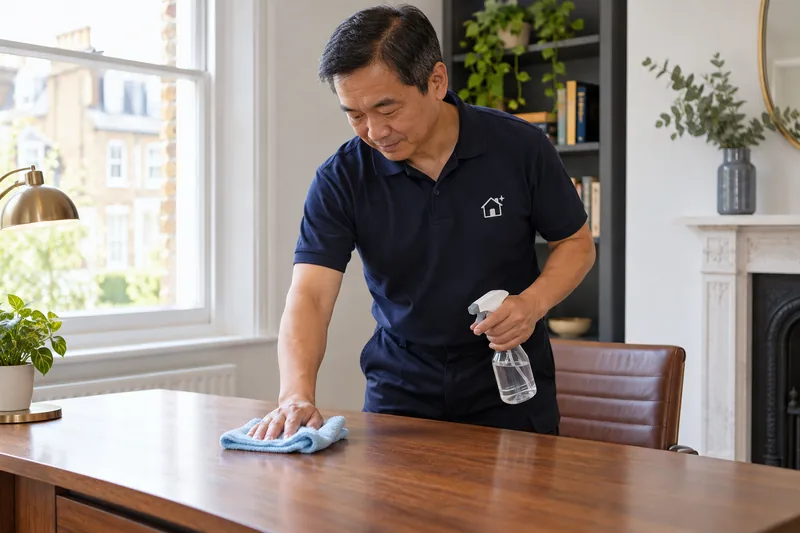
The start time can make a difference to the usefulness of the work. If you need the main bathroom ready first or will be using the kitchen later, describe that practical priority. The proposed sequence can take it into account where possible. Give an actual preferred time and date, with enough working hours for the selected rooms. That is easier to assess than an instruction to arrive whenever convenient and finish a large list before an unspecified deadline.
Weekly and fortnightly help can be built around the jobs you most want maintained. The kitchen and main bathroom might remain the essentials while reachable bedroom surfaces or a small linen task vary in priority. Include the work chosen for the particular visit, with any revised allowance and price agreed. A regular pattern should make the routine easier to follow. It does not mean that a new room, more laundry or a substantial change in condition can fit into unchanged hours.
If you are home during the visit, plan a usable route between the selected rooms. You may be able to use one room while another is cleaned, then swap once the first area is ready. Explain any workspace that must stay undisturbed, with electronic equipment left connected where needed. Confidential papers should remain under your control. A clear accessible desk surface can be a cleaning task, while sorting paperwork or cleaning inside a device is a different kind of work.
For a visit when nobody will be home, establish the access arrangement and a contact who can answer a practical question. A separate flat door, shared entrance or room that stays closed should be identified clearly. Give sensitive entry details through the appropriate private route. Local orientation around Crofton Road or Towncourt Lane supports the address; it does not replace the exact door. The cleaner needs a clear destination and a practical way to reach the work you have selected.
A one-off visit can support a specific occasion without becoming an unlimited whole-home reset. You may want the kitchen and guest bathroom ready, or a guest bedroom with clean linen and an accessible floor. Name that result and the work behind it. A time-sensitive request is still assessed against cover and the required allowance. Choosing a clear focus gives the visit a useful purpose, with other work kept separate if it would prevent the essentials from being finished properly.

Laundry help begins with the stage you want handled. Starting a prepared machine load, folding a dry group and ironing selected garments are different tasks with different finishes. Give the amount and the stage, and identify anything that needs particular care. A wash or drying cycle can continue beyond the cleaning visit, so say who will deal with the next stage. The working allowance should match what the cleaner can actually complete during the appointment.
A folding task can be kept simple by preparing one clean dry group. For example, a basket of pillowcases and sheets with an identified shelf is a clear amount and destination. Sorting several mixed loads into different households or reorganising linen storage is more involved. You can choose the smaller task if that is the useful result you want. Let the cleaner know which items should be hung, laid flat or left untouched so the handling follows the actual contents.
Ironing needs an approximate garment number and type. Everyday tops, shirts and large linen pieces need different amounts of handling, so the assessment should reflect the group you choose. Make a suitable working iron and stable board available, with hangers or a clear place for folded items. Keep specialist garments separate and explain their care requirements. A defined group lets the cleaner work towards a proper finish, and lets you see whether a further allowance would be useful for the remaining clothes.
For a bed change, prepare a complete set that fits the bed and identify where the used linen goes. A guest bed might need the sheet, duvet cover and pillowcases changed, with a reachable bedside surface and floor included as room cleaning. List those parts individually. Personal belongings on the bed need your decisions about storage, or a small handling task assessed in advance. The cleaner can then complete the agreed bed work without searching cupboards for matching pieces.
For confirmed work, the funding arrangement should keep the quoted visit, reserved amount and available balance distinct. The minimum top-up is £35, which is an account funding threshold and not a cleaning-visit price. The service rate and cleaner-hours still determine the charge. If you want to add a garment group or further linen work, its scope and cost remain a separate choice. Funds in an account do not automatically authorise the addition or extend the visit.
An interior cupboard, prepared fridge area or accessible internal glass can be useful selected extras. Describe the specific surface, condition and preparation. Emptying a cupboard yourself can leave the cleaner with a clear cleaning job, while sorting its contents would add handling and decisions. Food needs suitable storage when a fridge compartment is selected. The cleaner should know which part is included and what remains untouched, with the labour allowance reflecting that defined task.
Deep cleaning can be suitable when a first visit needs more attention than ordinary maintenance. Identify accumulated kitchen work, bathroom build-up or a room that has been difficult to keep up with. Relevant photographs may help the assessment, with private details left out. The aim is a realistic plan for the selected surfaces, distinguishing cleaning from wear or damage. A first reset can then be considered separately from a later maintenance routine, with each visit given a useful amount of time.
For an empty-property tenancy clean, starting packages are £189 for a studio or one-bedroom property, £269 for two bedrooms and £329 for three or more bedrooms or a house. Size, condition, bathroom numbers and the agreed checklist inform the quote. Selected tenancy work can include one oven, emptied cupboards and accessible internal windows. Carpet extraction needs separate assessment. The cleaning agreement covers the specified work; it cannot guarantee a landlord’s inspection outcome or a deposit decision.
Choose Other if the household task you want does not fit the listed options. Describe the actual work and its finish, such as a small group of clean items placed on a prepared reachable shelf. The agency can assess suitability, handling and time. Extra time during a visit also needs checking against cleaner availability. Overtime is paid work, with the additional scope and full charge approved before it proceeds. You can keep the original finish if the addition is better left for another request.
You can start with ordinary information: the home address, selected rooms, preferred date and time, proposed hours and the work that matters most. Add care instructions or access details that change the job. There is no need to write a technical cleaning specification. A clear kitchen priority, a named bathroom and a prepared linen group are useful descriptions. The assessment can bring those tasks into a realistic order, with enough working time and a quote you can follow.
If part of the agreed work needs attention, identify the area and task precisely. A mark on the accessible shower face or dust on a selected ledge gives the agency something practical to review with the cleaner. A relevant photograph can help, without showing unrelated documents, private belongings or people. The conversation can then stay focused on the work that was agreed. A different appliance interior or an additional room can be assessed as a new task with an appropriate allowance.
A later visit can reflect what you have learned from using the cleaned rooms. Perhaps the kitchen needs the larger share next time, or a different bed and garment group have become the priority. Explain the change and review the scope and price. The purpose of the arrangement is to direct effort where it helps you. Keeping the task list current allows the cleaner to follow a clear plan, with changes made deliberately and the essential work still easy to recognise.
Request cleaning for your Crofton home with the full postcode and property address, then select the service and your main priorities. Include laundry, ironing or bed work when those tasks would make the help more useful. A confirmed arrangement should leave you with the work, timing and cost together. The cleaner can then arrive with a defined sequence, from the first priority room to the agreed finish, and you can get on with enjoying the parts of your home the visit was chosen to improve.
Need to compare the details? See more cleaning questions →
Provide the complete residential address and postcode so the request can be checked. These are local orientation references; the exact entrance, selected work and assessed cover determine the practical visit. The page itself does not reserve a slot.
At the standard daytime weekly rate of £24 per cleaner-hour, three hours for one cleaner has a £72 base. The final quote reflects the selected work and any applicable timing adjustment. Weekly cleaning has a three-hour minimum.
List the laundry stage and amount, identify the bed and prepare the correct clean linen. Both tasks need working time alongside any room cleaning. A machine cycle that continues after the visit needs an agreed handover to the person completing the next stage.
No. A first clean with accumulated work can need a different assessed service or allowance from maintenance. Describe the condition and priorities so the proposed time suits the actual work. Any additional time needs approval of the scope and full charge.
Take a look around the area, then use your full postcode to plan a clean for your own home.
Area reference only. This map does not mark a company office or confirm service boundaries.
This embedded map is provided by Google, which receives connection information and may use cookies. Google privacy information.
Postcode districts help you browse. They overlap neighbourhood boundaries; your full address and available cleaner time still need checking.
Start with your postcode. We’ll plan the clean around your home.