Weekly cleaning
£24per cleaner-hour
3 hours minimum · £72 daytime basePlan weekly cleaning
Leave less cleaning for the time you wanted to spend at home. Request a Hanwell cleaner around your rooms, priorities and a suitable appointment, whether you want regular upkeep or an assessed occasional catch-up. Include the household tasks that help, from suitable floor care to ironing or bed linen, with enough cleaner-hours for the combined work. You review the proposed list and complete price before agreeing the visit, so the cleaner has practical instructions and the appointment has a clear purpose.

Moving area names stop while hovered or focused. Press Enter or Space, or tap the moving area, to keep them still after leaving. Activate again to allow movement. Browse the directory for the complete list.
A regular helping hand, a proper reset or a clean before your next move. Choose the work your home needs.
Keep the kitchen, bathrooms and everyday rooms feeling cared for.
Explore regular cleaning02 ↗More time for reachable detail and the build-up that needs extra attention.
Explore deep cleaning03 ↗An agreed empty-property checklist, ready for your next chapter.
Explore tenancy cleaningA clear plan for your Hanwell home, from the jobs you need to an agreed visit.
Add your contact details and save your home address.
Pick your service, tasks and property details. Choose a date and start time, then check the full cost.
Top up from £35, with enough to cover the whole visit. The booking amount is reserved from your balance when you confirm.
Agree the plan and an available time. Your visit details stay in your account.
These are starting points. The final scope, timing and suitable cleaner availability need confirmation.
£24per cleaner-hour
3 hours minimum · £72 daytime basePlan weekly cleaning£26per cleaner-hour
3 hours minimum · £78 daytime basePlan fortnightly cleaning£28per cleaner-hour
3 hours minimum · £84 daytime basePlan one-off cleaning£35per cleaner-hour
4 hours minimum · £140 daytime basePlan deep cleaningEarly starts, late finishes and next-day requests can cost more. The full breakdown is shown before agreement. See timing prices and assessed extras →
Studio & 1 bed from £189 · 2 beds from £269 · 3+ beds & houses from £329
 Hanwell · W7
A clean is more useful when the cleaner knows exactly where to start. Pick your rooms, add your priorities and allow enough time for the work.
Ironing and laundry use the same booked time. A long checklist may need more than the minimum visit.
Build my cleaning planHouse, flat or studio—start with what matters most to you.
A useful appointment starts with the household work you want to stop carrying forward. The kitchen and bathroom may keep consuming the weekend, or a few rooms may need a proper catch-up before a regular routine feels manageable. Choose those outcomes first. They help the agency consider the right service and enough time, and give the cleaner a practical order. You can include selected rooms or a broader list within an appropriate allowance, rather than assume every possible task deserves equal priority in the same minimum visit.
Hanwell's homes do not share one layout. The council's Village Green character material describes the setting around Church Road, Hanwell Green and Cuckoo Lane, with later residential streets including Manor Court Road, Alwyne Road, Golden Manor and Campbell Road. Those bounded observations help explain the district's variety, but your own rooms still need to be specified. Select House, Flat or Studio and include the bathrooms, internal levels and spaces you want attended to. The work inside the property determines the cleaning plan.
Provide the full W7 postcode and exact home address, including a flat or building identifier and correct entrance where relevant. A location near the green, station or another familiar landmark is not enough to establish the doorway or an available cleaner slot. The agency considers the actual property with the requested service and appointment. If access is separate from the main frontage, explain the route you are authorised to use, so the residential destination is clear before the visit is accepted.
Keep private spaces and personal permissions clear. You may request shared household rooms while excluding bedrooms, or choose an agreed linen task in a bedroom without broader cleaning there. In a home shared by several adults, establish one list and a contact who can answer questions. The cleaner should be able to follow accepted instructions rather than decide which of several preferences takes precedence after arrival. Clear boundaries also let the working allowance serve the rooms and tasks you actually chose.
Use the room and task choices for ordinary work, adding a short note for significant build-up, a deadline or a material restriction. The enquiry can stay manageable without a long written account of routine cleaning. The agency considers suitable cleaner skills, coverage and availability and proposes a list with a realistic allowance. You review the scope and complete amount before confirming. That gives you a concrete choice about the help needed and gives the cleaner the important details before work begins.

For kitchen cleaning, identify accessible worktops, the sink, hob exterior and suitable floor care. A dining surface or other requested reachable detail can be considered too. Explain whether dishes are part of the visit and what will be clear when the cleaner arrives. Washing up uses some of the same hours as surrounding surfaces. If your main aim is a preparation area ready for cooking, keep that result visible so the proposed sequence and allowance address it before time is committed to lower-priority tasks.
Describe significant grease or neglected detail during assessment. A first-clean catch-up and routine upkeep in a maintained kitchen can need different services or amounts of time. You can compare an intensive reset with a focused visit or a broader household list. The accepted work should have a realistic endpoint for the starting condition you explained. It should not depend on discovering after arrival that the kitchen is a substantially larger job and then squeezing the other agreed rooms into the remaining time.
Appliance and cupboard interiors need to be named where requested, with their condition and preparation clear. A fridge interior may need an arrangement for its contents; oven work needs the appropriate method and scope assessed. Check what the selected service includes, including an assessed empty-property package where relevant, and understand separate additions consistently. You can decide which detailed jobs belong in the current appointment when their work and price are visible, rather than assume every interior comes with the general kitchen selection.
Count the bathroom spaces included, with an ensuite, shower room and separate toilet stated if wanted. Describe the fixtures, established scale and other significant deposits. The bedroom count does not establish how much bathroom work is needed. You can prioritise the main shower, basin and toilet before less urgent detail in another room, or request more time for a larger combination. The agency can assess a suitable service and allowance for those actual fittings and their condition.
Make relevant care guidance available for surfaces that need a particular approach. Identify damaged seals, loose fittings and anything to leave untouched. Cleaning should be distinguished from repairing a fault or restoring a finish, with uncertainty raised before a treatment is expected. The useful proposal gives you a realistic understanding of the bathroom and kitchen work accepted. It does not promise every mark can be removed, or that stronger products are suitable simply because a concern remains after ordinary domestic care.
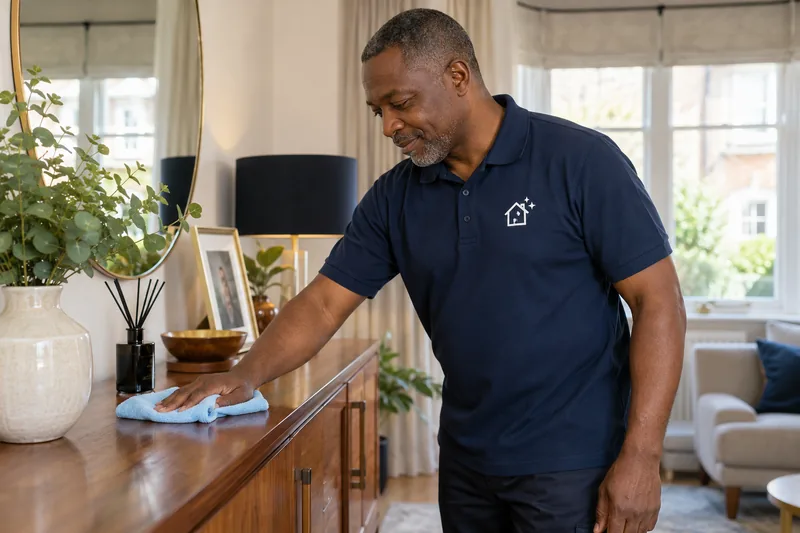
Reachable dusting can be planned for accessible furniture tops, shelves and other agreed surfaces. Name delicate objects, papers and equipment to leave alone. Where practical, prepare private or valuable belongings yourself so the cleaner can focus on accepted surface care. A cleared sideboard differs from organising a crowded collection of possessions. General room cleaning should not require the cleaner to decide where personal items belong, sort drawers or infer permission to rearrange everything simply because the surrounding space has been selected.
List the floor finishes and rooms requested, with internal stairs included explicitly where wanted. Suitable vacuuming and mopping should follow those actual materials and relevant care instructions. Mention a rug, damaged finish or area that must remain dry. Stain treatment, carpet extraction and specialist upholstery work are separate requests where relevant. The method, equipment and amount may differ from ordinary maintenance. A larger hourly allowance should not be mistaken for agreement to every type of treatment on every floor or furnishing.
If a room is used for work, explain which surfaces are available and when. You can exclude the desk, screens and papers while requesting floor care or a cleared shelf. Calls or an occupied room may affect the sequence, so describe those constraints while planning. The cleaner needs permissions for the actual task and a workable route through the home. That allows useful household help without treating a room choice as authority to unplug equipment or handle private documents during the visit.
Explain belongings or furniture that block an intended area, and make accepted surfaces reasonably accessible where practical. Heavy lifting, awkward-height work and specialist handling need their own consideration. Additional routine hours are not a substitute for a suitable method. A domestic flat appointment also does not automatically include common building stairs or halls. If shared spaces are wanted, identify the relevant authority and separate scope. These boundaries keep the cleaner's time directed towards the accepted property and tasks rather than unassessed work along the way.
The council describes both older and later residential development in parts of Hanwell. Your home's actual care requirements still need to be stated individually. The age of a house cannot identify which interior finish is present or which product it tolerates. Share relevant manufacturer guidance and explain existing damage or items to leave alone. An appropriate cleaning approach should address the accepted surfaces without a blanket promise about restoration, with any uncertain or different treatment raised during assessment instead of guessed after arrival.

For ironing, identify the approximate load and garments needed first, with care labels and specialist exclusions clear. Safe equipment and an appropriate workspace should be ready where agreed. A selected group of everyday items has a different workload from a large mixed basket. The request needs enough time alongside room cleaning. You can compare a longer suitable appointment or a different task balance, rather than assume every garment becomes unlimited extra work inside the same minimum duration.
Prepare a destination for finished items, such as suitable hangers or a clear place for folded clothes. Keep garments ready for ironing separate from used laundry and explain anything you prefer to handle yourself. These details help the accepted task reach a useful result without personal storage decisions. They also make it easier to review the work at handover, because the list concerns an understood group of items and a clear endpoint rather than a general promise to organise all clothing and household possessions.
Choose the laundry stage you want assessed. Sorting, starting a suitable wash, hanging ready items and folding dry clothes are distinct hands-on jobs. Explain what will be available at the start and who deals with a machine cycle finishing later. Washing or drying may continue after the cleaner leaves, so the complete process cannot be promised within a shorter appointment. The accepted contribution can still remove useful work from your list while preserving an agreed finish time and clear later arrangements for the household.
Bed help needs the number of beds and the action: straightening or a full change of linen. Leave the correct clean sets ready as arranged and indicate where used linen goes. Describe a sofa bed or an unusual handling requirement for assessment. A bedroom may have limited access for that task if broader room cleaning is excluded. The time for each accepted linen job belongs with the combined workload, rather than being assumed to have no effect on the hours available for the main cleaning priorities.
Other gives you a place to describe a household task not covered by the normal choices. Name the job, amount and relevant equipment so suitability, cleaner competence, time and price can be assessed. Each extra request shares the accepted labour allowance unless more time is agreed. You might alternate a domestic task across recurring visits or choose a broader appointment on another suitable date. The resulting plan should be a defined selection the cleaner can follow, with an achievable purpose and no assumption of unlimited additions.
Weekly cleaning starts at £24 per cleaner-hour with a three-hour minimum, and fortnightly cleaning at £26 with the same minimum. At standard daytime base rates, one cleaner for three hours starts at £72 weekly or £78 fortnightly before applicable additions. Those examples establish a starting comparison, not the duration every property needs. Describe the actual workload and what you will manage between visits, then review the list, interval and complete amount together so the proposed arrangement can remain useful over time.
One-off cleaning starts at £28 per cleaner-hour with a three-hour minimum. It can suit a specific catch-up or a defined household occasion when the condition and desired result are clear. Deep cleaning starts at £35 per cleaner-hour and a four-hour minimum, with intensive tasks assessed separately. A first reset can differ from later maintenance. Choose the service for its accepted work and appropriate method, rather than assume every detailed interior, fabric treatment or restoration concern is included because more routine hours were selected.
For an empty home at a move-in or tenancy change, starting packages are £189 for a studio or one bedroom, £269 for two bedrooms and £329 for three or more bedrooms or a house. The assessment needs bathroom and appliance details, condition, preparation and separately requested additions. Read the whole checklist and complete quote. No package can guarantee a landlord's deposit decision or inspection outcome, and a furnished or occupied property should not be assumed to fit an assessment made for an empty home.
The service date and start time can affect the complete cost. Early or later work, short notice and applicable holiday rates are considered, with additions itemised before agreement. Cleaner-hours measure labour; an accepted team may provide the same total hours over a different elapsed appointment window, subject to suitability and availability. For confirmed funded bookings, top-ups begin at £35 and the full required available balance is needed before reservation. That minimum funding amount is not a promise about the price of the cleaning itself.
Extra work or overtime needs approval of the task, time and charge before being accepted. If the assessed proposal is beyond your intended spend, compare a smaller useful list or another suitable time, checking the resulting exclusions. A clear change lets you protect the important outcome while choosing an appropriate amount of help. The cleaner should have a defined endpoint rather than an open-ended obligation to fit every later request into unchanged hours or extend the visit with a charge you did not agree.

Agree an authorised way into the home and the final handover, whether you will be there or another permitted arrangement is involved. Confirm any reception, representative or key process with the person responsible. Keep confidential access details out of public comments and photographs and provide a practical contact for an unexpected problem. The actual residential route matters more than a nearby landmark. A general address or shared main doorway may not establish entry to the specific flat and rooms covered by your appointment.
Choose a preferred start time you can accommodate with those arrangements. An occupied room, planned departure or building requirement may affect when accepted work can begin. Explain the constraints while the visit is being assessed. Suitable cleaner availability still needs confirmation, and proximity to a station or familiar road does not guarantee an immediate slot. A workable appointment gives the cleaner entry at the agreed time and a sensible sequence through the included spaces, while the household understands the window reserved for the service.
For recurring cleaning, have the agreed safe, usable vacuum, mop and bucket available. The company arranges approved products, cloths and protective equipment. Report missing or unsuitable equipment in advance; safe ironing equipment and workspace must also be ready if that work is accepted. Explain pet arrangements and known hazards, and clear the intended surfaces where practical. These preparations support the household help chosen and allow a practical problem to be considered before arrival, rather than expecting the same work with essential equipment or access unavailable.
For an empty-property clean, coordinate removals, deliveries and whoever controls the keys so the agreed checklist is ready to perform. Explain a room still occupied, stored belongings or another change in condition. The original scope and amount may need reconsideration if the circumstances differ materially. A useful visit needs the actual preparation and access understood, rather than an assumption that the same bedroom count makes an empty home and a property still being packed equivalent cleaning requests.
The accepted instructions should identify included rooms, priority tasks, quantities and relevant care restrictions. Check exclusions alongside the proposed hours. You should recognise the result you wanted in the list, whether a focused kitchen-and-bathroom visit or a broader plan with selected linen help. The cleaner can work to an agreed order, while you have a concrete basis for reviewing the service. A broad domestic-cleaning label or duration alone does not show how the working allowance was intended to serve the particular household.
Cleaner identity and suitability verification is required before approval for work, with requests considered against relevant skills, coverage and availability. Your property and task details define the visit within that process. If the household priorities change, explain the difference to the agency and have its effect on time and price assessed. Exchanging tasks can differ from adding work alongside everything already accepted. The revised plan should remain suitable and achievable, with additional hours approved rather than treated as an informal expectation of indefinite overtime.
Raise missed work with a specific account of the room, task and surface concerned, reporting promptly and within 48 hours where possible. An appropriate private photo can help where useful, but exclude people, papers, screens, keys and security details. The facts can then be considered against the accepted checklist while circumstances are clearer. This reporting request preserves statutory rights and does not promise a particular remedy before the booking terms and details of the issue have been assessed.
To begin a Hanwell enquiry, enter the full home postcode and property details, choose the service and select a preferred date and start. Mark the rooms and domestic tasks, then review the assessed scope, cleaner-hours and complete amount. These steps keep the request manageable while giving the cleaner the information needed beforehand. Choose a regular routine or an occasional clean with the same practical purpose: enough accepted help where you need it, leaving fewer household jobs waiting for your own time at home.
Need to compare the details? See more cleaning questions →
Identify the rooms and tasks wanted and the spaces to keep private. A focused list can be assessed within the selected service minimum, with enough time for the actual condition and any extra domestic help. The cleaner needs an accepted order and clear permissions rather than an assumption that every room in the home is included.
Weekly cleaning starts at £24 per cleaner-hour with a three-hour minimum, giving a £72 standard daytime base example for one cleaner. The actual workload can need more hours or another service. Applicable timing and other additions are itemised before agreement; review the complete scope and amount together.
Request the number of beds and whether you want straightening or a full change, plus an approximate ironing quantity and garment priorities. Correct clean linen and safe equipment need to be ready as agreed. These jobs use the same working allowance as room cleaning, so the combined list needs enough time.
Tell the agency promptly and explain the difference so the scope, timing, preparation and any price effect can be considered. A home still being packed, an unavailable room or missing equipment may not fit the original assessment. An updated accepted plan is needed rather than assuming the same room count makes the work unchanged.
Take a look around the area, then use your full postcode to plan a clean for your own home.
Area reference only. This map does not mark a company office or confirm service boundaries.
This embedded map is provided by Google, which receives connection information and may use cookies. Google privacy information.
Postcode districts help you browse. They overlap neighbourhood boundaries; your full address and available cleaner time still need checking.
Start with your postcode. We’ll plan the clean around your home.