Weekly cleaning
£24per cleaner-hour
3 hours minimum · £72 daytime basePlan weekly cleaning
A home can have several people with different cleaning priorities and still have one clear booking. For a Brackenbury Village enquiry, bring those priorities together into the actual contribution you want assessed: selected rooms, suitable household actions and enough paid time. Council material records the local junction of Aldensley Road and Brackenbury Road as a village-shop reference. Your own residence supplies the private details that matter to the job. Local House Cleaners London can consider suitable help from an agreed brief, giving the customer a clearer purchase and the cleaner a practical instruction before different informal requests compete for the same appointment.

Moving area names stop while hovered or focused. Press Enter or Space, or tap the moving area, to keep them still after leaving. Activate again to allow movement. Browse the directory for the complete list.
A regular helping hand, a proper reset or a clean before your next move. Choose the work your home needs.
Keep the kitchen, bathrooms and everyday rooms feeling cared for.
Explore regular cleaning02 ↗More time for reachable detail and the build-up that needs extra attention.
Explore deep cleaning03 ↗An agreed empty-property checklist, ready for your next chapter.
Explore tenancy cleaningA clear plan for your Brackenbury Village home, from the jobs you need to an agreed visit.
Add your contact details and save your home address.
Pick your service, tasks and property details. Choose a date and start time, then check the full cost.
Top up from £35, with enough to cover the whole visit. The booking amount is reserved from your balance when you confirm.
Agree the plan and an available time. Your visit details stay in your account.
These are starting points. The final scope, timing and suitable cleaner availability need confirmation.
£24per cleaner-hour
3 hours minimum · £72 daytime basePlan weekly cleaning£26per cleaner-hour
3 hours minimum · £78 daytime basePlan fortnightly cleaning£28per cleaner-hour
3 hours minimum · £84 daytime basePlan one-off cleaning£35per cleaner-hour
4 hours minimum · £140 daytime basePlan deep cleaningEarly starts, late finishes and next-day requests can cost more. The full breakdown is shown before agreement. See timing prices and assessed extras →
Studio & 1 bed from £189 · 2 beds from £269 · 3+ beds & houses from £329
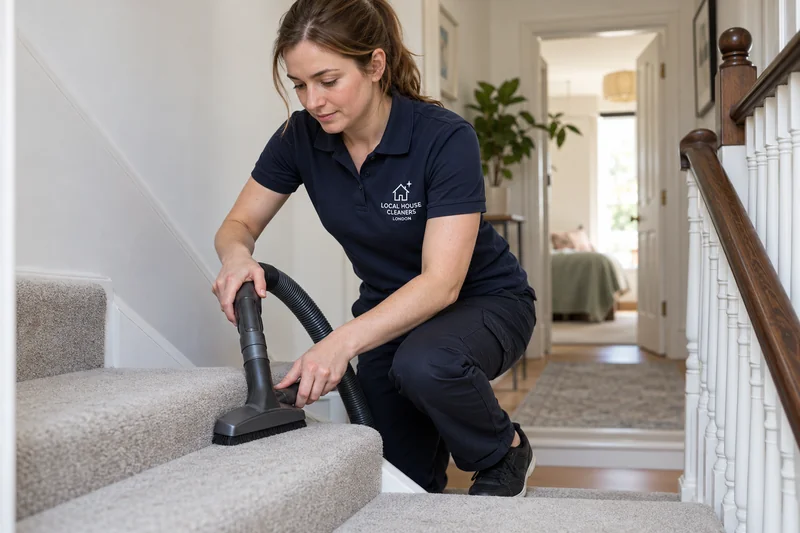 Brackenbury Village · W6
A clean is more useful when the cleaner knows exactly where to start. Pick your rooms, add your priorities and allow enough time for the work.
Ironing and laundry use the same booked time. A long checklist may need more than the minimum visit.
Build my cleaning planHouse, flat or studio—start with what matters most to you.
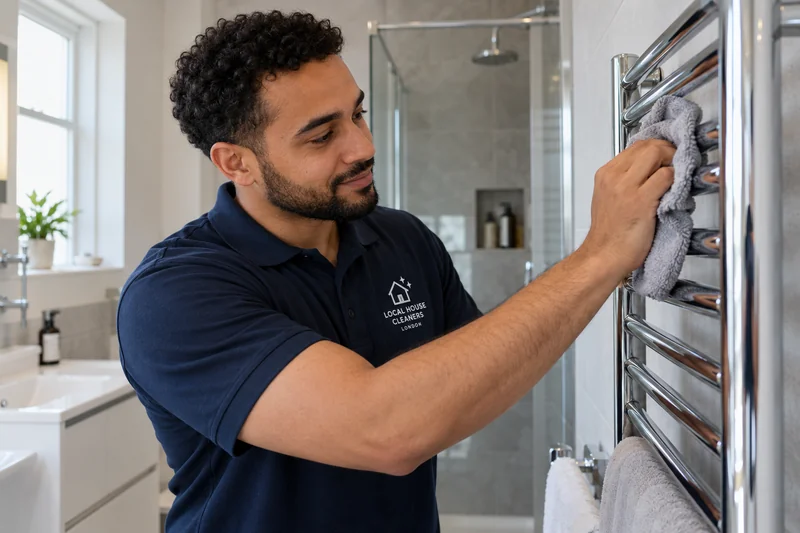
Begin with the actions the household agrees would make the visit worthwhile. One person may value bathroom care while another wants the accessible kitchen surfaces attended to. Identify what is essential, what is optional for discussion and what remains outside the request. There is no need to make every preference equally urgent. A useful booking can concentrate on a deliberate set of priorities, with the agency assessing suitable labour for that combination rather than leaving the cleaner to resolve a household debate after arriving.
Turn each priority into identifiable work. Name the bathroom fixtures, actual kitchen areas, reachable dusting or suitable floor actions wanted, with quantities and condition. A bedroom count does not reveal every connecting floor area, and a room title does not include every appliance or storage action automatically. Describe any companion contribution separately. This gives the agency a real combination to assess and gives the household a way to see whether the proposed allowance supports the work that prompted the enquiry.
Agree what the household will prepare and what decisions will remain private. A chosen room may need personal items put away, matching linen made ready or a clear route to the selected floor. Give an honest description of what will be available. A cleaner can be asked to carry out an assessed suitable handling action with permission and a destination, but ordinary cleaning does not give them authority to decide ownership, discard possessions or invent a storage arrangement on behalf of different people in the home.
Brackenbury Village provides the locality for the enquiry, while the actual residential address, postcode and property type identify the home. The council's local junction reference does not establish any private property's layout, material, household composition or entrance. Give relevant room and admission details yourself. The useful brief should describe the residence as it will be available for the accepted work, allowing appropriate help to be considered without a general neighbourhood picture standing in for the actual practical facts.
A simple priority conversation can prevent an avoidable misunderstanding. If kitchen care is the reason for booking while bedroom dusting is only a possible option, say so in the enquiry. Another person may still want that optional action, but its place in the proposal should be considered openly. The agency can assess the chosen combination and an appropriate allowance, leaving the customer able to compare a focused plan with a fuller one. The cleaner then works from a deliberate decision rather than a vote taken at the doorway.

Ordinary weekly cleaning starts at £24 per cleaner-hour, fortnightly at £26 and one-off at £28, each with a three-hour minimum per cleaner. One cleaner's ordinary three-hour base amounts are £72, £78 and £84 respectively. These shared starting rates apply consistently to the relevant arrangements. The allowance still needs to reflect your actual work. Several people's individual priorities do not become a smaller workload simply because they are combined into one booking, so assess the complete contribution rather than treating the minimum as a promise to fit every request.
For example, a suitable five-hour weekly proposal has a £120 base, while five fortnightly hours have a £130 base. If the household wants six cleaner-hours under a fortnightly arrangement, that base is £156. Discuss what those hours have been assessed to support and which plan provides the useful contribution you want to buy. A smaller focused brief may be an appropriate choice if the broader amount exceeds the intended budget. Keeping every task while removing necessary labour does not resolve the underlying difference.
Assessed deep cleaning starts at £35 per cleaner-hour with a four-hour minimum per cleaner, giving a £140 minimum base for one cleaner. Explain the condition and actions wanted so the appropriate category can be considered. A first visit or an extensive family discussion does not itself determine that the work is deep cleaning. Review the actual contribution and preparation as well as the rate. The category should make the proposal clearer, without becoming an assumption that every treatment and extra household request is included.
Check the offered date and start with applicable early, evening, short-notice or holiday adjustments and accepted extras understood in the total. The account has a £35 minimum top-up, while the available funds must cover the complete accepted reservation. That threshold does not set the whole booking amount. A contribution to the household's account balance does not by itself confirm attendance or approve a change in tasks. Keep the customer's purchasing authority clear so a funded account remains connected to a defined accepted plan rather than an unlimited instruction.
One person may know the care instructions for a surface while another knows where suitable equipment is kept. Gather the relevant facts for the accepted work and provide them coherently through the agency. A known finish, previous treatment or manufacturer restriction can affect what is suitable. If information remains uncertain, identify the question rather than allowing a confident assumption to fill the gap. The agency can assess the actual requested action with that uncertainty visible, leaving an inappropriate or unresolved treatment outside the contribution.
Explain specialist or unusual requests explicitly. An appliance interior, fabric treatment or unfamiliar material may need a different assessment from ordinary room care. More paid time does not make every method suitable, and a person owning an item does not establish that any suggested treatment is appropriate for it. Describe observations and reliable guidance without diagnosing the cause of a mark. Cleaning, repair and restoration are different contributions, so a useful household instruction should identify the action wanted instead of promising a particular transformation of every surface.
The agency verifies cleaner identity and approves cleaners before they can accept work. Relevant skills, coverage and available time also need to match the current brief. A customer supplies useful details about the household's work, while approval remains the agency's responsibility. If an optional request is important, include it during the enquiry so the appropriate contribution can be considered. The cleaner should receive an assessed job rather than discover a separate specialist instruction from someone whose preference was never part of the accepted arrangement.
For routine cleaning, have the agreed safe, working household vacuum, mop and bucket ready with their necessary parts, usable power and access. The company arranges approved cleaning products, cloths and protective equipment. Confirm the setup for another category or particular added stage through the agency. Explain equipment damage or a missing component before attendance. Sharing one accurate equipment arrangement is more useful than several people assuming someone else will supply it, and it lets the proposed contribution reflect the essentials that will actually be available.
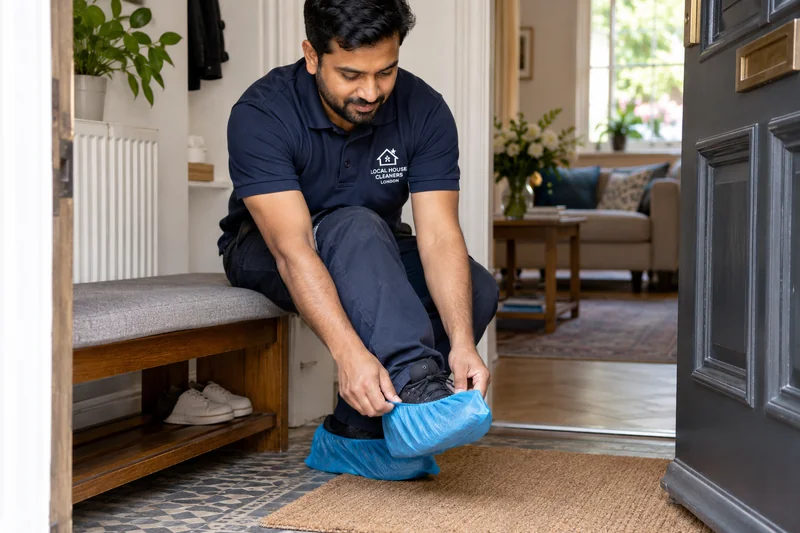
Arrange authorised admission to the actual residence, with the relevant building, flat or bell details supplied through the agreed booking route. Identify who will open the door and who can answer a question about the accepted work. Public village references are orientation only; they are not private access instructions or an agency reception. The cleaner needs the correct home and a permitted route to the selected areas, while sensitive entry information should remain with the people and channels that need it for this appointment.
If another household member is present, make sure they know the agreed room priorities and exclusions. They can point out equipment and practical preparation without producing a competing list of optional jobs. Explain whether they can clarify a care instruction and who retains authority to approve spending changes. Those roles may differ. An admission contact does not automatically become the purchaser of a larger contribution simply because they are the person the cleaner encounters first at the door.
Describe which areas will be available at the intended time. A room used for another purpose may need a clear arrangement before the accepted action can proceed, while the kitchen might remain occupied for part of the appointment. Tell the agency those constraints so suitable work and an appropriate order can be assessed. A household can request useful cleaning while retaining activity elsewhere, provided the actual accepted contribution and allowance reflect what is accessible rather than assuming every room becomes free simultaneously.
Include practical information about pets or people where it affects the selected work or route. The household remains responsible for care and supervision; this is not an assumed supervision service or a blanket assurance about every animal and product combination. Identify doors that should stay closed and relevant excluded areas. When practical facts change, tell the agency promptly. One current account of entry, ready work and restrictions gives the cleaner a more useful starting point than different people relying on separate outdated assumptions about the same visit.
Keep practical preparation proportionate to the accepted work. The person admitting the cleaner can identify the ready room and agreed equipment without needing a tour of every private space. An excluded cupboard or personal collection should remain clearly outside the contribution. Where a suitable defined placement action is included, its destination should be known. Those details give the cleaner actionable work while limiting the need for personal questions, and they make the household's preparation easier to repeat if a similar contribution is requested again.

An optional request can be considered when its purpose is clear. If the household wants one bed prepared, identify the bed, exact action, matching ready linen and destination of used pieces. If a suitable ironing group is wanted, describe its quantity, care, agreed tools and placement. These actions add labour to assess; they should not silently take the time intended for an essential bathroom contribution. The agency can consider an appropriate combined plan when it knows the priorities and actual work behind the categories.
Laundry needs the hands-on stage wanted and its endpoint explained. A machine programme's elapsed time is not equivalent to labour time or a promise that drying, pressing and storage can all follow within the booked visit. If a later action depends on a stage that may not be ready, make the dependency visible. The household may choose a contribution based on prepared items or ask for a limited suitable stage to be assessed. Clear preparation can make flexibility useful without turning a broad label into an unlimited sequence.
For a recurring arrangement, review what different people still find useful after the accepted contribution. You may decide that selected room care remains the core while an optional clothing request happens only occasionally. Explain a temporary variation as temporary, and keep the following request current. Weekly or fortnightly pricing does not promise an expanding amount of work within unchanged hours, automatic rescheduling or the same cleaner regardless of suitability and availability. The routine should follow an actual agreed purpose rather than accumulate every informal suggestion made over time.
When priorities conflict, settle the household choice through the agency before relying on a revised plan. Explain whether a new action replaces earlier work or adds to it, then review suitability, labour and the complete amount. A cleaner should not be required to decide whose preference has purchasing authority or which essential task should disappear to make someone else's extra fit. One recognised current contribution gives flexibility a practical boundary and leaves the customer able to choose the support that actually serves the household now.
Identify what a proposed addition would involve. A further bathroom needs its actual fixtures and condition described; a new floor area needs its covering and quantity; an appliance request needs the appliance and preparation understood. The agency can assess the appropriate work and any equipment or skills needed, alongside its effect on the original contribution. You can then choose the revised proposal or retain the accepted plan. A task being mentioned by someone inside the home does not make it an automatic paid inclusion.
Keep specialist carpet work distinguishable from ordinary vacuuming. Published starting prices include £45 per standard room and £65 for stairs and landing. Suitable trained operators and equipment are required, with an £85 minimum for standalone appliance or fabric-care bookings. That minimum is not another £85 added to each listed item. Describe the actual specialist request so the complete arrangement can be assessed. Consistent starting figures help the household discuss the same service facts, while the accepted quote explains the particular work and amount being purchased.
If a different purpose requires an end-of-tenancy proposal, identify the empty property's actual needs. The defined tenancy scope includes one oven, empty cupboard interiors and accessible internal windows; those included actions should not become duplicate extras within that accepted scope. It is a distinct request from an occupied home's recurring room contribution. Additional requirements need assessment, and the service does not guarantee inspection approval or deposit recovery. A familiar address and several people wanting the home cleaned do not replace a clear current proposal for the actual handover work.
Extra tasks, charges and overtime require agreement before additional work proceeds. Account funds, silence or an electronic finish record do not supply that approval. Keep the agency's accepted revised instruction clear, including the effect on existing priorities and the whole amount. If an admitting person suggests an addition without the relevant purchasing authority, the customer decision still needs to be obtained. A useful accepted plan can continue on its own terms while a separate proposed action is considered, without treating informal discussion as permission to enlarge attendance.
Use the accepted room actions and properly agreed changes when checking the appointment. If one person's optional request remained outside the contribution, it should be described as possible new work, not automatically as a missed inclusion. A concern about an accepted action is a different matter. The agency can consider the actual issue when the household identifies the part of the service involved. A clear brief gives everyone a common practical reference, helping the discussion stay connected to what was purchased rather than to several different unrecorded expectations.
For a service concern, identify the location, action and observation through the private agency channel. Include relevant care information and the accepted instruction; suitable photos may help without exposing unrelated personal material. Raise concerns within 48 hours where possible while circumstances remain recent. This practical reporting request preserves statutory rights. The customer can ask the agency to consider supplied work without having to purchase another appointment as a condition of obtaining that response, and a fresh paid request can be assessed separately if further help is genuinely wanted.
Discuss the preparation and priorities that worked well for future planning. Perhaps one room was a useful core contribution, while another needs a clearer household decision before its action can be assessed next time. Explain the actual change rather than simply repeating every previous category. Keep current care, quantity and entry details accurate. The agency can consider the next appropriate proposal from those facts, allowing useful support to continue without assuming that the same address and familiar participants always produce the same workload or practical arrangement.
For a Brackenbury Village home-cleaning request, bring the household's wishes into one purposeful brief. Give the actual residence, selected actions, relevant care and practical preparation, then review the appropriate labour and complete amount. You can choose a limited occasional contribution or discuss a realistic routine. The cleaner receives a coherent paid job, the admitting person knows the practical arrangement and the customer retains control of additions. That clarity lets the visit support the work you actually agreed was worth buying for this home.
Separate a preference for a different future contribution from a question about the service already supplied. One person may now value a different room priority, which can become a planning enquiry without implying that the accepted work should have included it. Where there is a genuine concern about an accepted action, report that clearly in its own right. This distinction helps the household choose future support thoughtfully while leaving the agency able to consider the previous service on its actual facts and instruction.
Need to compare the details? See more cleaning questions →
Bring the selected actions together and identify essential work, optional additions and exclusions. Give their actual quantities, condition, care and readiness. The agency can assess a suitable combined contribution and enough labour, rather than leaving the cleaner to reconcile competing informal room lists after arrival.
Explain the admitting person's practical role and the customer's purchasing authority through the agency. Admission and pointing out equipment do not themselves authorise additions. Extra tasks, charges and overtime need agreement before the new work proceeds, including its effect on original priorities and the complete amount.
Describe the particular suitable ironing, bed or laundry action, with its quantity, care, preparation and endpoint. Explain whether it adds to or replaces earlier work. The allowance must support the accepted combination; a broad category name does not include unlimited downstream household stages automatically.
No. The council's Aldensley Road and Brackenbury Road junction reference provides bounded local orientation. Give the actual private address, postcode, property type, selected areas and admission arrangement. Public locality material does not establish an individual home's layout, material, household composition or access permission.
Take a look around the area, then use your full postcode to plan a clean for your own home.
Area reference only. This map does not mark a company office or confirm service boundaries.
This embedded map is provided by Google, which receives connection information and may use cookies. Google privacy information.
Postcode districts help you browse. They overlap neighbourhood boundaries; your full address and available cleaner time still need checking.
Start with your postcode. We’ll plan the clean around your home.