Weekly cleaning
£24per cleaner-hour
3 hours minimum · £72 daytime basePlan weekly cleaning
A clean home should make ordinary routines easier: preparing food on a clear worktop, stepping into a bathroom that has been properly attended to, and sitting down without first finding another cleaning job. For your Rylands Estate home, Local House Cleaners starts with the work that would help you most. Tell us which rooms need attention, how the home is used and what can wait. We can then assess an appropriate visit, explain the price and agree a practical order of work rather than squeeze an unlimited list into a short appointment.

Moving area names stop while hovered or focused. Press Enter or Space, or tap the moving area, to keep them still after leaving. Activate again to allow movement. Browse the directory for the complete list.
A regular helping hand, a proper reset or a clean before your next move. Choose the work your home needs.
Keep the kitchen, bathrooms and everyday rooms feeling cared for.
Explore regular cleaning02 ↗More time for reachable detail and the build-up that needs extra attention.
Explore deep cleaning03 ↗An agreed empty-property checklist, ready for your next chapter.
Explore tenancy cleaningA clear plan for your Rylands Estate home, from the jobs you need to an agreed visit.
Add your contact details and save your home address.
Pick your service, tasks and property details. Choose a date and start time, then check the full cost.
Top up from £35, with enough to cover the whole visit. The booking amount is reserved from your balance when you confirm.
Agree the plan and an available time. Your visit details stay in your account.
These are starting points. The final scope, timing and suitable cleaner availability need confirmation.
£24per cleaner-hour
3 hours minimum · £72 daytime basePlan weekly cleaning£26per cleaner-hour
3 hours minimum · £78 daytime basePlan fortnightly cleaning£28per cleaner-hour
3 hours minimum · £84 daytime basePlan one-off cleaning£35per cleaner-hour
4 hours minimum · £140 daytime basePlan deep cleaningEarly starts, late finishes and next-day requests can cost more. The full breakdown is shown before agreement. See timing prices and assessed extras →
Studio & 1 bed from £189 · 2 beds from £269 · 3+ beds & houses from £329
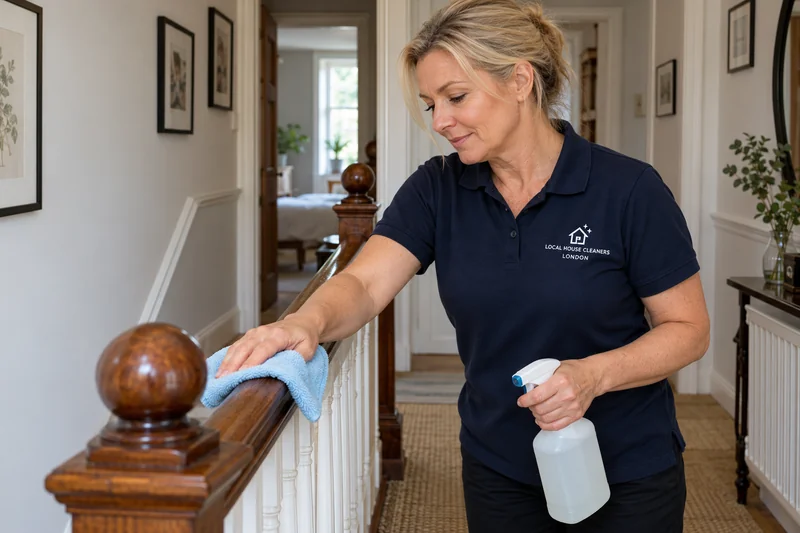 Rylands Estate · RM10
A clean is more useful when the cleaner knows exactly where to start. Pick your rooms, add your priorities and allow enough time for the work.
Ironing and laundry use the same booked time. A long checklist may need more than the minimum visit.
Build my cleaning planHouse, flat or studio—start with what matters most to you.

Some homes need a reliable weekly foundation; others need help recovering a kitchen and bathroom after a busy period. Those are different requests, even when the bedroom count is identical. Begin by naming the result you want at the end of the visit. That could be clean washing facilities and floors throughout the used rooms, or a more concentrated kitchen appointment with only essential work elsewhere. A clear first priority gives the cleaner something useful to protect if another task takes longer.
Make the room list specific enough to price without turning it into a household inventory. Say whether there is a separate toilet, an additional shower room, a study that needs cleaning or a bedroom that should stay untouched. Mention a large dining table, open shelving or several bathroom fittings when they materially change the work. You do not need to describe the contents of private cupboards if their interiors are outside the agreed service.
It also helps to distinguish cleaning from making space to clean. Wiping an accessible table is a different job from sorting paperwork piled across it. If belongings are blocking the surfaces you want done, you can clear them beforehand or ask us to assess a defined amount of straightening. A request to put shoes together or fold one basket of dry clothes is much easier to agree than an instruction to tidy everything.
For a shared home, settle one set of priorities before the visit. Different occupants may care about different rooms, but the cleaner needs an agreed sequence and a person authorised to answer questions. Explain which spaces are communal and which bedrooms have permission for entry. Where a room is unavailable on the day, the remaining agreed work can take priority; the cleaner should not have to guess whose belongings can be moved.
Think about what would make the biggest difference between visits as well. Keeping a sink accessible, leaving a safe route across the floor or gathering washable linen in one agreed place can make the next appointment more productive. These are choices for your household, not conditions that every home must meet. Our role is to build a manageable cleaning plan around the help you actually want.
The kitchen often contains several different kinds of work within a small space. Worktops, a hob exterior, sink, taps and reachable cupboard fronts can all need different treatment. Tell us which of these are priorities and whether grease or a long period without cleaning has changed the condition. A routine wipe of recently maintained surfaces is not the same undertaking as removing a substantial build-up, and the allocated time should reflect that difference.
An accessible worktop lets the cleaner work along the surface and around its edges rather than stop at each appliance. Agree how small movable items will be handled, particularly anything fragile, plugged in or difficult to lift. Food should be put away safely and valuable items left outside the working area. The aim is a properly cleaned preparation space, with belongings returned to agreed positions, rather than a hurried pass through the gaps.
At the sink, useful details include the material, any particular care instructions and whether draining accessories are included. A stainless steel bowl, a delicate finish and a stone surround do not invite the same products or abrasive tools. If a mark is already present or a fitting is loose, point it out before work begins. Cleaning can improve ordinary dirt and residue; it cannot guarantee the repair of scratches, damaged sealant or a worn surface.
Handles and frequently touched edges are worth identifying when they are part of the kitchen work you need. Cupboard pulls, the outside of a pedal bin and an accessible splashback can be overlooked in a request that says only worktops. Describe the surfaces you want included and any that need particular care. If a bin is to be emptied, establish the permitted disposal point and leave the correct replacement liner available; moving rubbish off the counter is not the same as agreeing to remove it from the property.
Washing plates can be assessed as a separate household task. Describe approximately how much there is and where clean items belong. Emptying a dishwasher, washing a few breakfast items and dealing with several pans are different demands on the visit. Where time is limited, decide whether you would prefer that task completed or the time used for worktops and the hob exterior. Neither should silently displace the agreed bathroom work.
Appliance interiors need their own discussion. A request for the outside of a fridge does not automatically include emptying and cleaning inside it, just as a hob clean does not include an oven interior. Tell us what you need, including any shelves or drawers you want assessed. We can establish what is suitable, what preparation is necessary and whether a different service or longer appointment makes better sense.
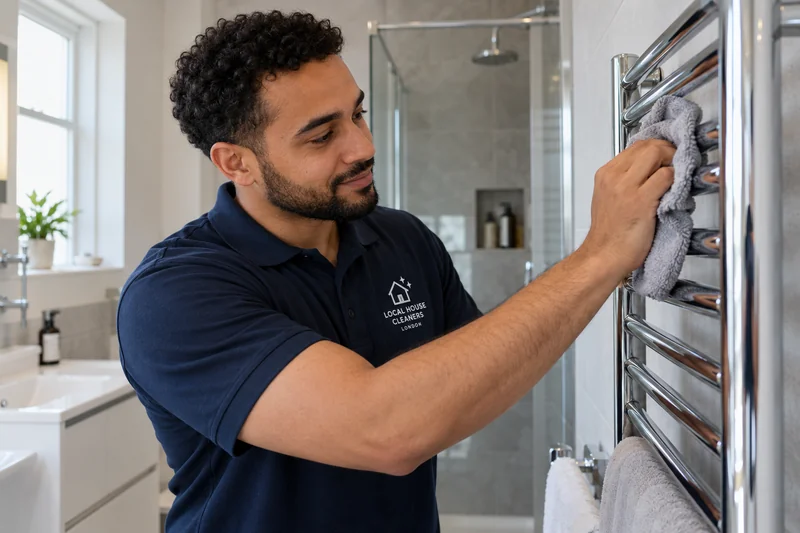
Describe the bathroom by its fittings rather than call it small or large. A bath with a shower above it, a separate shower enclosure, a basin and a toilet create a different workload from a shower room with fewer surfaces. Include an extra cloakroom in the request rather than assume it is part of another room. This gives us a fairer basis for estimating cleaning time and makes the work clearer for the cleaner.
Bathroom cleaning can focus on the agreed sanitary fittings, reachable surfaces, taps, mirrors and suitable floors. Products need to suit the finish, especially where there is natural stone, coated glass or a manufacturer restriction. Ordinary soap residue and water marks may need patient treatment. Persistent staining, damaged grout or failed sealant should be identified as an existing condition rather than met with a promise that stronger chemicals will put everything right.
Small decisions can make the result more useful. You might want the bath edge and taps prioritised, the mirror left clear or the floor around the toilet carefully attended to. Say whether towels should stay on their rails, be placed in a laundry basket or be replaced with clean ones you have left out. These details help finish the room sensibly without asking the cleaner to open cupboards and search for household supplies.
In the living space, choose the surfaces that matter rather than assume everything needs handling. Reachable ledges, a cleared coffee table and suitable furniture exteriors can form a sensible dusting list. Upholstery requires a different conversation: vacuuming an accessible cushion with a suitable attachment is not steam cleaning or stain removal. Explain the fabric care instructions and the result you want so an ordinary household clean is not mistaken for a specialist treatment.
In bedrooms, decide whether the work is dusting and floors, changing linen, or both. For a bed change, leave the correct clean set available and explain any pillows or covers that should stay as they are. Fitting a duvet cover and changing a fitted sheet take time; stripping a bed does not automatically include washing, drying and folding the removed linen. A defined linen task avoids an unfinished chain of work.
Reachable dusting is most effective when there is a clear understanding about fragile displays. An uncluttered chest of drawers can be cleaned differently from a shelf of delicate ornaments or personal collections. Point out items that should remain untouched. The cleaner can work on safe, agreed surfaces and suitable floors without treating private storage, ladders or lifting heavy furniture as routine parts of a bedroom appointment.

Three hours can be a useful minimum appointment, but it is not a promise to complete every room and every extra in any property. The number of fittings, floor area, condition and amount of handling all matter. If your list includes kitchen and bathroom cleaning, dusting, floors, bed changes, laundry and ironing, we should assess the combined workload before confirming the visit. The answer may be more time, fewer tasks or a different service.
Floor work has a sequence of its own. Loose dirt needs removing before a suitable hard floor is mopped, and different rooms may need different equipment or methods. A narrow route around storage is not equivalent to an open room of the same size. Tell us about delicate finishes, rugs and any floor that must stay dry. A good brief protects the surface and helps the cleaner plan a safe route through the work.
Where several floors are included, explain any internal stairs and the position of the cleaning equipment. Moving a vacuum safely between levels is part of the practical workload. Heavy beds, wardrobes and other substantial furniture are not routinely moved to extend the floor area. If you want a difficult space cleaned, describe the access and the item in the way so we can assess it rather than leave that decision until arrival.
A catch-up visit may sensibly spend more time on a few areas before a regular routine begins. For example, a kitchen needing sustained attention can be assessed separately from the lighter upkeep you want afterwards. That does not mean every first visit is automatically a deep clean. It means the initial condition should be described honestly so the selected service has enough time for the work you expect.
For ironing, choose a manageable batch and say which garments matter most. Several complicated shirts can take a different amount of time from a similar-looking pile of simple items. Laundry should identify the required stage, such as loading a machine or folding already dry clothes. If a cycle will finish after the cleaner leaves, agree who will take over. Productive help comes from a complete, achievable task rather than starting everything at once.
Our standard cleaning rates are £24 per cleaner-hour for weekly visits, £26 per cleaner-hour for fortnightly visits and £28 per cleaner-hour for a one-off visit, with a minimum of three hours. A three-hour visit by one cleaner therefore starts at £72 weekly, £78 fortnightly or £84 as a one-off. Frequency affects the rate; it does not remove the need to assess the rooms, condition and tasks.
A cleaner-hour means one person's working time. Four hours with one cleaner is four cleaner-hours, so the standard weekly labour total is £96. If more than one cleaner is proposed, the quotation should make the total labour and expected attendance clear. Two people working for three hours contribute six cleaner-hours; that is not a three-hour charge simply because they arrive and leave together.
Deep cleaning is £35 per cleaner-hour with a four-hour minimum, giving a starting labour total of £140 for one cleaner. It is appropriate to discuss when the request needs more concentrated work than standard upkeep. Tell us the actual areas and condition rather than choose a deep clean simply because the name sounds more comprehensive. Any agreed exclusions and specialist work still need to be clear.
Starting early, finishing late or asking for an urgent appointment can affect availability and price. Give the proposed date and start time when requesting the estimate so any applicable addition can be explained before you commit. A time shown in an initial request is not confirmation that a cleaner has accepted it. We will need to agree the complete arrangement, including how the cleaner gets into the property.
Keep optional tasks visible in the quotation. If you are deciding between a longer standard appointment and a shorter visit with fewer extras, compare the outcomes as well as the total. An extra hour may be useful when it completes a defined piece of work; it should not be added because the brief remained unclear. A fair price is one you can connect to the service and labour you have agreed.

Cleaner identity and suitability approval come before assignment. Your household instructions then help that approved cleaner approach the visit properly: the surfaces to protect, rooms available for entry and any areas that must be left alone. Approval does not make a cleaner familiar with every appliance or delicate object in your home. Relevant instructions should be clear before work starts, particularly where using the wrong product could damage a finish.
For recurring cleaning, you provide a safe, functioning vacuum, mop and bucket. The company arranges approved cleaning products, cloths and protective equipment; any different provision should be recorded in the quotation. Tell us if your vacuum has an unfamiliar attachment or if a floor requires a particular approved treatment. Equipment that is broken or unsafe should be flagged before the day so the proposed work can be reassessed.
Rylands Estate is a useful local name, and First Avenue appears in the area's published planning context, but the appointment needs your complete residential address. RM10 is only an outward postcode district. Include the full postcode, property number and any flat or entrance identifier that forms part of your address. A recognisable road or estate name can help orientation; it cannot tell the cleaner which door you have authorised them to use.
If you will be out, agree the authorised access arrangement in advance and confirm who can answer a necessary question during the visit. Do not leave keys unsecured or put access codes into general photo captions. Where a shared entrance or another person's assistance is involved, make sure permission and timing are settled. We cannot assume a neighbour or a public organisation will release a key or admit the cleaner.
Tell us about pets, an occupied room, a loose fitting or another practical issue that affects the work. A pet needing a closed door is a different instruction from a request for animal care, which should not be assumed to be included. There should be a safe working route and a clear place for equipment. These straightforward preparations allow the cleaner to concentrate on the agreed household cleaning.
You can ask the agency to clarify scope before accepting a visit. A useful question might be whether a fourth hour would cover a second bathroom, whether bed linen should be included, or whether the condition described needs a different service. We should answer against the actual request rather than treat a general room label as an unlimited promise. That makes choosing the right amount of help easier.
When circumstances change, tell us what has changed and what outcome matters now. An unused bedroom becoming available for cleaning, a guest arriving earlier or an appliance becoming unsafe can alter the practical plan. Give the agency the relevant details as early as possible. A request to change the agreed work or time still needs confirmation; it should not arrive as an unexpected instruction after the cleaner has planned the appointment.
Extra work requires an agreed scope, additional time where needed and an accepted price before it begins. The person authorising it must be entitled to make that decision for the booking. If approval is not available, or the cleaner cannot stay longer, the visit should keep to the agreed work and finish time. A remaining task can then be assessed for another appointment without an open-ended overtime bill.
If you need to raise a concern, describe the room, surface or task and what you expected from the agreed service. A focused photograph can sometimes explain a specific issue, provided it leaves out people, paperwork, screens and security information. A whole-home photo tour is unnecessary for a mark on one fitting. Keep the report factual so the agency can understand the problem and discuss an appropriate response.
To request cleaning for your Rylands Estate home, send the full address and postcode, the property details, preferred date and start time, and the work you want prioritised. Include optional ironing, laundry or other household help as separate requests with a sensible quantity. From there we can assess suitable hours, provide the complete price and confirm the arrangements before a visit is treated as booked.
Need to compare the details? See more cleaning questions →
Please provide the full postcode and residential address, including a flat or entrance identifier where relevant. RM10 helps identify the wider postal district, but it is not enough to locate an authorised door or assess the appointment. First Avenue or another local reference can support clear directions without replacing the address.
It depends on the rooms, their condition and the quantity of each extra. A minimum appointment is not an unlimited package. Tell us which cleaning tasks must be completed first, how much ironing you have and how many beds need fresh linen so we can assess sufficient time or agree a smaller scope.
Have the agreed rooms accessible and provide a safe functioning vacuum, mop and bucket. The company arranges approved products, cloths and protective equipment unless the quote says otherwise. If a bed change is included, leave the correct clean linen available; if ironing is agreed, confirm a safe iron and stable board.
Ask before the additional work begins. The task, any extra time and the amount must be agreed by an authorised contact, and the cleaner must be available. Without that agreement, the cleaner should follow the original scope and finish time. Unfinished optional work can be considered for a later visit.
Take a look around the area, then use your full postcode to plan a clean for your own home.
Area reference only. This map does not mark a company office or confirm service boundaries.
This embedded map is provided by Google, which receives connection information and may use cookies. Google privacy information.
Postcode districts help you browse. They overlap neighbourhood boundaries; your full address and available cleaner time still need checking.
Start with your postcode. We’ll plan the clean around your home.