Weekly cleaning
£24per cleaner-hour
3 hours minimum · £72 daytime basePlan weekly cleaning
A useful cleaning service takes a few recurring jobs off your mind and gives the home a more manageable rhythm. For your Thames View property, that starts with the rooms you want cleaned and the result you would notice most. Local House Cleaners can assess regular upkeep, a one-off standard visit or more concentrated deep cleaning, with finite household extras considered alongside the main work. Tell us what needs doing and when you would like help. We will work through the scope, suitable labour and complete price before any appointment is confirmed.
Moving area names stop while hovered or focused. Press Enter or Space, or tap the moving area, to keep them still after leaving. Activate again to allow movement. Browse the directory for the complete list.
A regular helping hand, a proper reset or a clean before your next move. Choose the work your home needs.
Keep the kitchen, bathrooms and everyday rooms feeling cared for.
Explore regular cleaning02 ↗More time for reachable detail and the build-up that needs extra attention.
Explore deep cleaning03 ↗An agreed empty-property checklist, ready for your next chapter.
Explore tenancy cleaningA clear plan for your Thames View home, from the jobs you need to an agreed visit.
Add your contact details and save your home address.
Pick your service, tasks and property details. Choose a date and start time, then check the full cost.
Top up from £35, with enough to cover the whole visit. The booking amount is reserved from your balance when you confirm.
Agree the plan and an available time. Your visit details stay in your account.
These are starting points. The final scope, timing and suitable cleaner availability need confirmation.
£24per cleaner-hour
3 hours minimum · £72 daytime basePlan weekly cleaning£26per cleaner-hour
3 hours minimum · £78 daytime basePlan fortnightly cleaning£28per cleaner-hour
3 hours minimum · £84 daytime basePlan one-off cleaning£35per cleaner-hour
4 hours minimum · £140 daytime basePlan deep cleaningEarly starts, late finishes and next-day requests can cost more. The full breakdown is shown before agreement. See timing prices and assessed extras →
Studio & 1 bed from £189 · 2 beds from £269 · 3+ beds & houses from £329
 Thames View · IG11
A clean is more useful when the cleaner knows exactly where to start. Pick your rooms, add your priorities and allow enough time for the work.
Ironing and laundry use the same booked time. A long checklist may need more than the minimum visit.
Build my cleaning planHouse, flat or studio—start with what matters most to you.
Start with the parts of cleaning that are hardest to keep on top of. A kitchen used every day, a shower that needs patient attention or floors across several used rooms can be a more useful starting point than a general request to do everything. Explain which tasks you would want protected if another area needs longer than expected. Those decisions let the cleaner follow your priorities without making personal judgments about what matters most in the household.
Choose rooms and tasks together. A bedroom might need only reachable dusting and floors, while a spare room may also need a bed change. Two bathrooms can contain very different numbers of fittings. Mention a separate toilet or an additional living space if you expect it to be included. A list that reflects the actual property gives a better basis for planning than the bedroom count on its own.
If the home needs a catch-up clean, point out the areas that have fallen behind and what you would like changed afterwards. We can assess whether standard cleaning with sufficient time or a deep-cleaning service fits the condition. You do not have to choose the most extensive service for every room. Sometimes concentrating on a few difficult areas first makes a later maintenance routine easier to define.
For a regular appointment, decide which essentials should repeat and which occasional tasks can be assessed separately. For example, you may want bathrooms and kitchen surfaces attended to every time but a manageable amount of ironing only when requested. This keeps the routine understandable. An occasional job should not appear unexpectedly and take the time reserved for a room you still expect to be cleaned.
Make the request easy for the household to recognise too. If more than one person will be at home, agree which rooms are available and who can answer questions about the visit. A study in use, a sleeping occupant or a room with private belongings may need a different sequence. The cleaner can work around an agreed arrangement more effectively than deal with contradictory instructions after arriving.
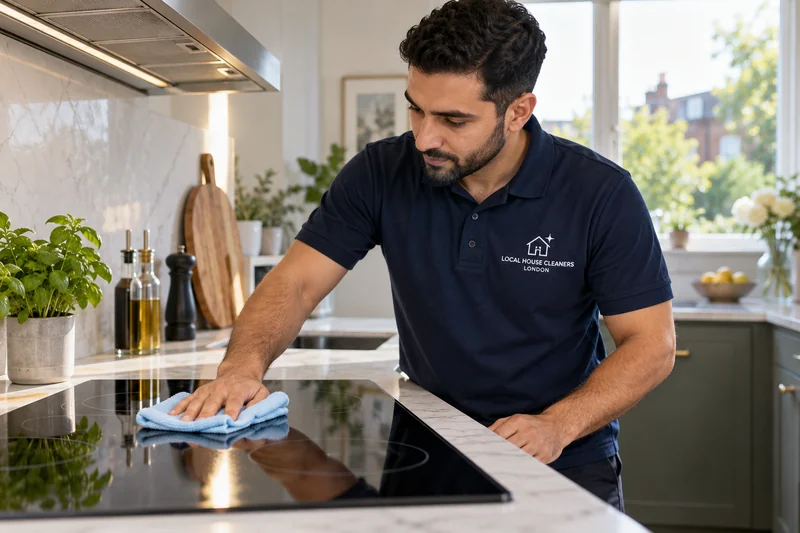
A practical kitchen brief names the surfaces you want attended to: worktops, the sink, taps, the hob exterior and any agreed splashback or reachable cupboard fronts. Say where grease or residue is more established, because concentrated work there changes the time needed. The objective is a preparation area you can use comfortably, with a method suitable for its materials, rather than a claim that every kitchen will take the same number of minutes.
Give the cleaner room to work along the surfaces. You can move food, personal papers and small belongings beforehand, or ask us to assess a defined amount of straightening. Rearranging cupboard contents is a separate request from cleaning a cupboard front. Where something is fragile, heavy or connected to an appliance, explain whether it should stay in place. That avoids a routine surface task turning into unplanned handling.
Think about which details make the kitchen feel properly finished to you. An accessible draining area, a table ready to use or fingerprints on agreed handles may matter more than polishing an ornamental item. Include the relevant surfaces in the request and let us know about care instructions. Cleaners should not apply a general product to a sensitive finish simply because two fittings happen to look similar.
Inside-appliance work needs an explicit description. A fridge exterior is different from clearing and cleaning the interior; an oven needs separate assessment from wiping the hob. If you want a microwave interior or particular removable parts included, ask before the quote is settled. Preparation, cooling and safe access can affect the task. Opening cupboards and taking appliances apart should never be assumed from a short instruction to clean the kitchen.
Household help such as washing plates can be considered, but give us a useful quantity. A few cups, a stack of plates and several cooking pans are not interchangeable tasks. Agree where items should be left and whether handling delicate pieces is appropriate. If the time allowance is tight, choose how washing-up ranks against the surface work. A clear choice is better than discovering that the cleaner spent the appointment on the least important part of the kitchen.
Include the bin only to the extent you want assessed. Emptying it requires a known disposal point and suitable replacement liner; wiping its outside is a different task from washing the inside. The cleaner should not have to search private storage for supplies or decide which unlabelled household items are rubbish. A short, practical instruction keeps this part of the kitchen work controlled and useful.

Bathrooms are easier to assess when you identify the fittings. Include the bath, separate shower, basin, toilet and any additional cloakroom that needs cleaning. Mirrors, reachable ledges and the suitable floor can then be discussed alongside them. Tell us which marks have been building up and whether a previous product has caused damage. An honest description supports a sensible allowance without implying that every visible mark can be removed.
Routine bathroom cleaning should respect the finish. Natural stone, coated glass and delicate metal fittings can need different treatment from more robust surfaces. Loose taps, damaged grout and worn sealant should be flagged rather than disguised as ordinary dirt. The cleaner can attend to the agreed cleaning safely; repairs, hazardous growth and specialist restoration are not made part of standard cleaning by using a stronger product.
A bathroom's small items can create a lot of handling. You may prefer to clear toiletries from the working surfaces, or agree what can be moved and returned. Specify whether used towels stay in place, go into a basket or are replaced with a clean set you leave available. Those decisions create a considered finish while avoiding a search through bathroom cupboards or assumptions about another person's possessions.
Shower enclosures deserve a clear description if they are the main reason for the visit. Doors, runners and fixed panels may create more edges than a simple screen above a bath. Explain what can be reached safely and whether any door is stiff or a fitting loose. The cleaner should not force a mechanism or dismantle unfamiliar parts to chase a mark. Appropriate cleaning and reporting an existing defect are more sensible than risking damage for a promised finish.
Suitable floor cleaning begins with removing loose debris, then using the appropriate method for the surface. Tell us about wood that must not be left wet, delicate tiles, rugs and any manufacturer's restrictions. A safe clear route matters more than promising to reach every hidden space. Substantial furniture is not routinely lifted or moved; difficult areas need to be described so the access can be assessed.
For homes with internal stairs, count the route between rooms as part of the practical job. A vacuum has to be moved safely and the steps need to be available for cleaning. Include the reachable handrail if you want it assessed, and flag any loose fitting. Cleaning stairs, dusting a high landing feature and moving bulky items are different tasks. The appointment should allow for the work that is safe and agreed.

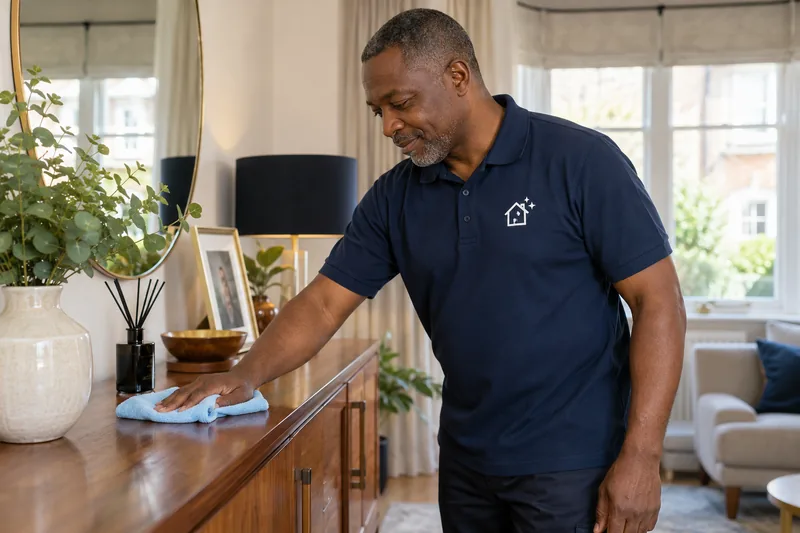
Reachable dusting can make a living room or bedroom more comfortable without reorganising everything in it. Identify the accessible surfaces and explain which displays should remain untouched. A clear sideboard is a different task from a shelf full of delicate objects, and important paperwork should stay away from the cleaning area. Furniture exteriors can be assessed according to their finish; private storage does not become part of the job by default.
Small lamps and other electrical items need particular caution. Cleaning the surrounding table does not imply wet-wiping a socket, opening equipment or handling a hot bulb. Identify any item to leave alone and keep leads safely out of the working route. Where a reachable shelf or ledge is a priority, make sure it can be accessed without climbing on furniture. That gives the cleaner a practical dusting task with a clear limit. Explain any relevant care instructions beforehand.
A bed change is a useful extra when the correct linen is ready. Tell us how many beds, which covers are to be changed and where the clean sets will be left. A duvet, mattress protector and several pillowcases require more work than a simple cover change. Put the task into the estimate so it has time of its own instead of assuming it can fit at the end of a full list.
If laundry is part of the help you want, name the stage. Loading a washing machine, hanging an agreed load or folding already dry items each needs a different setup. Identify delicate garments and any settings that must be followed. Where a cycle will continue beyond the appointment, someone needs to take over at the agreed point. The cleaner cannot promise a finished wash-and-dry sequence when the machine's timing makes that impossible.
Ironing should be a finite quantity with a sensible order. Tell us which items matter most and provide a safe iron and stable board under the agreed arrangement. Several detailed shirts can take different time from a similar number of simple garments. Clothing with uncertain care requirements should be set aside for clarification, not pressed in a hurry to make a pile appear complete.
Other household tasks can also be considered when they are described clearly. A request to straighten cushions, put away one identified basket or prepare a particular room is easier to assess than general help with everything. Some requests will need different equipment, more time or a different service. Bringing them into the conversation early allows you to choose useful extras while keeping the main cleaning work protected.
Weekly standard cleaning is priced at £24 per cleaner-hour, fortnightly standard cleaning at £26 per cleaner-hour and a one-off standard visit at £28 per cleaner-hour. Each has a three-hour minimum. With one cleaner, the starting labour totals are therefore £72, £78 and £84. The right choice depends on the frequency you want and the work assessed, rather than the lowest figure alone.
A four-hour standard visit by one cleaner comes to £96 weekly, £104 fortnightly or £112 as a one-off. If that fourth hour would allow a defined linen task or another room to be completed, we can assess it alongside the other priorities. If not, a shorter visit with a carefully chosen list may be more useful. The price should follow an understandable amount of work instead of an open-ended promise.
A cleaner-hour is one cleaner's working time. When more than one person is proposed, ask for the total labour and attendance arrangement to be clear. Two cleaners present for three hours contribute six cleaner-hours. This matters when comparing appointments: the time between arrival and departure is not, on its own, the amount of labour being supplied or the figure on which the price is based.
Deep cleaning is £35 per cleaner-hour with a four-hour minimum, so one cleaner's four-hour starting labour total is £140. The assessed scope should identify the areas that need concentrated attention and any exclusions. Deep cleaning is not a blanket promise of appliance interiors, specialist restoration or every household extra. Those needs should be raised specifically so the quote describes a result you can reasonably expect.
Tell us the date and proposed start time before accepting an estimate. Early or evening attendance, urgent requests and applicable holiday arrangements may affect availability and price. Any addition should be explained in the complete quotation. A preferred slot is a request until the arrangements are confirmed; it should not be treated as reserved simply because it was typed into a form.

Cleaner identity and suitability approval are required before assignment. The details of your home then help the approved cleaner carry out the agreed service with care. Mention fragile items, finishes needing particular products and any room that must not be entered. There is no reason to share unrelated personal information. The useful brief is the one that supports safe work and clear boundaries.
For recurring visits, you supply a safe functioning vacuum, mop and bucket, while the company arranges approved cleaning products, cloths and protective equipment. A different provision needs to appear in the quotation. Check the equipment before the day and explain any unfamiliar attachment or surface requirement. A broken vacuum or unsuitable mop can prevent an important part of the floor work, so raising the issue early is more helpful than discovering it on arrival.
In Thames View, Bastable Avenue and the Farr Avenue shopping area are useful local references. They still do not identify a private door. Provide the complete residential address and full postcode, with any flat number or separate entrance stated clearly. IG11 is an outward district shared by many addresses. A neighbourhood label or nearby community hub can support orientation without replacing the exact booking details.
If you are out, agree how the cleaner will be authorised to enter and which contact can deal with a practical question. A communal entrance, a household key and access to the individual property may be separate steps. Do not leave keys unsecured or include security codes in a general room photograph. If a third person is involved, their permission and the arrangement should be settled before the visit.
A working home does not need to be empty, but the cleaner needs safe access to the agreed areas. Explain a closed room, a pet that must be kept apart or equipment that is out of use. Cleaning does not automatically include supervision or animal care. A clear route, available fittings and sensible access instructions allow the appointment to focus on useful work instead of avoidable interruptions.
You can ask us to explain the proposed scope in everyday terms. If the request includes several bathrooms, floors and ironing, we can discuss which combination fits the hours and what would need additional time. That is the point to resolve uncertainty, before the household has organised its day around an expectation the service cannot meet. Clear advice helps you choose the right help without becoming an expert in cleaning estimates.
When an existing arrangement needs to change, tell the agency the practical difference. Perhaps a room will now be occupied, the linen will not be ready or you would like an earlier start. A change may affect the sequence, price or availability and needs to be confirmed. The cleaner should not be left to absorb a different list or timetable without the same clear agreement as the original visit.
Additional paid work must be authorised before it begins. Agree the particular task, any extra labour and the amount with someone entitled to approve the change, and confirm the cleaner can do it. If approval or time is unavailable, the appointment should keep its original scope and finish. This protects you from unexplained overtime and gives the cleaner a workable end to the job.
A concern is easier to address when it relates to the agreed work. Tell us which surface or fitting is involved and what you expected. A close photograph may help, but keep people, private paperwork, screens and security details out of it. The agency can consider the actual issue and discuss the response without collecting a record of unrelated parts of your home.
To request a Thames View clean, bring together the rooms, the main priorities and the complete address, then add your preferred date, start time and frequency. Describe optional household tasks in realistic quantities. We can assess the labour required, set out the complete price and confirm the practical arrangements. The purpose is a home that is easier to keep on top of, with a cleaning visit you understand from the outset.
Need to compare the details? See more cleaning questions →
Send the full residential address and postcode, the rooms and tasks, and the date and time you would prefer. We need to assess the request and confirm availability and arrangements. IG11 or a reference to Bastable Avenue alone does not identify a particular property or confirm a booking.
You can ask for a regular core of work and have an occasional extra assessed, such as a bed change or finite ironing batch. Tell us in advance what is changing. We can agree whether it fits the booked time or needs different priorities or additional approved labour.
At £26 per cleaner-hour, four hours with one cleaner is £104 in standard labour. The full quote must also show any applicable additions and the agreed work. If more than one cleaner is proposed, compare the total cleaner-hours rather than elapsed attendance alone.
An oven interior is not automatically included because a visit is one-off. Describe the appliance task when requesting the estimate so its suitability, preparation and service requirements can be assessed. The hob exterior and surrounding kitchen surfaces are separate parts of the cleaning brief.
Take a look around the area, then use your full postcode to plan a clean for your own home.
Area reference only. This map does not mark a company office or confirm service boundaries.
This embedded map is provided by Google, which receives connection information and may use cookies. Google privacy information.
Postcode districts help you browse. They overlap neighbourhood boundaries; your full address and available cleaner time still need checking.
Start with your postcode. We’ll plan the clean around your home.