Weekly cleaning
£24per cleaner-hour
3 hours minimum · £72 daytime basePlan weekly cleaning
Choose enough cleaning labour for the result you want in your Woodford Bridge home. A request can be focused or involve several rooms, fittings and linen tasks. If a suitable team is considered, the number of people and elapsed arrangement should be as clear as the total cleaner-hours and price. You can enquire about recurring domestic help, a standard occasional visit or concentrated work needing assessment. The agency can consider appropriate cover and a complete proposal before confirmation.

Moving area names stop while hovered or focused. Press Enter or Space, or tap the moving area, to keep them still after leaving. Activate again to allow movement. Browse the directory for the complete list.
A regular helping hand, a proper reset or a clean before your next move. Choose the work your home needs.
Keep the kitchen, bathrooms and everyday rooms feeling cared for.
Explore regular cleaning02 ↗More time for reachable detail and the build-up that needs extra attention.
Explore deep cleaning03 ↗An agreed empty-property checklist, ready for your next chapter.
Explore tenancy cleaningA clear plan for your Woodford Bridge home, from the jobs you need to an agreed visit.
Add your contact details and save your home address.
Pick your service, tasks and property details. Choose a date and start time, then check the full cost.
Top up from £35, with enough to cover the whole visit. The booking amount is reserved from your balance when you confirm.
Agree the plan and an available time. Your visit details stay in your account.
These are starting points. The final scope, timing and suitable cleaner availability need confirmation.
£24per cleaner-hour
3 hours minimum · £72 daytime basePlan weekly cleaning£26per cleaner-hour
3 hours minimum · £78 daytime basePlan fortnightly cleaning£28per cleaner-hour
3 hours minimum · £84 daytime basePlan one-off cleaning£35per cleaner-hour
4 hours minimum · £140 daytime basePlan deep cleaningEarly starts, late finishes and next-day requests can cost more. The full breakdown is shown before agreement. See timing prices and assessed extras →
Studio & 1 bed from £189 · 2 beds from £269 · 3+ beds & houses from £329
 Woodford Bridge · IG8
A clean is more useful when the cleaner knows exactly where to start. Pick your rooms, add your priorities and allow enough time for the work.
Ironing and laundry use the same booked time. A long checklist may need more than the minimum visit.
Build my cleaning planHouse, flat or studio—start with what matters most to you.
The useful starting point is what you want finished, not how little elapsed time a visit might occupy. You may want suitable kitchen surfaces ready, main bathroom fixtures attended to and selected floors cleaned, with a prepared bed or finite ironing group alongside them. Put those results in order and explain their condition. The agency can consider a focused allowance or more labour for a wider request. A larger list should not become an expectation that every task can simply be completed faster, whether one cleaner or a suitable team is being discussed.
Choose the property type and describe its included spaces. A house, flat or studio can have another toilet, an independent shower or private stairs that add work where wanted. A bedroom may have only a linen-change role while another includes selected floor and surface care. A room can remain excluded. These choices help the proposal follow the real combination instead of a bedroom count being treated as a complete description. The cleaner should have a recognisable accepted scope, with the important household benefit clear before the appointment rather than guessed from a long list on arrival.
For Woodford Bridge orientation, the council's character appraisal identifies Chigwell Road locally, and the park operator gives Ashton Playing Fields an IG8 address on that road. Provide your own full residential postcode and exact property details with the cleaning enquiry, including any building and flat. Those public references do not identify the work inside your home or establish private arrival rights. Suitable cover is considered for the actual destination and request, with an authorised entrance arrangement before confirmation rather than directions simply to a nearby playing field or another site's public visiting information.
Include concentrated work in the first assessment. Established bathroom deposits or kitchen residue left for longer may require another allowance or service purpose from routine upkeep. You can consider a useful initial focus and a later continuing arrangement separately. Adding a second person to a discussion does not remove the need to understand the starting condition, equipment or access. The proposal should still give the accepted work an achievable role, instead of minimum hours being expected to catch up on a backlog and complete every optional household task without further consideration.
A suitable team is one arrangement the agency can consider where the work and cover support it. It is not an automatic entitlement to a particular number of people or a guarantee of any preferred finish time. Ask what the proposal means in practical terms: total cleaner-hours, elapsed attendance and the tasks intended for that labour. Those details let you compare arrangements honestly. One cleaner providing six hours and two cleaners each providing three hours have the same labour total, but different practical implications for room availability, workspaces and the way the accepted chores can be carried out.
Not every task can use several people at once. A small bathroom or a single ironing position may have limited workable space, while separate included rooms can allow another sequence where suitable. Explain those constraints before staffing is considered. The agency can assess how the actual tasks and layout fit rather than infer that doubling people halves every action's elapsed time. The useful result remains the accepted household work completed appropriately, not a mathematical promise that ignores preparation, safe access or the number of suitable workspaces available inside the home.
Cleaners must complete identity verification and suitability approval before assignment. Explain relevant task skills, material restrictions and household requirements with the enquiry so appropriate cover can be considered. The same clear brief should identify the essential rooms and accepted extras for anyone attending. A team proposal should not leave the household giving several different versions of the list or assuming another person has been told the important care instruction. The agency can help make the practical requirements clear, with the requested date and staffing still subject to confirmation before the arrangement can be relied on.
Choose who gives the household handover and who may approve changes. A keyholder can be authorised to allow entry without being authorised to buy extra paid work. If another household member has a new request, it needs a clear decision rather than become a separate instruction to whichever cleaner is closest. This protects the agreed priorities as well as the complete amount. The person attending should know which result matters first, with other suggestions considered against the accepted scope instead of several parallel task lists expanding beyond the labour originally proposed.

For the kitchen, identify the suitable preparation surfaces, sink and taps wanted. A cool hob exterior, selected reachable fronts or flooring can be considered beside them. Explain concentrated cooking residue and what will be cleared beforehand. A cupboard or appliance interior needs a specific assessment of its extent, condition and readiness; food removal, taking equipment apart and reorganising contents are not inferred from exterior care. The task should have enough labour and practical space for its method, rather than a team arrangement being treated as permission to include every kitchen detail under one broad label.
A ready washing-up group can be another defined contribution. Suitable pieces to drain differ from a group dried and returned to an identified accessible place. Large cookware, delicate items and sharp utensils need particular handling consideration. Additional dishes used later do not automatically enlarge the accepted amount. An ordinary bin empty or liner change can be requested too, with an appropriate disposal point and a ready suitable replacement where relevant. Heavy clearance and hazardous-waste handling are different work. These choices keep the kitchen result finite while preserving labour for the other spaces in the accepted household plan.
Describe bathrooms by their fittings. A bath and independent shower enclosure create distinct actions, with basin, toilet, reachable mirror and suitable floor care added where selected. Another toilet or ensuite needs mention separately. A main washing space can take priority while another has a narrower accepted role. Explain established scale or residue and the actual materials before methods are considered. Worn finishes, failed seals and permanent marks differ from ordinary removable deposits. A practical proposal should not depend on stronger repeated treatment restoring every fixture or repairs being performed within an ordinary domestic-cleaning allowance.
Make selected bathroom ledges available in a way comfortable for you. Medicines and fragile toiletries can be put safely aside, or suitable limited handling can have an agreed temporary place. Private cabinets need not become organisation tasks. Flag leaks, loose panels or awkward reach before acceptance; repairs and improvised high access need another assessment. If ready towels or a clean bathmat placed would help the finish, request the pieces and destination for used textiles explicitly. Washing and drying those removed pieces is another stage if wanted, not an automatic result of the fixtures receiving their accepted care.
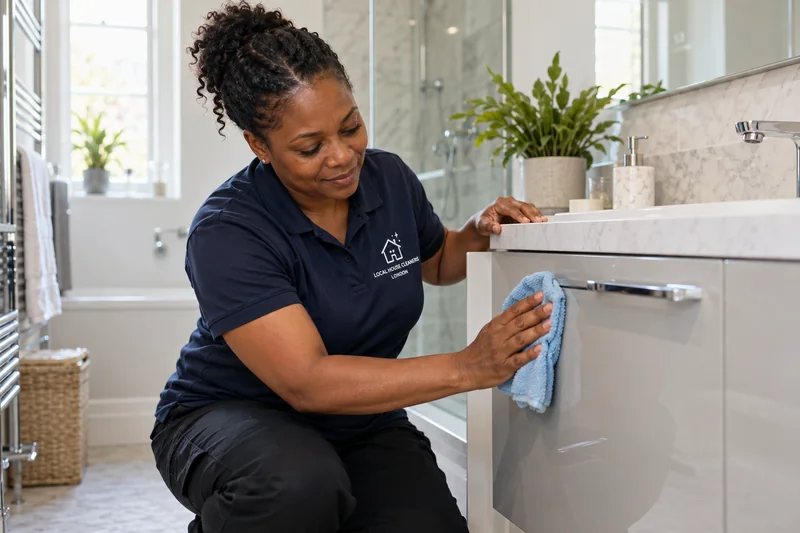
List floor finishes through the included rooms and private routes. Carpet, a rug and suitable hard flooring can need different equipment and treatment for appropriate vacuuming or mopping. Share manufacturer restrictions and flag existing damage before work is accepted. A stain requiring specialist attention, restoration of a finish or substantial furniture moving is a different request. The cleaner can then follow the selected accessible work without one method being assumed throughout the home, and without a promise that every mark or hidden area is included simply because more than one person might attend.
Private stairs and landings need a clear description where wanted. Give the flights, surface and any separately requested reachable rail or banister care. High stairwell details, awkward overhead corners and areas requiring improvised access may exceed ordinary safe reach. Keep the accepted working route clear of loose items where practical. That preparation helps any proposed arrangement move between rooms appropriately. The labour should be used for the suitable care accepted, rather than an unassessed clearance problem or difficult-access task becoming another obligation because the route happens to lead towards an included bedroom.
For dusting, choose reachable surfaces with the handling clear. A prepared shelf or accessible sideboard top can have a useful role while personal papers and delicate collections remain untouched. Identify where permitted small items may rest during the task and what must stay in place. A crowded display takes different preparation from a clear ledge. You can choose a focused available area and reserve labour for its care, leaving private storage decisions with the household instead of several people opening drawers or inventing new destinations for belongings as part of a general tidying request.
Smaller room finishes can be assessed by quantity. Suitable table care or a specified number of reachable chair details differs from upholstery treatment or heavy moving. Light straightening might mean identified cushions placed or a ready limited group returned to a known spot. These are definite actions to consider with the rest of the plan. Sorting paperwork and deciding what to discard remain different household choices. Clear boundaries let a living or dining area finish in its familiar arrangement without the domestic scope expanding into an unrequested reorganisation that takes labour away from the core results.

A bed change needs the beds and pieces identified. Have complete suitable clean sets ready and include a protector or extra layer in the request where wanted. Explain where removed linen should go. A bedroom may need only that prepared-bed result, or selected floor and surface care too. Washing and drying used pieces are further stages, as is specialist mattress treatment. The number of people attending should not replace the need to count the actual changes or leave the household expecting every bed-related chore to fit alongside the rooms simply because a team was considered.
Laundry can be a useful contribution at one agreed stage. A suitable load started, transfer to an accepted drying arrangement and folding ready dry pieces have different preparation and labour. Give safe appliance instructions and a household handover if a cycle continues beyond departure. Its duration does not authorise extra cleaner-hours or a wait without approval. You can choose a partial result with a clear next action, preserving the labour assigned to the other household priorities instead of expecting an entire wash-and-dry process to finish automatically because more than one cleaner is present.
For ironing, describe a ready finite group in priority order, with labels and ordinary care information. Detailed garments and larger household textiles can call for different handling, while uncertain specialist pieces need another decision. The agency can compare a smaller batch, more labour or fewer optional room tasks before confirmation. An unknown basket is not a fixed amount of work. The accepted group should have a recognisable finish without every later garment mentioned becoming another obligation inside the same allowance or several people being assumed to share one ironing position at the same time.
Prepare the agreed safe iron, stable board and suitable workspace, with a clear cable route and a safe cooling place for the equipment afterwards. Explain hanging or folding and identify the destination, including suitable hangers where needed. Mention faults before the appointment rather than rely on improvisation. Setup and safely leaving the task take part of its labour too. A practical completed result means the accepted pieces left as agreed, without private storage searched for an unplanned destination or an unsafe arrangement remaining for the household after the cleaner's work is finished.
Standard weekly cleaning begins at £24 per cleaner-hour, fortnightly at £26 and a standard one-off appointment at £28, each with a three-hour minimum. Six cleaner-hours at those base rates cost £144, £156 and £168. The complete proposal should identify the accepted scope and applicable additions beside that amount. Compare the tasks and condition as well as frequency. A minimum is a booking condition, not proof that every room and option fits, so a focused accepted result can be compared with more labour before you decide what is useful for the household.
Two cleaners each working three hours provide six cleaner-hours, not three for billing. One cleaner supplying four hours provides four, costing £96 at the weekly standard base rate; that is a different labour quantity as well as another elapsed arrangement. These examples should not be treated as equivalent whole-home outcomes. Suitable staffing and the proposed task distribution need assessment. Ask the agency to explain the actual labour and complete amount before confirmation, leaving you able to choose the work wanted rather than infer a team price from a single person's hourly figure.
Deep cleaning starts at £35 per cleaner-hour with a four-hour minimum, giving a base starting amount of £140. Describe concentrated work for assessment. Empty-property moving requirements have another purpose, checklist and readiness to consider, distinct from selected-room care in an occupied home. Early, evening or urgent requests may also carry quoted additions and depend on suitable cover. The complete arrangement needs confirmation before a preferred date or finish can be relied on. A service label or base figure should not silently imply an unlimited intensive task, any number of people or guaranteed availability at the requested time.
For account-funded bookings, the £35 minimum top-up is separate from the full accepted cleaning price. Sufficient balance needs to cover the booking amount reserved at confirmation. Extra paid scope or overtime requires approval of the work, total added labour and charge before proceeding, with cleaner availability. If several people are involved, the extension should still make its full labour clear. You can retain the original finish and consider another task separately instead of allowing a new suggestion to expand the amount automatically or displace the essential accepted household result without a deliberate choice.

Equipment availability should fit the proposed work and arrangement. For recurring cleaning, the normal provision is your safe working vacuum, mop and bucket, with the company arranging approved products, cloths and protective equipment. Agree any different supply plan beforehand. Do not assume a team has several suitable tools or can share one item without affecting its sequence; discuss the actual setup when the proposal is considered. Faults, missing attachments and inaccessible storage should be raised early. This helps the agency assess a workable arrangement rather than leave equipment assumptions to be discovered after arrival.
Arrange authorised entry for the confirmed start and a suitable contact for an arrival problem if you will be away. Give the correct private door, building and flat where relevant, with included rooms available in a workable sequence. Keep confidential keys and access instructions separate from task images. A photograph explaining a surface should avoid people, papers and private screens. Only the practical information necessary for the accepted work needs to accompany it. A restricted room remains outside the scope, not an alternative area for somebody to enter simply because another part of the home becomes unavailable.
Use the agency when a room, quantity or timing requirement changes before the appointment. Explain the new result wanted so its effect on labour and cover can be considered. A larger linen group or an additional bathroom is a different request even when the property is unchanged. The original finish can remain if an extension is unsuitable. You can also consider another proposal for a later date. A clear accepted change is more useful than expecting the cleaner or team to reconcile an old brief with several new verbal additions on the day.
After the visit, identify the accepted action and the result you noticed when raising a concern. The agency can consider the question against its scope, separately from additional work you now want assessed. A focused private image may help locate the relevant area. For future help, keep what was useful and adjust quantities or priorities before confirmation, with labour and the full amount understood. The routine can follow the household's needs without every initial or occasional task carried forward, and without a staffing choice being mistaken for a promise to cover an ever-growing list indefinitely.
Need to compare the details? See more cleaning questions →
Describe the actual work, condition, layout and timing wanted so the agency can consider suitable cover and a workable arrangement. A team is not automatically available and does not guarantee a particular finish time. The proposal should make the number of people, total cleaner-hours, accepted scope and complete amount clear before confirmation.
They provide six cleaner-hours in total. At the weekly standard base rate of £24 per cleaner-hour, that labour is £144 before any applicable quoted additions. Elapsed attendance and total labour are different measures. Ask the agency to explain the complete proposed arrangement rather than infer that several people's work is supplied for one person's hourly charge.
Give the full residential postcode and exact home address with the domestic requirements. Council and park-operator records provide useful Chigwell Road IG8 references, but they do not establish a private entrance, parking arrangement or appointment availability. Include any building and flat details, with authorised access arranged for the confirmed visit.
The actual scope and labour still need assessment. Several people may need suitable separate rooms, tools or workspaces, and not every action can happen together. Identify bed changes, ironing quantities and any kitchen interior explicitly. You can compare a focused list with more labour where suitable rather than assume the number attending creates an unlimited household result.
Take a look around the area, then use your full postcode to plan a clean for your own home.
Area reference only. This map does not mark a company office or confirm service boundaries.
This embedded map is provided by Google, which receives connection information and may use cookies. Google privacy information.
Postcode districts help you browse. They overlap neighbourhood boundaries; your full address and available cleaner time still need checking.
Start with your postcode. We’ll plan the clean around your home.