Weekly cleaning
£24per cleaner-hour
3 hours minimum · £72 daytime basePlan weekly cleaning
Choose the cleaning result that would make your week easier, then build the appointment around it. For an Acton Town home, that can mean keeping the main kitchen and bathroom in routine, getting suitable floor care done or adding an assessed bed or garment task. Give the room list, quantities and starting condition before comparing labour and the complete amount. You can request recurring help, an occasional visit or an empty-property clean with its own checklist. An achievable plan leaves less to explain on arrival and gives the cleaner a useful target for the work the household has actually chosen.
Moving area names stop while hovered or focused. Press Enter or Space, or tap the moving area, to keep them still after leaving. Activate again to allow movement. Browse the directory for the complete list.
A regular helping hand, a proper reset or a clean before your next move. Choose the work your home needs.
Keep the kitchen, bathrooms and everyday rooms feeling cared for.
Explore regular cleaning02 ↗More time for reachable detail and the build-up that needs extra attention.
Explore deep cleaning03 ↗An agreed empty-property checklist, ready for your next chapter.
Explore tenancy cleaningA clear plan for your Acton Town home, from the jobs you need to an agreed visit.
Add your contact details and save your home address.
Pick your service, tasks and property details. Choose a date and start time, then check the full cost.
Top up from £35, with enough to cover the whole visit. The booking amount is reserved from your balance when you confirm.
Agree the plan and an available time. Your visit details stay in your account.
These are starting points. The final scope, timing and suitable cleaner availability need confirmation.
£24per cleaner-hour
3 hours minimum · £72 daytime basePlan weekly cleaning£26per cleaner-hour
3 hours minimum · £78 daytime basePlan fortnightly cleaning£28per cleaner-hour
3 hours minimum · £84 daytime basePlan one-off cleaning£35per cleaner-hour
4 hours minimum · £140 daytime basePlan deep cleaningEarly starts, late finishes and next-day requests can cost more. The full breakdown is shown before agreement. See timing prices and assessed extras →
Studio & 1 bed from £189 · 2 beds from £269 · 3+ beds & houses from £329
 Acton Town · W3
A clean is more useful when the cleaner knows exactly where to start. Pick your rooms, add your priorities and allow enough time for the work.
Ironing and laundry use the same booked time. A long checklist may need more than the minimum visit.
Build my cleaning planHouse, flat or studio—start with what matters most to you.
Start with what you need back in use. A main bathroom might be the first priority before the household returns, while an unused bedroom can stay outside the appointment. Or the kitchen and suitable floors may be the combination you value most. Give the other requests an order behind that result. The agency can assess a workable allowance or a focused alternative. You then make the choice about scope and spend instead of asking the cleaner to guess which of several equally important tasks should be left unfinished.
Acton Town station is on Gunnersbury Lane, with Transport for London giving its address in W3. That is a recognisable local reference, not a substitute for the home address. Give your full residential postcode and the correct building, flat and entrance details where relevant. The appointment needs suitable coverage, skills and availability for that property and request. A station name can help identify the neighbourhood, but it does not establish the cleaner's route, travel time, authority to enter or confirmed attendance.
Select House, Flat or Studio, then explain the areas you want attended to. Count bathrooms, ensuites and separate toilets individually alongside bedrooms. Add internal stairs, another living space or a hall if included, and mark excluded rooms. The labour should reflect those choices and the condition. A compact property can have substantial washing-room or appliance work, while a larger home can have a deliberately limited list. The property category gives the enquiry a starting point without defining every task or how long it will take.
Explain how the rooms are used if that changes the sequence. If you need the living room for a call during part of the appointment, say when it can be entered or exclude it from the list. There must still be enough accessible accepted work for the proposed labour. Give the agency the practical constraint before agreement so the order can be considered. It is easier to plan a workable visit than repeatedly redirect the cleaner while important rooms remain unavailable throughout much of the time.
Be clear about the initial condition. A first catch-up can need a different allowance or assessed service from a home already maintained regularly. You may want an initial improvement in the most important room before deciding what should repeat. Describe the backlog and intended result, checking preparation as well as duration. The first visit should have an achievable target, rather than expecting a routine minimum to absorb intensive work in several spaces while still completing all the normal domestic tasks already selected.
Identify the accessible kitchen surfaces wanted, such as the preparation counter, sink and hob exterior, with suitable floor care named too. If washing up is part of the request, estimate its amount. A sink full of cookware creates a separate stage before the surrounding surfaces are available. Having both tasks assessed keeps the intended kitchen result realistic and protects the hours allocated to the bathroom or other rooms. Kitchen should describe an understood combination of work rather than an unlimited instruction to finish everything found there.
For a simple preparation example, decide whether the cleaner is to wash a stated group of breakfast items or whether the household will clear them before arrival. Then identify the ready counter section and any belongings that should remain untouched. Either arrangement can be considered when its labour and permission are clear. Uncertainty is what makes the visit harder to use: the cleaner should not have to decide where private possessions belong or which resident is expected to have made a working area available.
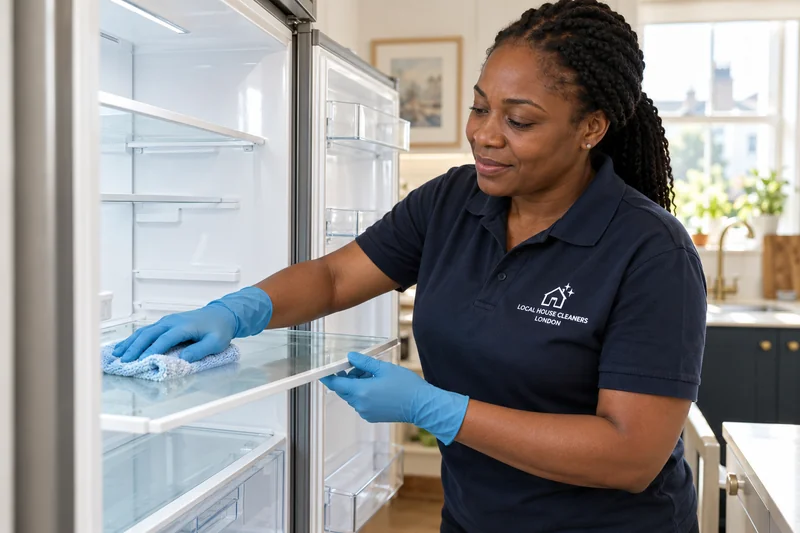
Ask explicitly for an oven, fridge or cupboard interior. Give the condition, quantity and contents arrangement, checking the selected service's inclusions and any separately assessed addition. One emptied fridge is a different request from filled cupboards and several appliances. The full proposal should explain the accepted work and preparation so you can choose what is useful. A general room selection cannot tell the cleaner which storage may be opened, what can be handled or whether extra interior work has been included in the time.
If a major grease or first-clean problem is the reason for the visit, place it at the front of the assessment. The method and labour should follow the condition, rather than simply adding an intensive request to a short maintenance slot. Compare a focused reset with a wider suitable allowance. If another appliance becomes important later, have its effect considered before agreement. The cleaner then has a realistic kitchen target instead of a growing set of interiors competing with every other accepted room for the same unchanged hours.
Give any care instructions for sensitive finishes, together with known damage or loose fittings. A mark may be wear, a coating problem or another concern that ordinary cleaning cannot reverse. Appropriate treatment should respect the material present, with repair or specialist work considered separately when needed. Knowing those limits helps you assess the result being offered. It also avoids an expectation that stronger products will safely remove every existing mark or restore every surface simply because the room has been selected for cleaning.

List the actual bathroom work, including baths, showers, basins, toilets and other fittings. A main bathroom, ensuite and separate toilet are different working spaces even where the bedroom count seems modest. Explain significant scale or an initial backlog while the allowance is considered. You can make the main washing room the priority or request a broader assessment. That gives the cleaner enough information to understand the job instead of discovering several extra spaces hidden behind one general bathroom choice.
Prepare the personal-item boundary in the bathroom as part of the household plan. Clear the selected surface where practical and identify anything that must stay in place. Share guidance for delicate fittings, damaged seals or uncertain finishes. The cleaner can follow permitted reachable work without choosing a destination for personal belongings or opening a private cupboard to find storage. Cleaning needs a realistic result too: damage that requires repair or specialist treatment should not be assumed to disappear through an ordinary room-care appointment.
For room dusting, choose the accessible furniture tops and ready ledges you want included. You might clear a bedside surface but leave a desk of work papers excluded. That lets the cleaner provide useful attention without interpreting private information or reorganising personal possessions. Explain fragile items and handling exceptions, preparing valuable belongings yourself where practical. A room selection can have clear limits and still serve the household well; it does not need to mean every drawer, display and storage space becomes part of the work.
Describe floor finishes and included areas, giving relevant care instructions and damage information. Suitable vacuuming or mopping depends on an appropriate method and equipment. Request a particular stain treatment, carpet extraction or upholstery service separately so tools, suitability and charge can be assessed. A general floor allowance is not a promise to supply every specialist process that might be used on a textile or sensitive surface. Clear detail makes the options easier to compare against the result you actually want.
Include halls, internal stairs and reachable rail detail where they matter to the result. These spaces take labour even though they are not bedrooms or bathrooms. Explain blocked routes, heavy furniture or awkward heights before acceptance, with any preparation agreed. Shared building areas outside a flat need the relevant authority and their own accepted scope if wanted. Separating them from the private home helps prevent a small room-care plan expanding after the visit has already been priced and its hours allocated.

Choose straightening or a complete linen change for beds, stating the number involved. Set out the correct clean pieces and agree where used bedding goes. This makes the task ready to complete without the cleaner searching cupboards or deciding which sets belong together. Several bed changes share labour with the room work wanted. Have the whole list considered when choosing the hours rather than treating linen as an unlimited extra within a visit already allocated to the kitchen, bathrooms and floors.
For ironing, identify the suitable ready items you want prioritised and give an approximate quantity. A stated group for the coming days can be easier to plan than a mixed basket whose contents have not been checked. Share the care labels and exclusions, with specialist pieces identified. The agreed safe equipment and workspace must be ready too. Compare the garment allowance with the cleaning list so the combined appointment has enough labour for the actual amount, instead of expecting every selected task to fit the same short minimum.
Consider what the household needs to do with the finished clothes. A group intended for hanging needs suitable hangers and a known place; folded work needs its destination identified as well. Keep pieces awaiting washing or another process separate from the ready items. These decisions give the cleaner a clear finish without opening personal wardrobes to guess the household's preferences. They also leave time directed towards the service accepted, rather than an unplanned session of sorting mixed clothing and choosing storage for several people.
Laundry requests should name the hands-on stage wanted. Folding a ready dry load, hanging suitable washing or starting an agreed machine cycle are different tasks with different preparation. Explain the amount and responsibility for later stages. A machine can still be running when the booked visit ends. Agree the useful stopping point and where the items are left so the work reduces the household list without implying that washing, drying and every subsequent action must all finish within a shorter cleaning appointment.
Choose Other if the usual task labels do not describe the help you mean. Give the action, quantity, equipment and intended finish so suitability, skills, permission, labour and charge can be assessed. A request for help with linen could mean folding a ready group or sorting the entire contents of a cupboard. Specify the one you want. Suitable domestic extras can be combined with cleaning while still having a real allowance in the accepted hours or an agreed addition where more time is needed.

Weekly cleaning starts at £24 per cleaner-hour with a three-hour minimum. Fortnightly cleaning starts at £26 per cleaner-hour with the same minimum. At the stated starting rates, three standard daytime hours have base examples of £72 weekly and £78 fortnightly, before applicable additions. Choose the interval alongside the condition and requested result. A minimum is a service starting requirement; it does not prove that every room, appliance interior and domestic extra can be completed within it for every property.
A five-hour weekly example at the starting rate has a standard daytime base of £120 before additions. Assess what that labour would support before choosing it. You might want more suitable time for the original priority rooms or an agreed domestic-task quantity alongside them. The figure does not guarantee a number of completed rooms or garments. Comparing the actual scope and amount gives the longer allowance a purpose and lets the household decide whether that proposal is more useful than a smaller accepted list.
One-off cleaning begins at £28 per cleaner-hour with a three-hour minimum for an assessed occasional list. Deep cleaning begins at £35 with at least four hours and an assessed intensive scope. Explain the reason for the visit, condition and intended detail, checking preparation and inclusions. Interiors or specialist concerns should be explicit. A longer routine appointment and a different service are options to compare by what they supply, rather than assuming extra maintenance hours automatically include every method or tool used for more intensive work.
Give the preferred start time with the date and duration. Early or late work, urgent next-day requests and applicable holiday rates can alter the complete amount, with additions itemised before agreement. Suitable cover must still be confirmed. If there is a practical deadline, explain it while staffing and sequence are assessed. Cleaner-hours count total labour; the proposed number of people and elapsed attendance need to be understood alongside that allowance so the appointment can be compared with the access window you can provide.
For confirmed funded bookings, enough available balance is needed for the full required reservation amount. The minimum top-up of £35 is an account-funding rule, separate from the cost of a whole service. Review the complete proposal before agreement, including relevant additions. A later extra or overtime needs approval with the task, time and charge understood, subject to suitable availability. You can also consider an accepted substitution, keeping the spending choice deliberate instead of allowing informal additions to create an open-ended working period.

Empty-property tenancy or move-in cleaning starts from £189 for a studio or one bedroom, £269 for two bedrooms and £329 for three or more bedrooms or a house. The actual checklist and full quote follow assessment of layout, condition and additions. Describe appliance and bathroom requirements rather than relying only on bedroom numbers. The accepted scope should explain what the service covers without promising a landlord's deposit decision, someone else's inspection result or restoration of every pre-existing mark or defect.
Check the gap between belongings leaving and cleaning starting. Boxes can block suitable floor work, while filled appliances and cupboards need their contents arrangement settled. Give the real readiness point and have later moving changes assessed. A different sequence, allowance or amount may be necessary if the property no longer matches the earlier description. The cleaner should work towards a realistic handover rather than be expected to deliver an empty-home checklist in rooms still being used for removals and storage.
If building works have just finished, describe the completed work and what remains in the property. Stored materials, tools or continuing trades can affect readiness and the appropriate service. An empty space does not by itself establish that routine move-in work is suitable. Method, equipment and preparation need consideration for the condition present. Explain the intended result and deadline so a useful proposal can be assessed instead of all properties between occupants being assumed to have the same starting point.
Agree authorised access and the final handover with the person responsible. If a landlord, agent or representative is involved, check the actual entry process before arrival and give a practical contact if it fails. Keep confidential security details private. Several people passing on informal instructions can leave responsibility unclear. A settled arrangement lets the cleaner start on the accepted work and gives the household a firmer basis for organising the other parts of the move around the appointment agreed.
For recurring cleaning, the agreed safe, usable vacuum, mop and bucket need to be available at the property. The company arranges approved products, cloths and protective equipment. Check essential attachments and equipment before the day, raising missing or faulty items while a suitable arrangement can be considered. Prepare any accepted ironing setup too. This gives the cleaner tools appropriate to the agreed tasks and keeps paid time directed towards cleaning, rather than discovering an avoidable equipment problem when the appointment is meant to start.
If the household request changes, have its effect considered through the agency. A new guest-room task might need an accepted substitution or more suitable labour, with the charge and availability understood. Keep one agreed priority list for everyone involved. That is easier to follow than separate residents adding directions as the cleaner moves between rooms. It also preserves the customer's spending choice and gives the work a realistic endpoint, instead of the original short list becoming a different job halfway through the visit.
For a concern about the result, identify the appointment and the particular accepted task or area. A relevant photo can help where appropriate, avoiding people, private documents, screens and security information. Report promptly, within 48 hours where possible; statutory rights remain unaffected. Keep a new request separate from a concern about work already agreed. The agency can then compare the issue with the scope and discuss a suitable response without the original cleaning question turning into an unrelated list of extras.
Use four clear stages: supply the property and preferred time; select the tasks and quantities; review the assessed scope, preparation and full amount; confirm when the proposal suits and the appointment is accepted. Keep the result that matters most visible while choosing. A concise request can still explain the details that change the job. The household prepares once, and the cleaner receives a workable target, leaving fewer ordinary decisions to interrupt the time bought for useful work.
Need to compare the details? See more cleaning questions →
Give the complete residential address and full postcode, property type, included rooms, starting condition and task quantities. Add priorities, the preferred date and start, and relevant access or surface information. Coverage, skills and a suitable appointment are assessed for the actual request.
Explain when particular rooms can be entered before agreement. A practical sequence can be assessed if enough accepted work is accessible within the proposed labour. If a room cannot be made available, identify it as excluded or consider another suitable arrangement.
Request each interior and check the service's inclusions or assessed addition. Give its condition and contents preparation. More routine hours alone do not establish permission, equipment or an accepted scope for every appliance and closed storage space.
Have the change assessed before additional work is accepted. Agree revised scope, time and charge with suitable availability, or an accepted substitution. Extra tasks and overtime do not create an automatic unlimited extension of the original appointment.
Take a look around the area, then use your full postcode to plan a clean for your own home.
Area reference only. This map does not mark a company office or confirm service boundaries.
This embedded map is provided by Google, which receives connection information and may use cookies. Google privacy information.
Postcode districts help you browse. They overlap neighbourhood boundaries; your full address and available cleaner time still need checking.
Start with your postcode. We’ll plan the clean around your home.